



You step out to your car on a freezing winter morning, turn the key, and there it is: that stubborn yellow horseshoe light glowing on your dashboard. Before you assume you ran over a nail, take a breath. Most of the time, a low tire pressure warning during cold weather has nothing to do with a puncture—it comes down to basic physics.
Here is what triggers the warning, how to know if your vehicle is safe to drive, and the right way to fix it.
Quick Answers: TPMS in Cold Weather
| Question | Answer |
| Why does the TPMS light come on in winter? | Cold air contracts, which naturally lowers the internal pressure of your tires. |
| Is it safe to drive? | Yes, if pressure is only slightly low and the tire shows no signs of physical damage. |
| How much pressure is lost? | Roughly 1–2 PSI for every 10°C (18°F) drop in ambient temperature. |
| Should I inflate above the recommended PSI? | No. Always inflate strictly to the manufacturer’s recommended cold pressure. |
| When should I see a mechanic? | If the light stays on after inflating the tires or flashes continuously while driving. |
Why Does Cold Weather Lower Tire Pressure?
Air molecules move slower and pack closer together as the surrounding temperature drops. Because the air inside your tire contracts, it exerts less force against the inner rubber walls. This drop in density lowers the overall PSI (pounds per square inch).
A typical tire loses roughly 1 to 2 PSI for every 10°C (18°F) drop in temperature.
MotorFuturist Tip: A sudden overnight cold snap can easily shave 3 to 4 PSI off your tires. That brief dip is often just enough to trip your Tire Pressure Monitoring System (TPMS)—even if your tires were perfectly inflated the afternoon before.
How TPMS Works: Direct vs. Indirect
Your vehicle’s TPMS is an early-warning safety feature designed to catch leaks before they cause a blowout. However, manufacturers use two different methods to track pressure:
| Feature | Direct TPMS | Indirect TPMS |
| How It Works | Uses physical sensors inside the wheel assembly to measure exact pressure. | Uses the ABS wheel-speed sensors to detect if a tire is spinning faster due to low air. |
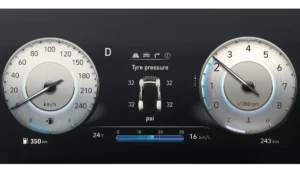
| What You See | Often displays individual PSI readings for each tire on the dashboard. | Typically shows only the general warning icon without specific PSI numbers. |
| Accuracy | Immediate and highly precise. | Requires a short driving distance to calculate speed differentials. |
Common Reasons the Light Illuminates
While autumn and winter weather shifts are the most frequent triggers, a few other issues can turn the warning light on:
- Cold Snaps: Rapid drops in ambient temperature overnight.
- Natural Air Seepage: Tires routinely lose roughly 1 PSI every month through normal use.
- Slow Punctures: A small screw or damaged valve stem causing a gradual leak.
- Sensor Battery Failure: Direct TPMS sensors use lithium batteries that last around 5 to 10 years; cold weather can temporarily suppress an aging battery’s voltage.
- Missing Calibration: Rotating tires or swapping to winter rubber without resetting the system.
Is It Safe to Drive with the Light On?
Usually Safe If:
- The tire looks visually inflated without any sagging sidewalls.
- The car steers normally without pulling to either side.
- Your pressure gauge shows the tire is only 2 to 3 PSI below the recommended level.
Stop and Check Immediately If:
- A tire looks noticeably flat or bulging.
- The steering wheel feels heavy or vibrates violently.
- The TPMS light flashes for 60 to 90 seconds before going solid: This signals a system malfunction or faulty sensor rather than just low air pressure.
How to Fix a Tire Pressure Warning Light
- Check Pressure Cold: Always measure pressure before driving more than a mile. Friction warms up tires and artificially inflates PSI readings.
- Find the Target PSI: Open the driver’s side door and check the information sticker on the jamb. Never use the “Maximum Pressure” rating molded onto the tire sidewall.
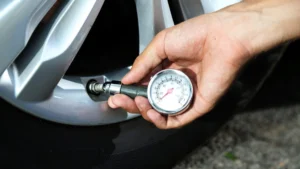
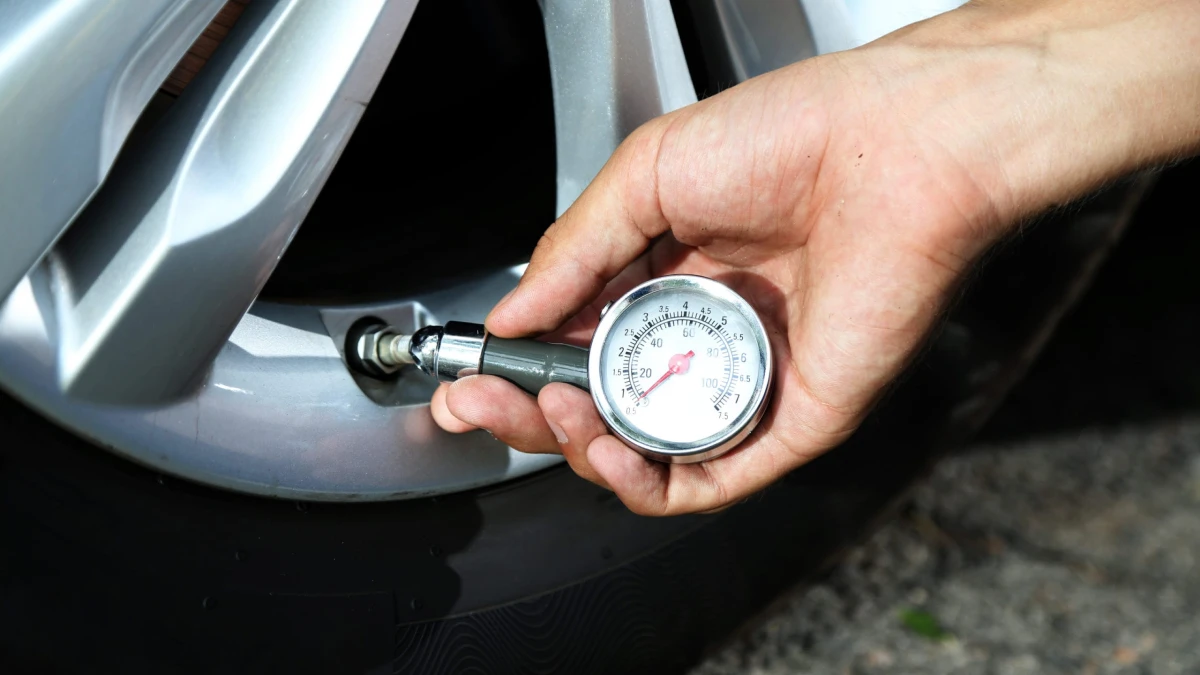
- Top Off the Air: Use a dependable digital gauge and fill each tire (including the spare) to the recommended level.
- Reset the System: Many direct TPMS systems clear automatically after a few minutes of driving above 30 mph. Indirect systems usually require you to press a TPMS reset button on the dash or inside the infotainment menu.
Can Overinflating Tires Prevent the Warning?
It might seem tempting to overinflate your tires by a few extra pounds to keep the cold-weather warning light off, but you should never exceed the manufacturer’s recommended PSI.
Overinflating shrinks the tire’s contact patch with the road. This reduces grip on wet, icy, or snowy pavement, ruins ride comfort, and causes rapid wear along the center of your tread.
Winter Tire Care Checklist & Myth vs. Fact
Quick Winter Checklist
- [ ] Check cold tire pressure at least once a month.
- [ ] Ensure tread depth is at least 4/32″ (3mm) for reliable snow and rain traction.
- [ ] Keep a portable 12V tire inflator in your trunk for quick morning top-ups.
- [ ] Check your spare tire pressure before long road trips.
Myth vs. Fact
- ❌ Myth:“The TPMS light always means you have a flat tire.”
- Fact: Sudden temperature drops trigger harmless low-pressure alerts all winter long.
- ❌ Myth:“The warning light will permanently disappear once the sun comes out.”
- Fact: Driving heat can temporarily expand air and turn the light off, but your baseline pressure will still be low the next morning.
Frequently Asked Questions
Why does my tire pressure light turn off after driving for a few minutes?
As tires roll along the road, friction creates heat. This warming effect expands the air inside the tire, nudging the PSI back above the sensor’s warning threshold. However, you should still add air to ensure correct baseline pressure when cold.
Can cold weather permanently ruin TPMS sensors?
No. Cold temperatures don’t physically break the sensors, but severe freezing can cause older sensor batteries to struggle, which might trigger a temporary error code.
How often should I check my tire pressure during winter?
Check your pressures at least once a month, and always verify them before heading out on a long highway trip.
MotorFuturist Verdict
A tire pressure warning light on a frosty morning is usually just a gentle reminder from physics—not an expensive mechanical disaster. Still, you should never ignore it. Driving on underinflated tires hurts fuel economy, wears down your tread unevenly, and compromises your grip on slippery winter roads. Keeping a portable inflator handy and spending five minutes checking your cold pressures when the season changes is one of the easiest ways to stay safe on the road.

