
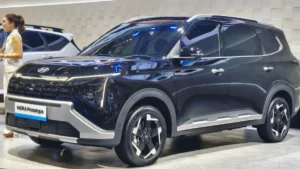



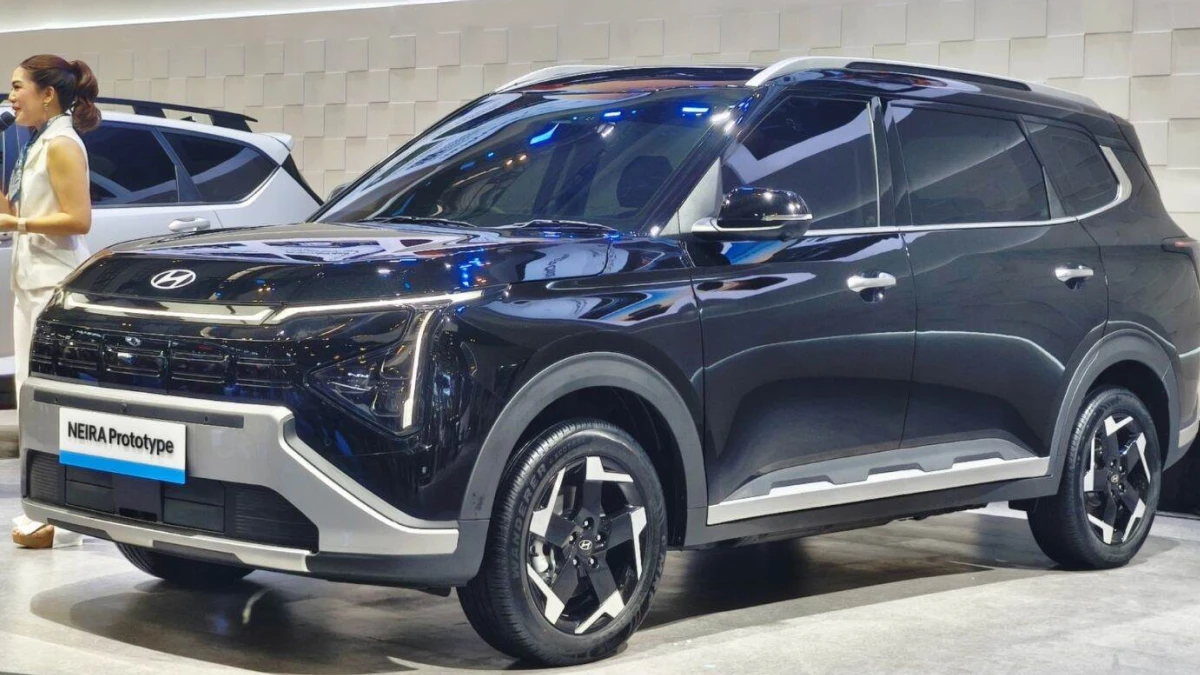
Family movers are undergoing a massive electric revolution across Asian markets, and Hyundai is jumping into the fray with a crucial strategic move. At the 2026 Gaikindo Indonesia International Auto Show (GIIAS), the South Korean automaker officially unveiled the Hyundai Neira Prototype—a sleek, futuristic three-row electric MPV designed to bring affordable, zero-emission family transport to mass markets.
Officially categorized as a seven-seater crossover MPV, the Neira previews a production model slated for launch by the end of 2026. Underneath its sharp exterior, the Neira shares its underlying electric platform with its close sibling, the Kia Carens Clavis EV, signaling Hyundai’s intent to aggressively target high-volume family segments.
Decoupling the Neira: How It Shapes Up Against Electric MPV Rivals
The Neira bridges the gap between traditional family vans and modern electric crossovers. Built to be locally manufactured at Hyundai’s Indonesian plant with over 60% local content, it aims to deliver an optimal balance of interior roominess and accessible pricing.
The comparative matrix below shows how the upcoming Hyundai Neira EV aligns against its primary platform sibling and key electric family movers in the segment:
| Feature / Parameter | Hyundai Neira EV (Prototype) | Kia Carens Clavis EV | BYD eMAX 7 |
| Market Status | Previewed at GIIAS 2026 | Market Ready / Launched | Production Available |
| Seating Configuration | 3-Row (6 & 7-Seater Options) | 3-Row (6 & 7-Seater Options) | 3-Row (6 & 7-Seater Options) |
| Estimated Length | ~4,550 mm | 4,540 mm | 4,710 mm |
| Wheelbase | 2,780 mm | 2,780 mm | 2,800 mm |
| Expected Battery Capacities | 42 kWh / 51.4 kWh | 42 kWh / 51.4 kWh | 55.4 kWh / 71.8 kWh |
| Estimated Driving Range | 400 km – 490 km (Claimed) | 404 km – 490 km | 420 km – 530 km |
| Peak Motor Output | 135 hp to 171 hp | 135 hp to 171 hp | 163 hp to 204 hp |
| Fast-Charging Capability | 10–80% in 39 mins (100 kW) | 10–80% in 39 mins (100 kW) | 10–80% in 30 mins |
Futuristic Aesthetics Meet Crossover Toughness
Visually, the Hyundai Neira moves away from the boxy, commercial “van” silhouette. Up front, it showcases Hyundai’s signature full-width horizon LED light strip paired with vertically stacked LED headlamp clusters embedded in a closed-off grille. Silver skid plates and an upright, muscular bumper give it an aggressive SUV-like stance.
From the side profile, long roof rails, thick black body cladding around squared wheel arches, and multi-spoke 17-inch aerodynamic alloy wheels enhance its crossover character. Noticeably, Hyundai opted for practical conventional door handles rather than flush electric handles, reinforcing the bike’s focus on everyday durability and usability. The rear is wrapped with vertical LED taillights linked by a continuous horizontal light bar across the tailgate.
Local Battery Assembly Driving Down EV Costs
The production version of the Neira will be built locally at Hyundai Motor Manufacturing Indonesia (HMMI). Crucially, it will utilize locally produced battery cells sourced directly from the HLI Green Power joint venture factory in Karawang. This localization strategy allows Hyundai to skip heavy import tariffs and offer competitive pricing across Southeast Asian and emerging Asian markets.
Interior Tech and Family-First Practicality
Inside, the Neira’s cabin prioritizes flat-floor passenger room and flexible cargo layout. The wide glasshouse and long wheelbase allow comfortable legroom even in the third row.
Key expected features inside the cockpit include:
- Dual Integrated Screen Setup: Twin 10.25-inch digital displays for instrument clusters and infotainment running Hyundai’s cNCi software.
- Level 2 ADAS Suite: Front collision avoidance, lane keep assist, smart cruise control, and blind-spot monitoring.
- Passenger Comforts: Multi-zone climate control with roof-mounted rear vents, wireless charging, panoramic glass roof, and Type-C USB charging ports across all three rows.
Final Takeaway
With its sharp SUV-inspired styling, modular three-row cabin, and shared proven mechanicals with the Kia Carens Clavis EV, the Hyundai Neira Prototype gives us a clear look at the future of family mobility. Once production kicks off in late 2026, expect the Neira to become a primary contender for an Indian launch to challenge the Carens EV and BYD eMAX 7 directly.
Image Source: indra_fathan/instagram

