

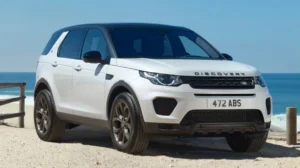


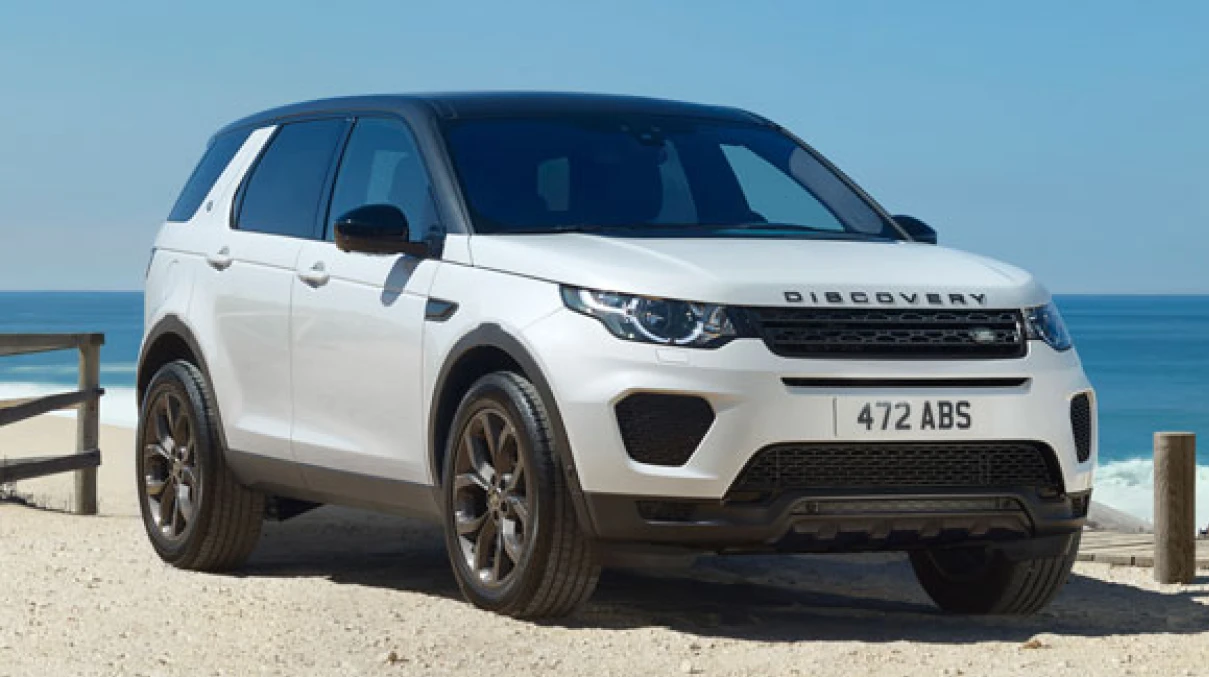
After more than a decade on the global market, the Land Rover Discovery Sport is officially driving off into the sunset. Introduced in 2015 as the highly anticipated successor to the Freelander, it quickly became the default choice for families wanting premium luxury mixed with muddy-boots off-road credibility.
But retiring this compact SUV is about much more than putting an ageing model out to pasture. It points to Jaguar Land Rover’s aggressive pivot toward electrification, a tightening of safety regulations in Europe, and a complete reimagining of what the modern luxury SUV should be.
Discovery Sport at a Glance
| Category | Details |
| Introduction | Launched in early 2015 |
| Lineage | Direct successor to the Land Rover Freelander |
| Production Run | ~11 years, ending in December 2026 |
| Powertrains | Petrol, Diesel, Mild-hybrid, and Plug-in hybrid (PHEV) |
| Standout Feature | Optional 5+2 seven-seat layout in a compact footprint |
| Global Status | Once JLR’s best-selling model (2016), now phasing out |
Why Is Land Rover Retiring the Discovery Sport?
Why pull the plug on a nameplate that was once the bedrock of Land Rover’s sales volume? The decision comes down to a perfect storm of changing regulations and corporate strategy.
- Tougher Safety Regulations: The European Union recently enforced the strict General Safety Regulation 2 (GSR2). Updating the 11-year-old Discovery Sport architecture to accommodate these new mandatory electronic safety nets simply wasn’t financially viable for JLR given the model’s shrinking profit margins.
- A Drastic Drop in Demand: In 2016, the Discovery Sport was JLR’s undisputed king, shifting over 122,000 units globally. By 2025, it had become the brand’s lowest-selling vehicle, barely moving a tenth of that volume.
- JLR’s House of Brands Strategy: Jaguar Land Rover is aggressively restructuring its portfolio into four distinct brands: Range Rover, Defender, Discovery, and Jaguar. Trimming the fat is essential to give each brand a sharper, more premium identity.
- The Shift to EMA: Future investment is pouring entirely into the Electrified Modular Architecture (EMA). JLR is prioritizing the launch of pure electric Range Rovers and next-gen software-defined vehicles, leaving legacy internal-combustion platforms behind.
A Look Back at the Discovery Sport’s Journey
| Year | Key Milestone |
| 2014 | Global debut, showcasing a sleek new design language for Land Rover. |
| 2015 | Officially replaces the Freelander, hitting showrooms globally. |
| 2016 | Peaks as Land Rover’s best-selling vehicle worldwide. |
| 2019/2020 | Receives a major facelift with heavy platform revisions and an overhauled interior. |
| 2020–2023 | Electrification arrives with Mild-Hybrid and Plug-in Hybrid (PHEV) powertrains. |
| 2026 | JLR announces production will end in December 2026. |
What Made the Discovery Sport Special?
The Discovery Sport didn’t just look the part—it played it. While competitors built lifted hatchbacks disguised as SUVs, Land Rover engineered a vehicle with legitimate wading depth and their famed Terrain Response system. It successfully bridged the impossible gap: it was compact enough to parallel park in tight city centers, yet spacious enough to offer a highly practical 5+2 seating configuration for large families. It managed to balance soft-touch premium cabin materials with a rugged, hose-it-out utility that few rivals could match.
Why Buyers Loved It
For owners, the appeal was undeniable. It served as a highly comfortable daily driver that projected a premium image in the office parking lot, yet transformed into a highly capable off-road tool on the weekends. The flexible cargo space and third-row jump seats made it the ultimate Swiss Army knife for school runs, long-distance touring, and outdoor adventures.
What Will Replace the Discovery Sport?
JLR has not announced a direct, one-to-one replacement bearing the “Discovery Sport” badge. Instead, industry analysts expect the upcoming “baby” Defender—likely dubbed the Defender Sport—to eventually step in and fill the void for a rugged, compact premium SUV. In the immediate future, JLR will steer compact SUV buyers toward the closely related Range Rover Evoque, which will continue production alongside the Velar.
What This Means for the Discovery Brand
The retirement of the Sport leaves the larger Land Rover Discovery in a precarious position, as its sales have also sharply declined. Moving forward, the “Discovery” brand is expected to shift upmarket, offering fewer, more highly specialized models focused heavily on EV technology, sustainable interior materials, and advanced family connectivity.
How the Discovery Sport Compared with Rivals
| SUV | Key Strength in the Segment |
| BMW X3 | Razor-sharp driving dynamics and handling |
| Mercedes-Benz GLC | Unmatched cabin luxury and ride comfort |
| Audi Q5 | Seamless technology and understated design |
| Volvo XC60 | Class-leading safety tech and minimalist interiors |
| Lexus NX | Bulletproof hybrid efficiency and reliability |
| Discovery Sport | Genuine off-road capability & 7-seat versatility |
The Bigger Picture: Luxury SUVs Are Entering a New Era
MotorFuturist Insight: The end of the Discovery Sport isn’t simply about one model leaving the market—it is a glaring reflection of how legacy luxury SUVs are making way for a new generation.
Automakers can no longer afford to keep analogue, internal-combustion platforms on life support. Stricter emissions, mandatory EU safety regulations, and the insatiable consumer demand for digital cockpits and OTA (over-the-air) software updates are forcing massive platform consolidation. The Discovery Sport’s departure is a necessary sacrifice to fund JLR’s fully electric, software-defined future.
Should You Still Buy a Used Discovery Sport?
Absolutely, but you need to shop smart.
Pros: You are getting a proven platform, incredibly comfortable seating, a premium cabin, and unmatched off-road capability for its class.
Things to Check: Look strictly for models with a flawless service history. Pay special attention to the suspension components, check the health of the hybrid battery on PHEV models, and ensure all interior electronics (particularly the infotainment) function without lag. Maintenance costs will be higher than non-luxury brands, so budget accordingly.
MotorFuturist Verdict
The Discovery Sport’s retirement marks the conclusion of an incredibly important chapter for Jaguar Land Rover. Over the past 11 years, it successfully bridged the gap between premium family transport and authentic Land Rover capability. Its departure isn’t a sign of failure; rather, it highlights how rapidly the luxury automotive industry is evolving. As modern buyers—and regulators—demand electric powertrains and software-first experiences, even highly successful nameplates must step aside for what’s next. Whether the Discovery Sport badge ever returns on an EV platform remains a mystery, but its legacy as the ultimate premium family all-rounder is firmly secured.

