


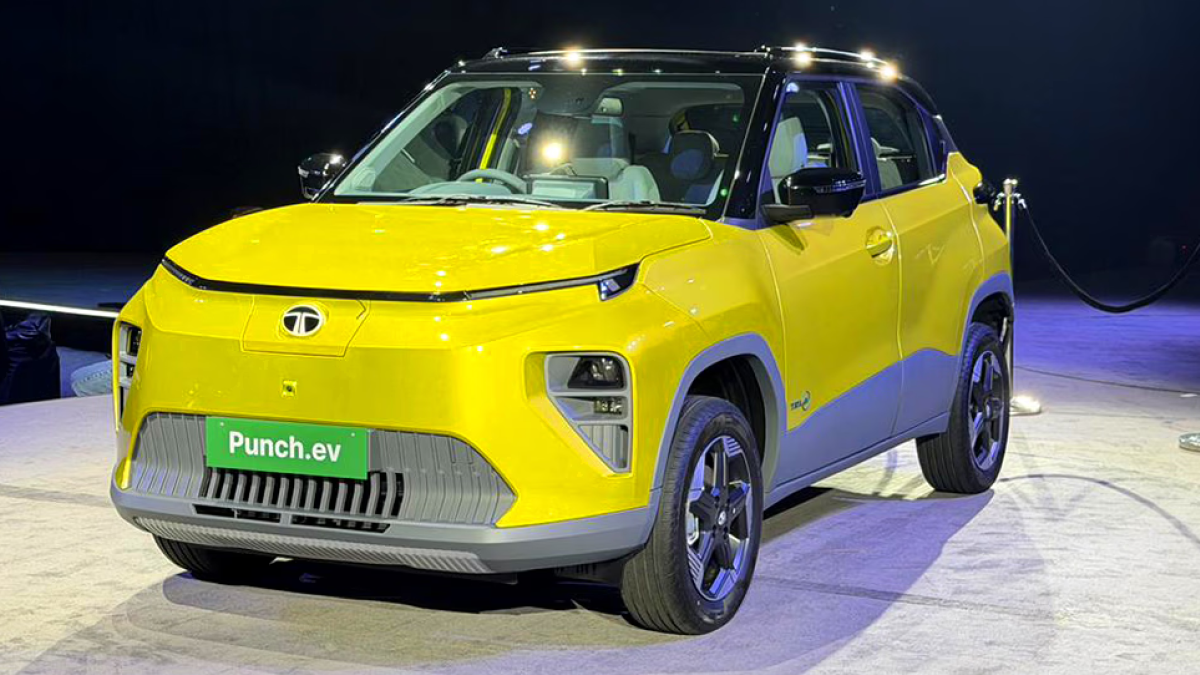
The Indian electric passenger vehicle market achieved a monumental milestone, as monthly retail registrations surged past the 30,000-unit threshold for the first time in history. Driven by an expanding portfolio of electric SUVs, rising consumer confidence, and a sharp increase in alternative powertrain adoption, the segment has definitively moved from a premium niche into the mainstream auto retail landscape.
According to the latest retail registration data from the Federation of Automobile Dealers Associations (FADA), India recorded 31,823 electric car sales, representing an explosive 107.75% year-on-year (YoY) growth compared to the 15,318 units sold in the same month last year. This momentum also reflects a robust 19.27% month-on-month (MoM) increase from May. Crucially, electric vehicles captured an all-time high 7.75% market share of the total Indian passenger vehicle space, proving that the shift toward battery power is rapidly accelerating.
Understanding the June 2026 Passenger EV Retail Hierarchy
The competitive landscape is intensifying as legacy carmakers scale up production and global players aggressively expand their local footprints. While Tata Motors firmly retains its crown as the undisputed market leader, competitors like Mahindra are rapidly closing the volume gap with fresh “Born Electric” architectures.
To give your blog readers an explicit, transparent view of the market share dynamics, the comprehensive matrix below highlights the top-performing electric car brands, their specific June volumes, and annual growth trajectories:
| EV Manufacturer Rank | June 2026 Retail Sales (Units) | Year-on-Year (YoY) Growth | Core Market Share (%) | Bestselling & Newly Launched Models |
| 1. Tata Motors | 12,187 Units | +126.73% | 38.30% | Punch EV, Nexon EV, Sierra EV |
| 2. Mahindra & Mahindra | 7,766 Units | +121.06% | 24.40% | XUV400, XEV 9e, BE 6 |
| 3. JSW MG Motor India | 5,861 Units | +24.94% | 18.42% | Windsor EV, Comet EV, ZS EV |
| 4. Maruti Suzuki | 1,919 Units | New Entrant | 6.03% | e-Vitara SUV (First full sales year) |
| 5. VinFast Auto India | 1,404 Units | New Entrant | 4.41% | VF e34, VF 3 (Expanding network) |
| 6. BYD India | 873 Units | +51.30% | 2.74% | Atto 3, Seal Sedan, e6 MPV |
| 7. BMW Group India | 497 Units | +105.37% | 1.56% | iX1, i4, iX Luxury Crossovers |
Core Drivers: What is Fueling this Explosive Green Surge?
Three critical trends defined the automotive retail trajectory during this record-breaking month, providing deep insights into shifting buyer behavior across both mass and premium car segments:
- The Sierra Effect and the Dominance of SUVs: Electric sport utility vehicles continue to be the primary volume drivers for Indian families. A major catalyst at the tail end of the month was the highly anticipated official launch of the Tata Sierra EV at an aggressive starting price of ₹18.79 lakh. Offering an expansive 665 km range and optional four-wheel drive (4WD) capabilities, the Sierra badge has generated massive booking backlogs that are expected to turbocharge July and August delivery cycles.
- The Rise of the Luxury EV Segment: Electric mobility is gaining immense traction among high-net-worth buyers. Luxury electric car registrations more than doubled YoY, hitting a record 804 total units. BMW India remains the dominant titan in the luxury tier, commanding over 60% of the premium EV market with 489 units, closely followed by Mercedes-Benz at 234 units. New entrants like Tesla also marked a stable entry, delivering 35 Model Y SUVs to Indian premium buyers during the month.
- New Global Entrants Decentralizing the Market: For years, Tata controlled nearly 70% of the EV pie. June proves that the market is decentralizing. Vietnamese EV giant VinFast secured a solid fifth place with 1,404 units as it scales its local assembly operations, while Maruti Suzuki’s e-Vitara achieved its highest-ever monthly tally of 1,896 units despite strict production allocations favoring export markets.
The Macro Economic Catalyst: FADA leadership explicitly noted that recent domestic fuel price hikes acted as a powerful psychological trigger, pushing practical urban commuters away from internal combustion variants. For the first time in Indian automotive history, alternative-fuel powertrains—encompassing electrics, strong hybrids, and factory CNG models—accounted for more than 40% of all passenger vehicle sales combined.
Final Thoughts
The retail performance of June 2026 signals a definitive tipping point for clean mobility in India. Smashed records across mass-market brands and luxury segments indicate that buyers are moving beyond early-adopter hesitancy. As infrastructure matures and manufacturers roll out mid-tier options, the passenger EV ecosystem is no longer just a futuristic concept—it is actively steering the growth narrative of the Indian automotive sector.
