




The Indian automotive sector has established a historic milestone as passenger vehicle (PV) retail registrations soared to an all-time high for June. According to the latest retail data from the Federation of Automobile Dealers Associations (FADA), total passenger vehicle registrations climbed to an impressive 4,10,853 units.
This performance marks a substantial 28.63% year-on-year (YoY) expansion compared to the 3,19,412 units registered during the same period last year. Even with incremental price hikes implemented by multiple original equipment manufacturers (OEMs) at the start of the fiscal year, sequential retail momentum remained positive, tracking a 2.05% month-on-month (MoM) increase from May’s 4,02,591 units.
The Alternative Fuel Revolution Takes Center Stage
The defining story of the month is not just the volume of cars being sold, but what is powering them. For the first time in Indian automotive history, the combined sales share of alternative fuel technologies—consisting of Compressed Natural Gas (CNG), hybrid powertrains, and Electric Vehicles (EVs)—crossed the 40% threshold, accounting for exactly 40.35% of total retail passenger vehicle sales.
While traditional petrol power still leads the market, its absolute share has contracted from 47.68% down to 43.63% within a single year. Similarly, diesel demand has stabilized at 16.02%. Clean mobility is filling that gap rapidly. Driven by expanding model portfolios and stronger consumer acceptance across multiple price brackets, the electric passenger vehicle segment experienced a massive breakout, registering an all-time monthly high of 31,823 retail units to capture 7.75% of the overall market.
Standard WordPress Specification Matrix
To illustrate the competitive positions and growth trends of the country’s leading passenger vehicle manufacturers, the table below outlines the retail volumes, market shares, and year-on-year dynamics captured during the record-breaking month:
| Manufacturer Brand | June 2026 Retail (Units) | June 2025 Retail (Units) | YoY Volume Growth (%) | Captured Retail Market Share (%) |
| Maruti Suzuki | 1,67,834 | 1,22,775 | +36.70% | 40.85% |
| Tata Motors | 57,009 | 37,732 | +51.09% | 13.88% |
| Mahindra & Mahindra | 54,099 | 44,249 | +22.26% | 13.17% |
| Hyundai Motor India | 44,163 | 46,225 | -4.46% | 10.75% |
| Toyota Kirloskar | 28,818 | 25,031 | +15.13% | 7.01% |
| Kia India | 23,166 | 19,485 | +18.89% | 5.64% |
OEM Deep-Dive: Industry Leaders Secure Domain Dominance
Maruti Suzuki maintained its absolute dominance over the domestic market, registering 1,67,834 units to command a 40.85% retail market share. The company’s diverse product portfolio, backed by highly efficient petrol engines and strong factory-fitted CNG variants, continues to serve as the industry’s primary volume driver.
Meanwhile, the battle for the second position has intensified into a high-stakes competition between Tata Motors and Mahindra. Tata Motors successfully held onto its runner-up spot by retailing 57,009 units, securing a 51.09% YoY surge. This growth was heavily accelerated by its updated SUV portfolio and clean energy division, as the Tata Punch and Nexon models claimed the top spots on the country’s bestselling vehicle list.
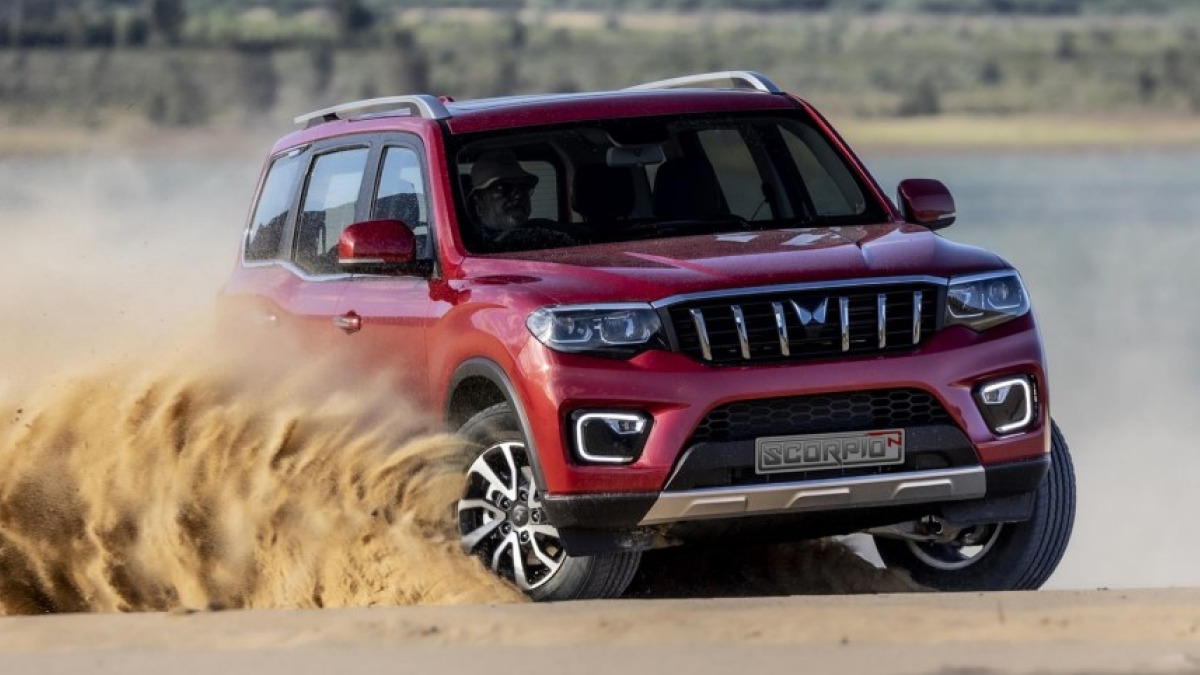
Mahindra followed remarkably close behind in third place, recording 54,099 retail units. The home-grown SUV specialist achieved a 22.26% annual increase, propelled by sustained waiting lists for the Scorpio N, XUV 700, and the recently refreshed XUV 3XO series.
In contrast, fourth-placed Hyundai Motor India experienced a minor 4.46% decline in sequential momentum, dropping to 44,163 retail units. This temporary dip was caused by an unexpected component supply bottleneck following a fire at a major vendor facility, which disrupted manufacturing operations earlier in the month. Toyota Kirloskar Motor completed the top five standings with 28,818 units, seeing a 15.13% YoY lift driven by strong demand for its premium hybrid MPVs and SUVs.
The Rural-Urban Consumption Divide
An analytical breakdown of the geographical registration data shows that the demand pattern is heavily supported by regional economies. Interestingly, rural vehicle markets are outpacing major urban cities in terms of annual growth metrics.
The Regional Growth Gap: Driven by early monsoon coverage and positive agricultural sentiment, passenger vehicle retail sales in rural areas recorded a spectacular 35.09% year-on-year expansion. This significantly outpaced the urban sector’s otherwise healthy 24.67% YoY growth. However, looking at month-on-month trends, rural areas experienced a tiny 0.11% dip—a typical seasonal pattern known as the “monsoon-linked rural pause”—while urban areas grew by 3.54% over May.
Final Thoughts
The record-breaking performance in June indicates deep-rooted consumer resilience in the Indian automotive space. While persistent price adjustments and high inventory holding costs at the dealer level were expected to cool off retail demand, the market has responded with historic volumes. As the country enters the second quarter of the fiscal year, the rapid adoption of alternative fuels suggests that manufacturers with diverse powertrain portfolios—spanning CNG, smart hybrids, and electric variants—are best positioned to capture future growth.

