
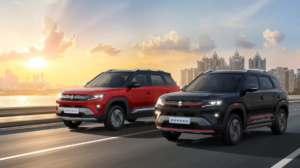




The sub-4-metre SUV space in India has evolved into a high-stakes arena where bold styling and cutting-edge technology dictate retail success. While models like the Maruti Brezza and Tata Nexon have long dominated the sales charts, Mahindra is quietly preparing to rewrite the rules of the compact lifestyle segment.
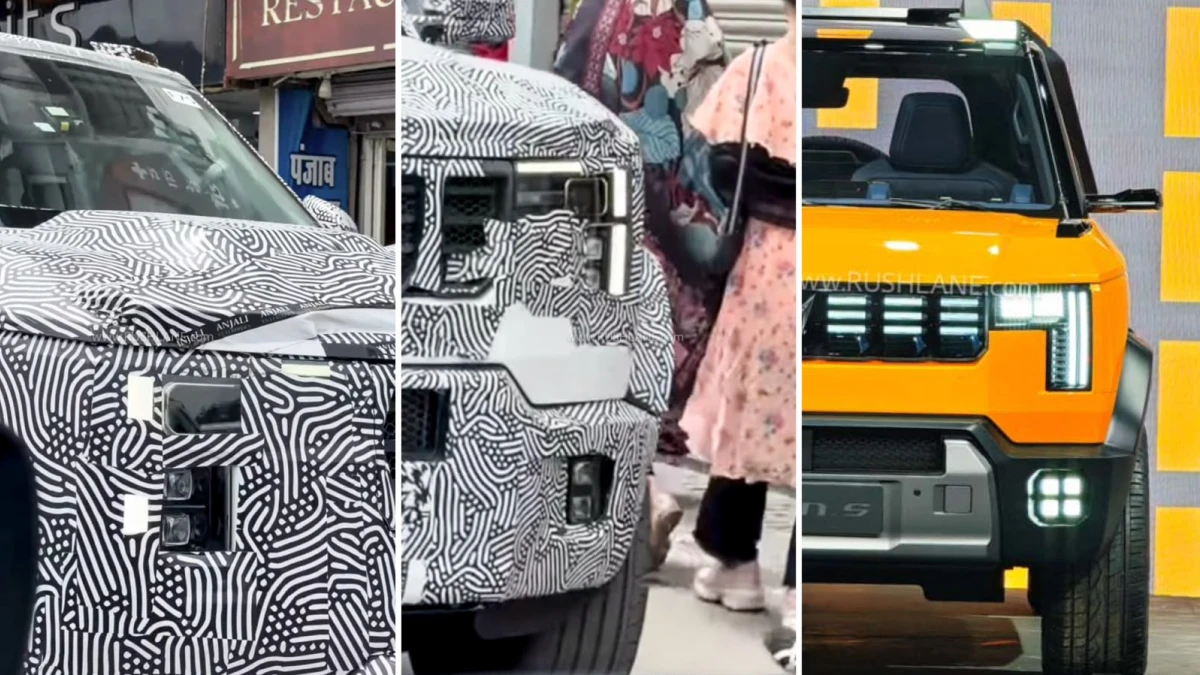
Recent spy shots captured in June 2026 reveal that development on the highly anticipated Mahindra Vision S is moving rapidly. For the first time, camouflaged test mules have shed their temporary round parts, debuting sleek, production-spec LED lighting assemblies that hint at a nearing final design freeze.
Unmasking the Lighting: True Production Design Revealed
Until very recently, initial engineering mules of the Vision S spied testing across northern India were equipped with generic, circular LED projector units heavily borrowed from the Thar parts bin. While these parts successfully threw off automotive sleuths, the latest spy footage reveals that those rounded assemblies were purely temporary mock-ups.
The newest prototypes running through mountain test loops are officially showing off their final production lighting layouts. The front fascia proudly showcases vertically stacked main projector headlamps housed deeply within the lower front bumper corners.
Framing these main illumination points are striking, inverted L-shaped LED daytime running lights (DRLs) that align perfectly with the original concept vehicle unveiled during Mahindra’s landmark Freedom NU event on August 15, 2025. This distinctive lighting language completely ditches the old-school utility look, framing a prominent, multi-slatted vertical front grille and an aggressive, low-slung front skid plate.
Sub-4-Metre Lifestyle SUV Segment Matrix
Slated to slot strategically into Mahindra’s portfolio as a premium, highly modern sub-4m crossover alternative, the production version of the Vision S will compete directly with well-established compact segment players:
| Segment Contender Model | Primary Core Platform | Available Drivetrain Systems | Top Tech Feature Highlight | Safety Suite Level | Anticipated Launch Window |
| Mahindra Vision S | Modular NU_IQ Architecture | Petrol, Diesel, Strong Hybrid, & EV | Full-Length Panoramic Sunroof | Level 2 ADAS Suite | Early 2027 Launch |
| Maruti Suzuki Brezza | Suzuki TECT Platform | 1.5L Petrol / Underbody Dual CNG | Ventilated Seats, 360 Camera | No ADAS Package | July 23, 2026 |
| Tata Nexon (Facelift) | Tata ALFA-ARC Architecture | 1.2L Turbo-Petrol / 1.5L Diesel | 10.25-Inch Floating Display | No ADAS Package | Available Now |
| Mahindra XUV 3XO | Mahindra W601 Framework | 1.2L Turbo-Petrol / 1.5L Diesel | Dual-Zone Electronic Climate | Level 2 ADAS Suite | Available Now |
| Skoda Kylaq | Volkswagen MQB-A0-IN | 1.0L TSI Three-Cylinder Petrol | Powered Driver Seat Array | Six Airbags Standard | Available Now |
A Tech-Forward Cabin with Big-Car Luxury
Peeking through the camouflaged glass surfaces of mid-tier test vehicles confirms that Mahindra is migrating its high-end tech layout downward into the sub-4-metre footprint. The interior architecture breaks away from past utilitarian work layouts, adopting a sleek, minimalist dashboard structure.
The crown jewel of the interior is a dual-screen dashboard setup, linking a digital driver instrument console to a high-resolution central touchscreen media matrix running Mahindra’s latest Adrenox software framework.
Remarkably, despite measuring under 4,000 mm in total length, the packaging efficiency of the long 2,665 mm wheelbase has allowed engineers to wedge in a full-length panoramic sunroof—a feature that continues to serve as an immense selling point for Indian car buyers.
Lower variants will balance out production costs using clean analogue dials with a centered multi-information display (MID) and manual climate toggles, while top-spec variants will receive an entirely fresh three-spoke steering wheel design, soft-touch dashboard panels, and crisp dual-zone digital climate arrays.
True Modular Independence: The NU_IQ Advantage
What truly separates the Vision S from every other compact SUV currently retailing in India is its foundational backbone. It will serve as the premier production model to debut Mahindra’s all-new NU_IQ architecture. This modular monocoque layout has been engineered from the ground up to be powertrain-agnostic.
Unlike traditional platforms adapted from fossil-fuel models to EVs, the NU_IQ structure accommodates internal combustion engines (ICE), strong hybrids, and pure battery-electric vehicle (BEV) layouts natively. Initial launch variants rolling off assembly lines in early 2027 will rely on Mahindra’s proven 1.2-litre turbo-petrol and the highly efficient 1.5-litre four-cylinder mHawk oil burner, pumping out a muscular 117 PS and 300 Nm of torque via a torque-converter automatic gearbox.
However, with distinct fuel doors and unique structural underpinnings spied on separate test platforms, upcoming strong-hybrid configurations and a dedicated single-motor EV layout are actively being co-developed. This multi-energy strategy ensures Mahindra can quickly adapt to changing market demands, giving the Vision S a serious technological leg up over its single-fuel rivals.
For a comprehensive breakdown of the latest leaked on-road spy videos showing the testing prototypes side-by-side, check out the Mahindra Vision S Production Model Analysis. This automotive review covers the newly exposed structural lighting signatures, interior material layouts, and how this compact vehicle compares directly to the upcoming Brezza facelift.
Image Source- Rushlane

