


While India’s E20 program has successfully integrated 20% ethanol into petrol across the country, replicating that success with the nation’s critical commercial transport fleet has proven to be a major hurdle. Diesel remains the absolute backbone of the Indian logistics ecosystem, with annual consumption nearly double that of petrol.
To address this challenge, Tata Motors’ leadership has confirmed that India is preparing to begin pilot validation trials of an isobutanol-diesel fuel blend starting in Q2 FY2027. Driven by a government-led high-level task force, this pilot project aims to decarbonize heavy transport and strengthen long-term national energy security.
The Chemical Breakthrough: Why Isobutanol Beats Ethanol for Heavy Transport
For decades, engineers and policymakers attempted to force ethanol-diesel blending programs into action, but basic organic chemistry consistently pushed back. Ethanol is a simple two-carbon alcohol with a highly “polar” structure. This means it naturally repels the oily, non-polar consistency of conventional diesel, causing the two liquids to separate in the tank without the addition of expensive, non-renewable chemical binders.
Isobutanol completely sidesteps these limitations. As a structurally superior four-carbon alcohol, it possesses a chemical chain that is much less corrosive, less hygroscopic (meaning it has a very low tendency to absorb moisture from air), and highly stable when mixed with heavy oils.
Furthermore, ethanol poses a severe flashpoint hazard. The temperature at which its vapors can ignite sits at a mere 12°C to 13°C, whereas standard diesel is tightly regulated to a minimum flashpoint of 35°C. This massive safety gap makes shared transport pipelines and storage infrastructure logistically impossible. Isobutanol, by contrast, has a stable flashpoint between 27°C and 30°C, allowing it to safely remain within the same petroleum classification as diesel.
Alternative Biofuel Chemistry Matrix
The technical differences between these alcohols explain why the Ministry of Road Transport and Highways (MoRTH) is prioritizing isobutanol for commercial vehicle fleets:
| Chemical & Operational Property | Conventional Diesel (BS-VI) | Isobutanol Biofuel (Four-Carbon) | Conventional Ethanol (Two-Carbon) |
| Primary Raw Sourcing Material | Crude Oil Petroleum Refinery | Sugarcane, Grains, Biomass | Sugarcane, Maize, Broken Rice |
| Volumetric Energy Density | ~36.0 MJ per Litre | ~29.2 MJ per Litre | ~21.3 MJ per Litre |
| Fuel Flashpoint Safety Range | Minimum 35°C | 27°C – 30°C (Class B Category) | 12°C – 13°C (High Fire Risk) |
| Infrastructure Compatibility | Existing Pipelines & Dispenser Pumps | 100% Seamless Drop-In Fit | Requires Dedicated Anti-Corrosive Tanks |
| Fuel Tank Stability Window | Indefinite Under Storage | Stable at 10% Blend for 40+ Days | Immediate Phase Separation Risk |
| Initial Target Blending Ratio | Base Fuel (100%) | 2% Pilot Target (Q2 FY2027) | 20% National Mandate (Petrol Only) |
Negligible Impact on Real-World Fleet Performance
One of the primary concerns for fleet operators running tight, low-margin transit schedules is how a blended fuel impacts engine health and trip fuel economy. Addressing these exact concerns at a recent media roundtable, Girish Wagh, Managing Director and CEO of Tata Motors Commercial Vehicles, emphasized that the initial 2% blending limit is conservative by design.
Because isobutanol holds a slightly lower calorific energy content than pure petroleum diesel, there will technically be a small drop in raw energy density. However, at a minimal 2% concentration, the impact on engine horsepower, torque curves, and combustion behavior is completely unnoticeable.
Stationary engine tests conducted on heavy-duty Cummins hardware over a three-month testing phase confirmed that engine parts experienced no anomalous wear. Furthermore, data collected from higher 5% isobutanol trial runs revealed a minor mileage drop of just 1% to 2%. At the upcoming 2% pilot level, fleet operators can expect near-total parity with current BS-VI fuel economy.
Scalable Infrastructure with Zero Modification Costs
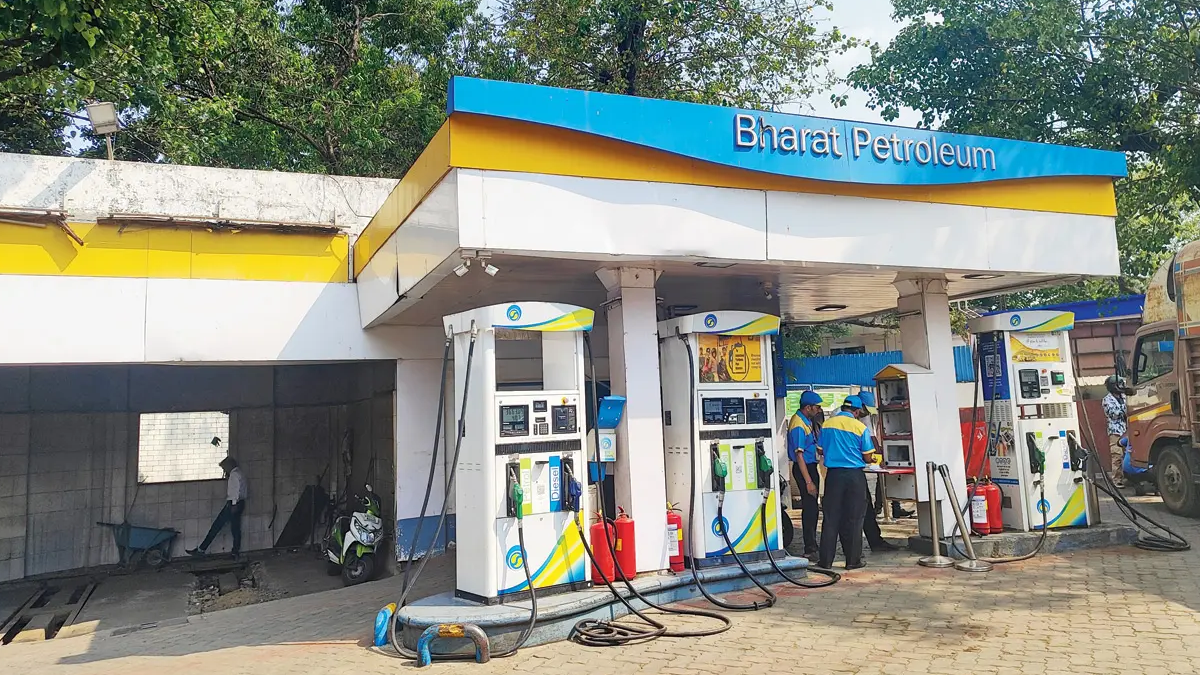
Perhaps the most significant economic advantage of the upcoming transition is infrastructure preservation. Because isobutanol mimics the physical characteristics of petroleum, oil marketing companies like Bharat Petroleum Corporation Limited (BPCL) and Hindustan Petroleum Corporation Limited (HPCL) can distribute the fuel using India’s existing networks of tankers, underground storage facilities, and fuel station pumps without requiring multi-billion-rupee hardware retrofits.
The Automotive Research Association of India (ARAI) is now launching a formal 10-month technical assessment alongside bioenergy technology firm Praj Industries to validate these metrics across 33 distinct vehicle configurations. If these real-world validation trials prove successful, India will open up a massive domestic alternative pathway, providing a highly reliable outlet for agricultural feedstocks while moving the commercial transport sector closer to true energy independence.
