





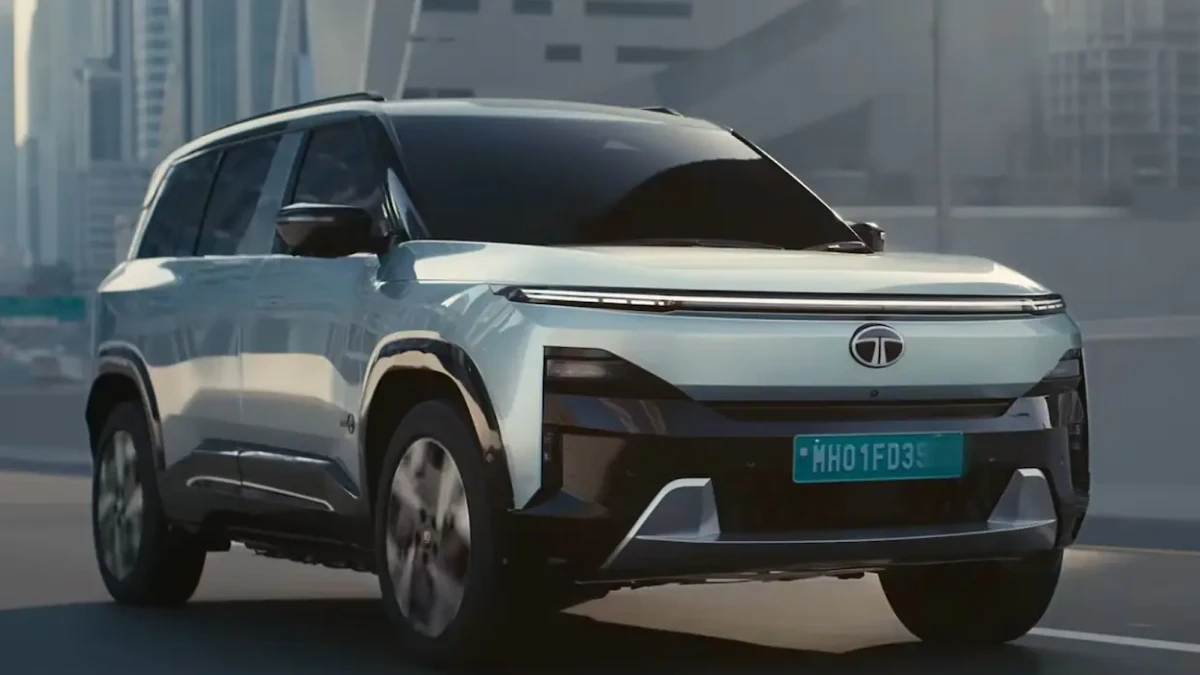
The anticipation surrounding the upcoming Tata Sierra EV is reaching a fever pitch ahead of its official June 30 unveiling. As Tata Motors strips away the final layers of camouflage, the focus has shifted from its deeply nostalgic silhouette to the high-tech components driving its powertrain.
Built on the scalable and advanced acti.ev+ architecture, the Sierra EV is steering away from basic urban runabout territory. Instead, it is stepping up as a heavy-hitting, long-distance midsize SUV by utilizing a smart, two-tier battery layout engineered to shake up the premium electric vehicle segment.
The Dual-Battery Blueprint: Choosing Range and Power
Rather than taking a one-size-fits-all approach, Tata is launching the Sierra EV with two distinct lithium-ion battery choices borrowed from its mechanical sibling, the Harrier EV. This strategy allows the brand to target two very different buyers: value-conscious shoppers looking for an efficient commuter, and driving enthusiasts demanding maximum performance.
The line kicks off with a 65 kWh battery pack reserved for the base ‘Pure’ variant. Far from being a stripped-down entry model, this 65 kWh setup delivers a healthy MIDC-certified range of 538 kilometers on a single charge. It pairs with a rear-wheel-drive (RWD) single-motor configuration that produces 238 horsepower and 315 Nm of peak torque.
For buyers looking to travel longer distances, upper-tier trims come equipped with a larger 75 kWh battery pack. This extended-range cell pushes the estimated driving range to an impressive 627 kilometers, effectively eliminating range anxiety for cross-country highway road trips.
Furthermore, this larger battery is the exclusive power source for Tata’s high-performance Quad Wheel Drive (QWD) dual-motor setup, which splits power across both axles to unlock a massive combined torque output of 504 Nm.
Sharing Tech: The Advantage of the Harrier EV Underpinnings
By utilizing the robust acti.ev+ architecture shared with the larger Harrier EV, the Sierra EV benefits from massive manufacturing efficiencies and thoroughly proven high-voltage components. This shared platform ensures the vehicle maintains excellent structural rigidity, top-tier crash-test readiness, and a flat interior floor maximizing cabin space.
Charging speeds get a massive upgrade as well. Both battery variants support high-capacity DC fast charging, allowing drivers to juice up from 20% to 80% in roughly 45 minutes when using a public fast charger.
For home charging, Tata includes a standard 7.2 kW AC wall-box charger that completely tops up the 65 kWh pack in under 8 hours. The platform also natively supports advanced Vehicle-to-Load (V2L) and Vehicle-to-Vehicle (V2V) bidirectional charging, transforming the SUV into a mobile power bank capable of running camping gear or charging a stranded EV.
Midsize Electric Crossover Battle Matrix: How the Sierra EV Stack Up
When it arrives in showrooms, the Sierra EV will slot directly into India’s most competitive electric vehicle segment. The performance comparison below outlines how it shapes up against its primary rivals.
| Electric SUV Model Lineup | Battery Pack Capacities | Drivetrain Layout Options | Peak Torque Output | Max Claimed MIDC Range | Expected India Price Bracket |
| Tata Sierra EV (2026) | 65 kWh / 75 kWh | RWD Single / QWD AWD | 315 Nm to 504 Nm | 538 km to 627 km | ₹20 Lakh – ₹25 Lakh |
| Mahindra BE 6 | 59 kWh / 79 kWh | Rear-Wheel Drive Only | ~380 Nm (RWD) | ~500 km to 600 km | ₹19 Lakh – ₹24 Lakh |
| Hyundai Creta EV | 45 kWh / 51.4 kWh | Front-Wheel Drive Only | ~255 Nm (FWD) | ~400 km to 450 km | ₹22 Lakh – ₹26 Lakh |
| Maruti Suzuki e Vitara | 49 kWh / 61 kWh | FWD Single / e-AWD Dual | ~189 Nm to 300 Nm | ~400 km to 500 km | ₹20 Lakh – ₹25 Lakh |
| MG ZS EV | 50.3 kWh | Front-Wheel Drive Only | 280 Nm (FWD) | ~461 km | ₹18.9 Lakh – ₹25 Lakh |
Strategic Market Takeaway
Tata Motors’ decision to skip smaller 40-50 kWh city batteries for the Sierra EV underscores its goal to position the vehicle as a premium, uncompromising family cruiser. Offering a 65 kWh baseline right from the start gives the entry-level variant a major range advantage over the upcoming Hyundai Creta EV and Maruti e Vitara.
By wrapping this heavy-hitting battery performance and advanced QWD dual-motor tech inside a deeply nostalgic design, Tata isn’t just releasing another electric option—it is delivering a highly capable flagship that sets a new benchmark for Indian engineering.
For a closer look at how this platform behaves in the real world and to see its off-road performance during hot-weather testing, check out the Tata Sierra EV Exterior Reveal and AWD Dune Test Walkaround. This analysis highlights the vehicle’s design evolution and details how the dual-motor setup splits torque across challenging terrain.

