


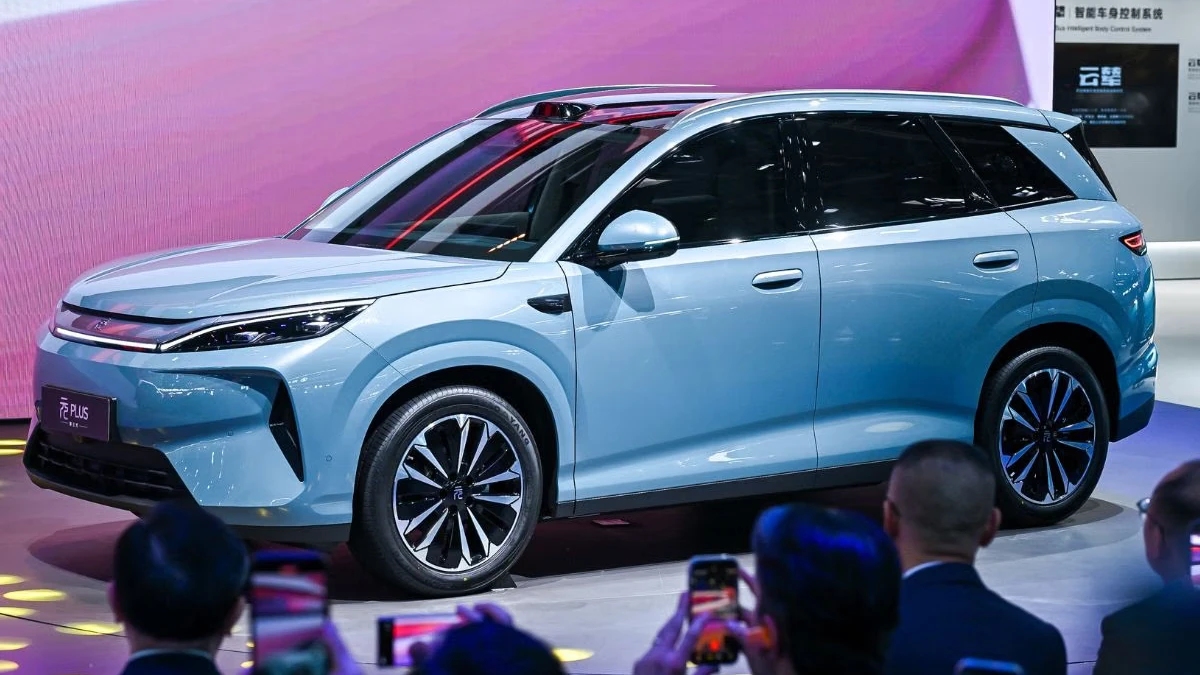
When discussing modern automotive safety, our minds instinctively wander to the open road—lane-keep systems, highway cruise assistance, or automatic emergency braking designed to avoid high-speed collisions. However, a significant portion of vehicular accidents, property damage, and tragic animal casualties happen before the vehicle even moves an inch.
To bridge this specific safety blind spot, Chinese automotive giant BYD has officially published a groundbreaking engineering patent titled “Method for Detecting Living Organisms Under a Vehicle.” Disclosed by China’s National Intellectual Property Administration (CNIPA) under application number CN122200729A, this technology leverages intelligent computer vision to spot stray animals or children hiding directly beneath or around a parked vehicle before the driver sets off.
The Under-Car Hazard: Why This Matters
Stray dogs, cats, and wild animals frequently seek shelter beneath stationary vehicles to shield themselves from harsh weather elements like torrential rain, snowfall, or intense summer heat. Because these hiding spots sit entirely below the driver’s natural line of sight and underneath standard backup camera angles, motorists often start their engines and pull away completely unaware of the lifeforms resting near the tires.
This results in thousands of avoidable household accidents every year. BYD’s new patent introduces a clever solution to this problem, aiming to provide absolute clarity regarding a vehicle’s hidden surroundings before a drive begins.
The Innovation: Two-Stage Delta Image Processing
Mapping out the environment directly beneath a car’s chassis is an incredibly difficult task for basic cameras. The area is plagued by erratic shadows, shifting natural lighting, road grime, mud accumulation, and uneven asphalt. Standard motion sensors or simple continuous video feeds frequently trigger false alarms when a loose piece of trash blows by or when a shadow shifts across the pavement.
To conquer these real-world obstacles, BYD engineered a highly efficient two-stage detection architecture:
- Stage 1: The Baseline Reference: Every time the vehicle is powered down after a journey, the system’s underbody cameras take a high-resolution snapshot of the empty undercarriage space. This static image is saved locally as an environmental baseline, locking in the placement of permanent structural components like suspension arms, battery enclosures, and aerodynamic panels.
- Stage 2: Delta Region Isolation: When the driver approaches the car to start a new trip, the system runs a fast secondary scan. Instead of wasting processing power analyzing the entire undercarriage, the computer vision software only looks for “deltas”—areas that display a noticeable difference from the saved reference image. If a change is found, advanced recognition algorithms isolate that specific target zone to determine if the shape, heat, or movement matches a living animal or human.
This smart filtering method ensures that the vehicle’s onboard computer doesn’t over-allocate its processing resources, keeping the system quick, reliable, and free from annoying false alarms.
Architectural Comparison: How Underbody Sensing Changes the Game
To see how this new patent redefines the safety landscape, we can look at how BYD’s upcoming underbody detection system stacks up against traditional vehicle monitoring technologies currently deployed in the market.
| Vehicle Sensing Tech | Primary Operational Zone | Primary Objective | Key Technical Limitation |
| BYD Underbody Vision | Beneath the vehicle chassis & around wheels | Identifies hiding animals, pets, or infants before vehicle movement | Requires clean lenses in heavy mud conditions |
| Traditional ADAS Cameras | Front windshield and exterior body panels | Real-time lane tracking & highway obstacle avoidance | Severe blind spots directly beneath the vehicle floor |
| In-Cabin Radar / ROA | Internal cabin seats and footwells | Detects forgotten passengers, children, or pets left inside | Completely blind to external surroundings |
| Standard Ultrasonic Sensors | Front and rear bumper facias | Low-speed parking assistance & proximity alerts | Ineffective at detecting flat objects lying under the frame |
Building a 360-Degree Protective Shield
This undercarriage live-detection filing isn’t a standalone project. It rolls out alongside a parallel BYD safety system designed to detect passengers left behind inside locked vehicles using radar channel impulse responses and angle-of-arrival analysis.
When deployed together, these systems form a comprehensive protective shield around the car. While the internal radar keeps watch over the cabin, the computer vision array guards the dark spaces underneath the vehicle platform. Although a patent filing doesn’t guarantee immediate mass production, this project highlights BYD’s clear vision to build a smarter, safer, and more socially conscious vehicle ecosystem for the future.
