




The sub-4-meter compact SUV segment in India is arguably the most fiercely contested battleground in the entire automotive market. Just as competitors are settling into their current lifecycles, Kia India has blown the gates wide open. A heavily camouflaged prototype of the next-generation, second-generation Kia Sonet (internally codenamed QY2E) has been caught undergoing its first high-altitude public road tests in Manali.
The early spy shots reveal that this is not a minor cosmetic facelift. Kia is completely overhauling its popular compact vehicle from the ground up, utilizing an entirely new structural architecture to address the current model’s biggest limitation: rear cabin space.
The Big Shift: Moving to the K1 Modular Platform
The most significant upgrade happening beneath the heavily wrapped body panels is a structural migration. The second-generation Sonet is abandoning its older K2 architecture to adopt the advanced K1 platform. This is the exact same high-strength platform that underpins the recently launched Kia Syros and the upcoming next-gen Hyundai Venue.
The primary consumer benefit of this architecture shift is a physical dimensional expansion. The upcoming model is expected to stretch its wheelbase by roughly 20 mm. While 20 mm might sound minimal on paper, in the sub-4-meter segment, it allows engineers to radically reposition the rear bench. This directly translates to much-needed rear-seat legroom and a deeper boot capacity, turning the Sonet into a far more practical family hauler.
Furthermore, shifting to the K1 chassis allows Kia to structurally target a flawless 5-star Bharat NCAP safety rating, directly answering the safety standards set by rivals like the Tata Nexon and Mahindra XUV 3XO.
Exterior Evolution: Borrowing the Bolder Seltos Aesthetic
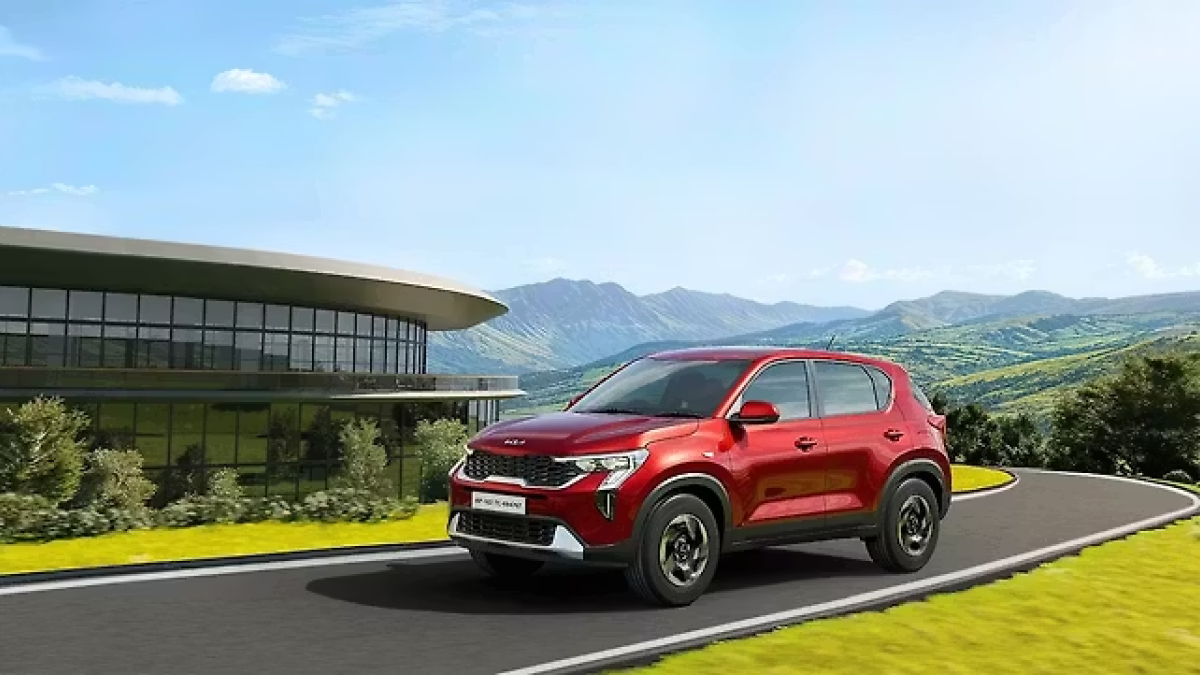
Visually, the test mules indicate that Kia is ditching the rounded, curvy silhouette of the current model in favor of an ultra-modern, boxy, and upright stance. The front fascia boasts a significantly larger, more rectangular grille that replaces the traditional slim “Tiger Nose” design.
Flanking this commanding new face is a sophisticated split-headlamp array. Striking, Sorento-inspired boomerang-shaped LED Daytime Running Lamps (DRLs) sit high up near the flatter bonnet line, while the primary vertical LED projector pods are integrated cleanly lower down into a redesigned front bumper.
The side profile reveals a boxier silhouette with a completely straight roofline, taller window glass for enhanced shoulder room, flush-style roof rails, and standard pull-type door handles. Interestingly, the test mules were spotted rolling on 17-inch dual-tone alloy wheels borrowed from the first-generation Seltos, giving the compact SUV a massive, planted stance. At the rear, the vehicle sports razor-thin vertical LED taillights that perfectly mirror the front DRL signature.
Inside the Cabin: A Massive Technological Leap
While the exterior is rugged, the interior is dropping into ultra-luxury territory. Peeking through the windows of the test mules reveals a completely revamped dashboard layout dominated by a massive twin 12.3-inch curved display setup. This single, seamless glass housing unites the fully digital driver’s instrument cluster with the main touchscreen infotainment system, mimicking the premium cockpit setup found in the EV6.
The feature sheet is expected to set new benchmarks for the segment, adding a panoramic sunroof, a premium 7-speaker Bose sound system, ventilated front seating, and an upgraded connected-car technology suite featuring native AI voice assistance. On the safety front, while the current car offers standard Level 1 Advanced Driver Assistance Systems (ADAS), the second-gen model is heavily rumored to introduce a comprehensive Level 2 ADAS radar and camera suite.
Under the Hood: Familiar Engines and a Future Strong-Hybrid
To keep pricing competitive at launch, Kia will carry forward its highly reliable, diverse powertrain portfolio. However, the real wildcard is a confirmed strong-hybrid powertrain currently under active development for a later release. The table below outlines the expected mechanical layout of the upcoming lineup.
| Engine Configuration | Peak Power Output | Peak Torque | Transmission Options | Market Target & Character |
| 1.2L 4-Cylinder Naturally Aspirated Petrol | 83 PS | 115 Nm | 5-speed Manual Only | Price-conscious city commuters seeking low maintenance |
| 1.0L 3-Cylinder T-GDi Turbocharged Petrol | 120 PS | 172 Nm | 6-speed iMT / 7-speed Dual-Clutch (DCT) | Performance enthusiasts looking for lightning-fast shifts |
| 1.5L 4-Cylinder CRDi Turbocharged Diesel | 116 PS | 250 Nm | 6-speed Manual / 6-speed Torque Converter Automatic | High-mileage highway drivers prioritizing raw torque |
| 1.5L Petrol Strong-Hybrid (Expected 2028) | TBA | TBA | Dedicated Hybrid e-CVT | Ultra-high fuel efficiency (Targeting 25+ km/l) |
With an expected official global unveiling locked in for the second half of 2027, the next-generation Kia Sonet is positioning itself to completely reset expectations in the compact SUV market, proving that small family cars don’t have to compromise on tech, space, or style.
For a complete visual breakdown of these recent highway sightings and a rendering of the upcoming design, check out this detailed Kia Sonet Second-Gen Spy Video Analysis. This video walks through the leaked design details and the interior screen layout seen on the Indian test mules.

