



For a long time, the Indian premium SUV space has forced buyers into a rigid compromise. You could either choose the long-distance safety net of a traditional internal combustion engine (ICE) or leap into the refined, low-running-cost world of battery electric vehicles (EVs) while wrestling with highway charging infrastructure. While strong hybrids have offered a partial bridge, their tiny batteries mean they can only manage a few kilometers on pure electricity.
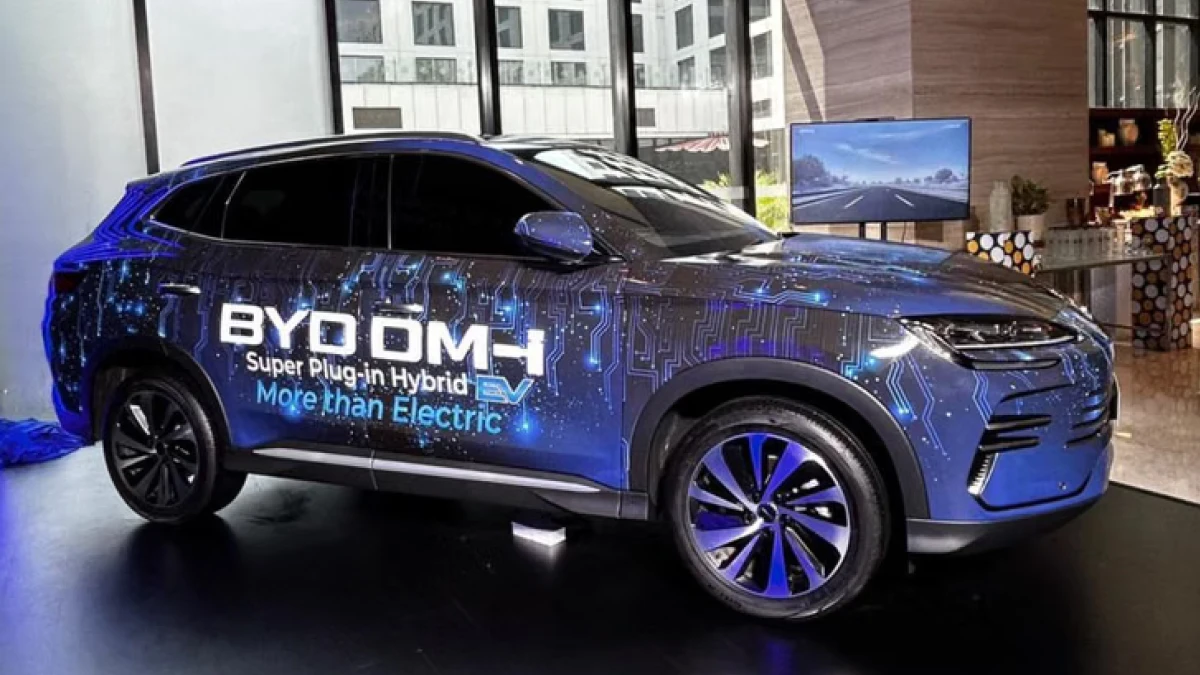
Recognizing a major market opportunity, BYD India has officially showcased its highly acclaimed DM-i (Dual Mode Intelligent) Super Plug-in Hybrid technology, confirming that the BYD Seal U will lead the brand’s alternative powertrain charge in India. Slated for an official market launch toward the end of 2026, this mid-size premium SUV represents a massive shift for the brand, expanding its local lineup beyond pure battery-electric cars.
Unpacking DM-i Tech: An Electric-First Architecture
Unlike traditional parallel hybrid setups that rely primarily on a petrol engine and use a small electric motor for light assistance, BYD’s DM-i platform operates on an electric-first philosophy. In almost all urban driving conditions, the Seal U functions exactly like a pure electric vehicle.
The system relies on three distinct operational states that change automatically without any driver input:
- Pure EV Mode: Drawing energy solely from the 18.3 kWh Blade battery pack, the SUV silently handles daily city commutes with zero tailpipe emissions.
- HEV Series Mode: When the battery level drops below a set threshold, the ultra-efficient 1.5-litre petrol engine fires up. Crucially, it does not drive the wheels directly; instead, it acts strictly as an onboard generator to replenish the battery pack and supply raw power to the traction motor.
- HEV Parallel Mode: During high-speed highway cruising or under heavy acceleration loads, a clutch engages, allowing the petrol engine and electric motor to work together to drive the front wheels directly.
Technical Specifications & Efficiency Metrics
The heart of the Seal U’s efficiency lies in its Xiaoyun 1.5-litre turbocharged hybrid engine, which achieves a world-leading thermal efficiency of 43.04 percent. When paired with its high-output electric traction motor, it balances high-end performance with incredibly low fuel consumption.
The baseline mechanical and performance specifications for the incoming midsize SUV highlight this balance:
| Vehicle Attribute | Technical Specification Details | Real-World & Strategic Advantage |
| Powertrain Type | Plug-in Hybrid Electric Vehicle (PHEV) | Bridges the gap between ICE and full EV ownership seamlessly. |
| Engine Configuration | 1.5L Xiaoyun Turbo-Petrol (Direct Injection) | Engineered specifically for hybrid duty with 43.04% thermal efficiency. |
| Battery Type & Capacity | BYD Ultra-Safe Blade Battery (18.3 kWh) | Structural battery packaging that supports 18 kW DC fast charging. |
| Pure EV Driving Range | Up to 70 Kilometers on a full charge | Allows owners to complete daily city driving without burning petrol. |
| Combined Maximum Range | Over 1,200 Kilometers (Full Tank + Battery) | Completely eliminates range anxiety during long cross-country tours. |
| Claimed Fuel Economy | 4.8 Litres per 100 km (~20.8 km/l) | Drastically lower running costs than conventional petrol midsize SUVs. |
| Acceleration (0-100 km/h) | 5.9 Seconds (AWD Trims) / 8.9 Seconds (FWD) | Delivers instant overtaking performance similar to a 2.0L turbo-petrol. |
| Rapid Charging Capability | 30% to 80% state of charge in 35 Minutes | Quick turnaround times at public DC fast chargers when required. |
Cabin Sophistication: Rotating Screens and Premium Luxuries
Measuring 4,775 mm in length with a long 2,765 mm wheelbase, the Seal U offers a highly spacious 5-seater layout. The interior layout follows BYD’s modern design philosophy, anchored by the brand’s signature 15.6-inch electrically rotatable touchscreen infotainment hub, paired with a crisp 12.3-inch digital driver’s display.
The premium cabin features plush vegan leather upholstery, heated and ventilated front seats, a massive panoramic sunroof, a high-end 10-speaker Infinity audio system, and a PM2.5 air purification system. It also supports Vehicle-to-Load (V2L) functionality, allowing the car’s traction battery to export power to external electronic appliances during outdoor camping trips.
Market Positioning and Competitor Landscape
Expected to sit in the ₹35.00 lakh to ₹45.00 lakh price bracket, the Seal U will carve out a distinct niche. While smaller, localized strong hybrids like the Toyota Urban Cruiser Hyryder operate at a much lower price point, they lack plug-in charging capabilities and have a very limited electric-only range.
Conversely, premium midsize Monocoque rivals like the Hyundai Tucson or the upcoming Jeep Compass updates rely entirely on traditional internal combustion engines, making them significantly more expensive to run in stop-and-go traffic. By offering luxury-car PHEV technology at a mass-market premium price point, BYD is targeting buyers who want the smooth refinement of an electric car without being tethered to a charging grid.
The Verdict
The introduction of the Seal U DM-i marks a crucial turning point for BYD’s expansion goals in India. By eliminating highway range anxiety while maintaining a 70 km pure-electric city envelope, it provides an incredibly practical, high-tech alternative for modern Indian households looking to transition away from traditional fossil fuels.

