


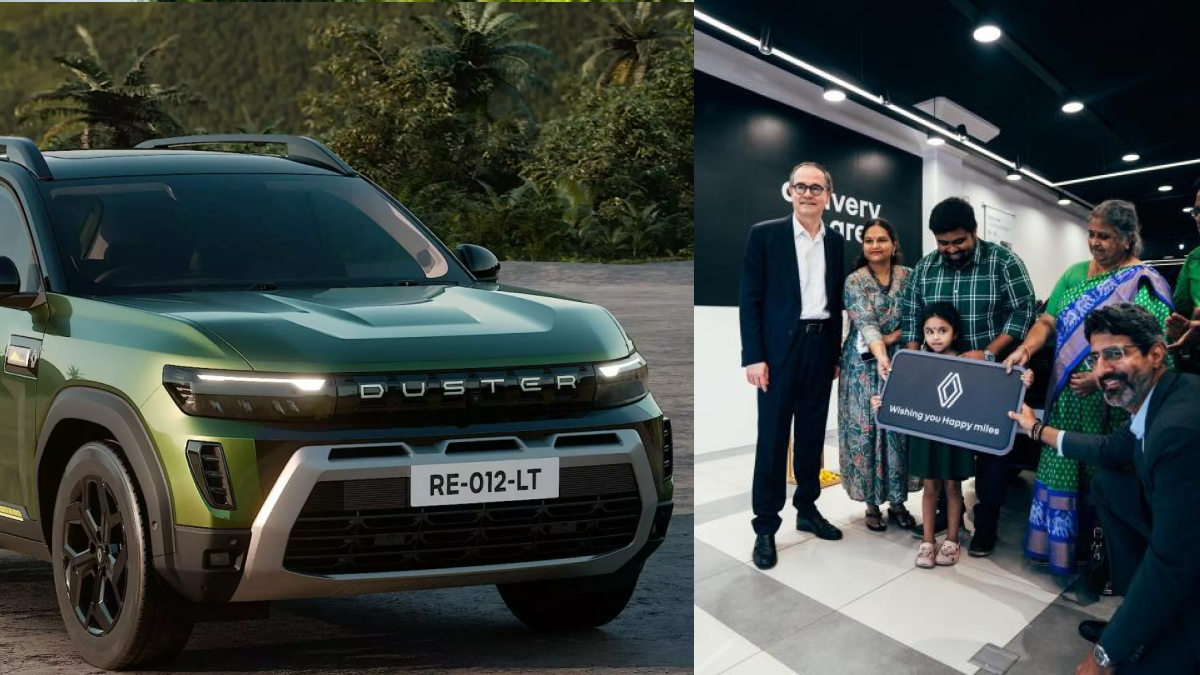
The Renault-Nissan Alliance has officially kickstarted the new fiscal year on an exceptionally high note. According to the freshly released domestic passenger vehicle sales data for April 2026, both automakers have posted massive volume growth that signals a definitive structural turnaround for the alliance in India. After weathering a prolonged period of contracting market share, a sustained product onslaught—headlined by the iconic return of the Duster brand and the introduction of new localized utility platforms—has effectively triggered a dual-brand volume expansion.
Combined domestic wholesales for the alliance climbed to 8,616 units in April 2026, a steep upward trajectory from the 4,351 units recorded during the exact same period in April 2025. This performance highlights the growing consumer appetite for the alliance’s newly launched architectures.
Renault India: The Duster Effect Triggers 108% YoY Growth
Renault India emerged as a primary growth engine last month, securing the number nine position among domestic original equipment manufacturers (OEMs). The company reported total domestic wholesales of 5,413 units, representing a spectacular 108.03% year-on-year (YoY) increase compared to the modest ,2602 units it moved in April 2025.
The undisputed catalyst behind this volume doubling is the third-generation Renault Duster. Officially launched in March 2026 with customer deliveries commencing on April 14, the legendary midsize SUV immediately claimed the top spot in Renault’s portfolio
| Renault Model | April 2026 Wholesales (Units) | Portfolio Share (%) | YoY Performance |
| Renault Duster | 2,359 | 43.58% | Fresh Launch (Incremental) |
| Renault Triber | 1,917 | 35.41% | +36.83% YoY |
| Renault Kiger | 727 | 13.43% | +19.97% YoY |
| Renault Kwid | 410 | 7.57% | -31.09% YoY |
While the entry-level Kwid hatchback continues to feel the pressure of structural shifts toward higher segments, the refreshed 2026 Triber MPV remains a rock-solid secondary pillar for the brand. Equipped with a thoroughly updated dual-tone cabin dashboard and segment-first automatic climate control on its top-tier Emotion trim, the Triber brought in strong double-digit growth.
Nissan India: Gravite and Magnite Build Dual Pillars
Mirroring its alliance partner’s positive trajectory, Nissan Motor India registered an 83.13% YoY growth in domestic sales, dispatching 3,203 units to dealerships compared to 1,749 units in April 2025. When factoring in Nissan’s substantial export operations from the Oragadam manufacturing facility in Chennai, the brand’s total monthly volume reached an impressive 5,388 units.
The sub-four-metre Magnite crossover remains the core volume driver for Nissan, contributing 1,775 units and accounting for 55.42% of overall domestic sales. However, the true story of Nissan’s retail expansion lies with its newest introduction: the Nissan Gravite. Securing the second spot right out of the gate, the family-focused Gravite accounted for 1,428 units last month. This new model successfully gives Nissan a competitive, multi-tiered presence in the utility segment rather than relying solely on a single product line.
Looking Ahead: The ‘FutuREady India’ Roadmap
The alliance’s April performance acts as a direct validation of its broader mid-term strategy. On April 16, 2026, leadership unveiled the aggressive “FutuREady India” strategic plan, designed to elevate the country into one of Renault-Nissan’s top three global manufacturing hubs by 2030.
What to Expect Over the Next 12–18 Months:
- Strong Hybrid Technology: The rollout of the Duster Strong Hybrid E-Tech variant (featuring a 1.8-litre petrol engine and a 1.4 kWh battery pack) is slated to commence around Diwali 2026 to capture the premium efficiency market.Park+
- Nissan Tekton Mid-Size SUV: Nissan is scheduled to officially unveil its highly anticipated mid-size SUV, the Tekton, on July 9.RushLane
- Next-Gen Sub-Compact Offerings: Production planning is already underway for a 7-seater C-SUV variant of the Duster framework alongside a localized sub-compact lifestyle SUV line by 2027.
By moving away from budget hatchbacks and focusing entirely on high-margin, heavily localized SUV architectures, the Renault-Nissan Alliance is effectively rebuilding its brand equity in the Indian automotive space. As production stabilizes and order backlogs clear, the coming quarters will determine if this volume surge can translate into sustained market share.
