


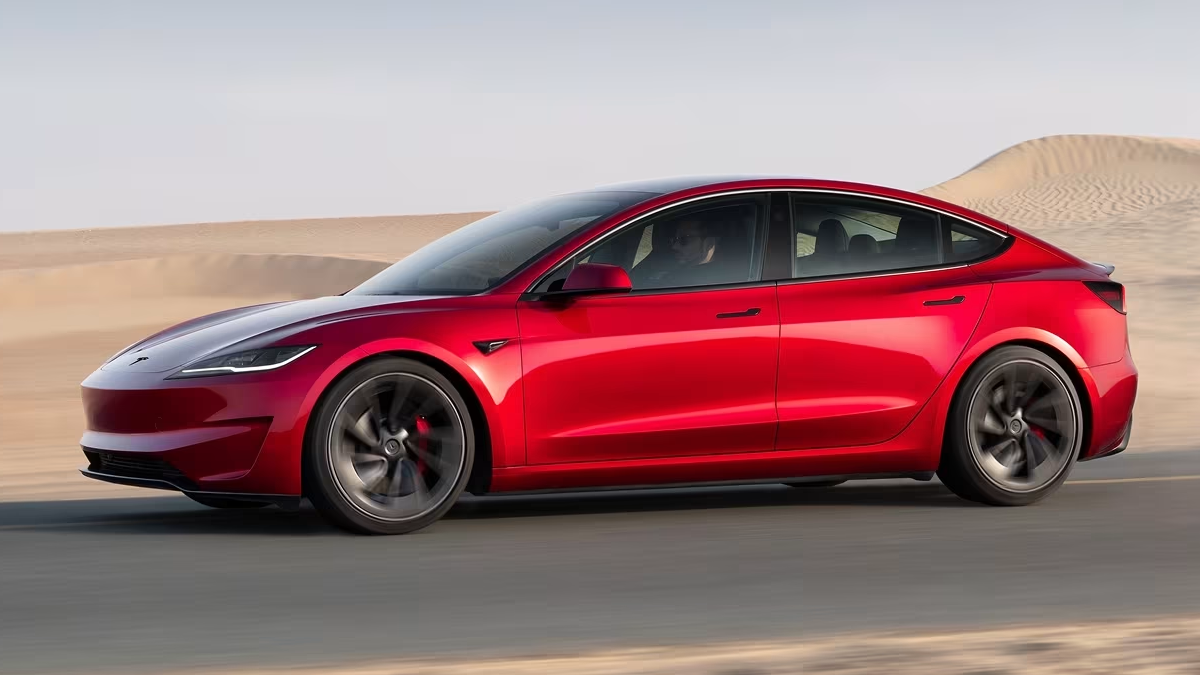
The decade-long “will-they-won’t-they” saga between Elon Musk’s Tesla and the Indian government has finally reached a definitive conclusion. For years, automotive enthusiasts and industry analysts tracked every tweet, factory site scout, and policy debate, hoping to see a localized “Giga India” become reality.
However, India’s Ministry of Heavy Industries recently confirmed that Tesla has officially paused its plans to establish a local manufacturing facility.
Instead, the American EV giant is shifting its focus toward a pure import model, establishing an initial footprint through luxury retail showrooms and experience centers in major hubs like Mumbai, Delhi, Gurugram, and Bengaluru. This decision marks a major turning point for the premium electric vehicle landscape in India.
The Tariff Deadlock That Killed the Factory
The core obstacle that derailed local manufacturing wasn’t a lack of interest, but an unyielding policy deadlock. The fundamental disagreement boiled down to a classic chicken-and-egg dilemma:
- Tesla’s Stance: The company wanted the Indian government to slashed hefty import duties first, allowing them to test market demand with fully built units before committing billions of dollars to build a factory.
- The Government’s Stance: New Delhi stood firm on its “Make in India” resolve, demanding a concrete local manufacturing commitment before granting major tariff relaxations.
Even when the Indian government introduced a tailored EV policy—offering a slashed 15% customs duty on vehicles priced above $35,000—it came with a strict catch. Automakers had to commit at least $500 million toward local manufacturing lines within three years. While global brands like Mercedes-Benz, Skoda-Volkswagen, and Hyundai engaged with this policy, Tesla ultimately declined to participate.
Supply Chains and Global Realities
Beyond the tariff standoff, several harsh operational and economic realities made a local factory difficult to defend to investors:
1. Global Production Overcapacity
Tesla’s existing global plants, such as Gigafactory Berlin, are currently operating below peak capacity (around 65%). With a global inventory buildup, investing massive capital into a brand-new manufacturing hub in an unproven market simply didn’t make financial sense.
2. Supply Chain Immaturity
Compared to established hubs like China, India’s localized supply chain for high-volume EV production is still developing. Crucial ecosystems for battery cell manufacturing, advanced semiconductors, and localized component sourcing require more time to mature before they can support Tesla’s massive manufacturing scale.
Pricing, Shifting Strategies, and the Retail Reality
With domestic production off the table, Tesla’s strategy relies entirely on Completely Built Units (CBUs). Because these vehicles are subject to high import duties, pricing remains firmly in the luxury bracket.
For instance, the recently launched 2026 Tesla Model Y starts at approximately ₹59.89 lakh (ex-showroom), with the premium six-seater Model Y L stretching up to ₹61.99 lakh.
+-------------------------------------------------------------+
|               TESLA INDIA RETAIL FOOTPRINT                  |
+-------------------------------------------------------------+
|  Showrooms / Experience Centers:                            |
|  • Delhi  • Mumbai  • Gurugram  • Bengaluru                 |
+-------------------------------------------------------------+
|  Service Model:                                             |
|  • Over-The-Air (OTA) Remote Diagnostics                    |
|  • Two Physical Hubs (Gurgaon & Mumbai)                     |
+-------------------------------------------------------------+
To counter these premium prices, Tesla is introducing a distinct ownership experience to the Indian market. The brand is leaning heavily on a digitally driven service model, relying on Over-The-Air (OTA) software updates and remote diagnostics to resolve minor issues without requiring a traditional workshop visit. For physical maintenance, early buyers must rely on just two specialized service stations located in Gurgaon and Mumbai.
The Competitive Gauntlet
Tesla’s premium import strategy faces a tough climb because the Indian EV market is booming without it. Domestic electric car sales skyrocketed by 84% in fiscal year 2026, reaching nearly 200,000 units—but this growth is concentrated in highly affordable price segments
Tesla’s ₹60-lakh luxury models are entering a price-sensitive market dominated by heavily localized alternatives:
- Tata Motors: Commands the mass market with highly accessible options like the Nexon EV, Tiago EV, and upcoming premium projects like the Sierra EV.
- BYD & Hyundai: Offering highly competitive premium features, established nationwide service networks, and localized assembly advantages at lower price points.
By comparison, Tesla’s cumulative sales in India remain under 400 total units since retail operations began.
What the Future Holds
While a dedicated Indian Gigafactory is officially off the table for the foreseeable future, the door isn’t completely shut forever. If Tesla’s import strategy successfully captures the premium demographic, and if India’s charging network and component ecosystem mature over the next few years, the economic math may change.
For now, Indian buyers can look forward to the official commencement of Model Y deliveries this June. Tesla has arrived in India—not as a mass-market disrupter, but as an exclusive, tech-forward luxury import.
