





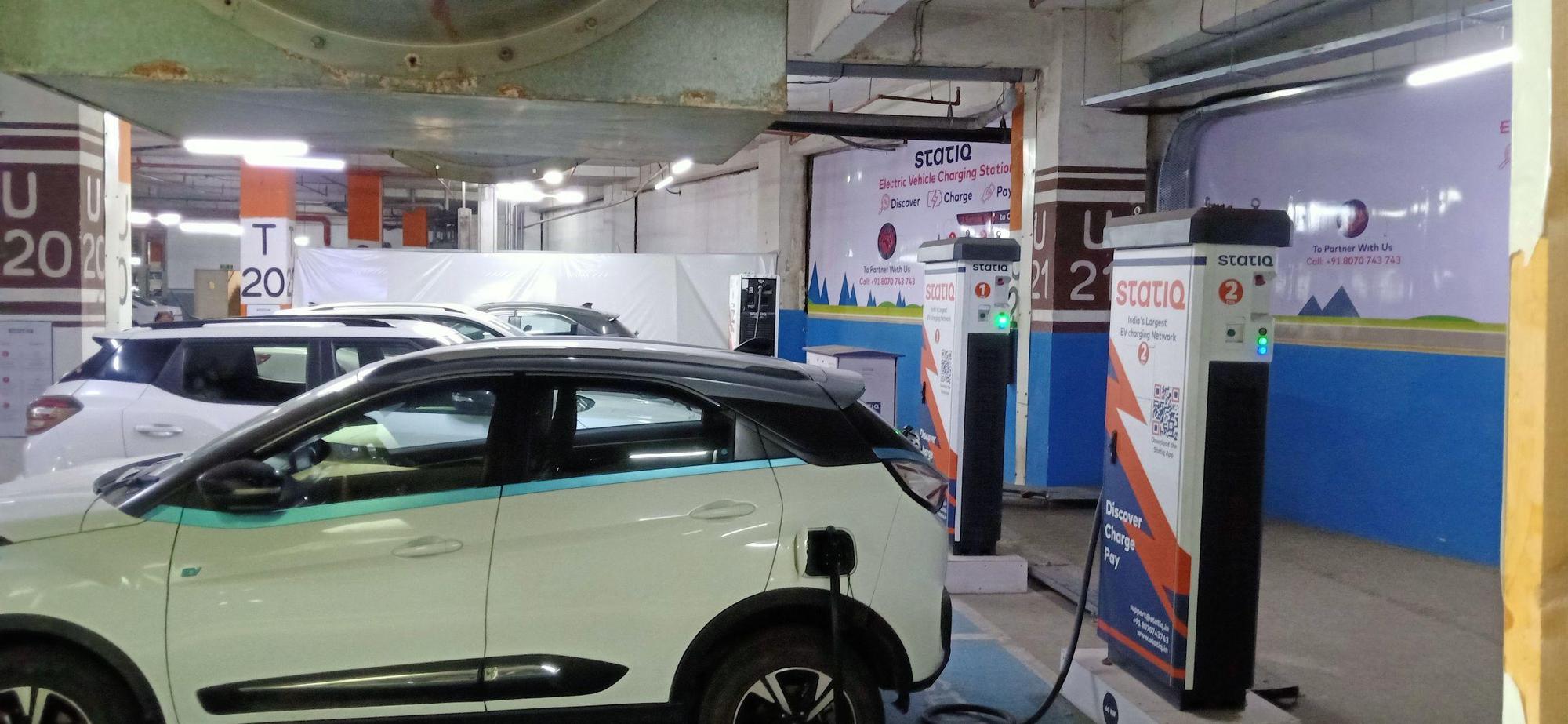
For years, the biggest hurdle for potential EV buyers in cities like Gurugram and Faridabad hasn’t been the cost of the car, but the headache of charging it. Residents in older societies often faced uphill battles with RWAs over wiring and safety.
The new draft notification aims to end those disputes before the first brick is even laid. By integrating charging infrastructure into the design phase, the government is ensuring that future homeowners can “fill up” as easily as they park their cars.
1. The Ratios: How Many Chargers?
The proposed amendments lay out strict, mandatory ratios for different types of developments. Whether you are building a boutique office or a massive group housing society, the “EV tax” on space is now clearly defined.
- Commercial Projects (Malls, Offices, Hotels): Developers must install one charging point for every three parking spaces.
- Residential & Group Housing: The mandate requires one charging point for every five parking spaces.
- 100% EV-Ready: Beyond the active chargers, the code requires all parking spots to be “EV-ready,” meaning they must have the conduits and wiring pre-installed for future expansion.
2. The FAR Incentive: A Win for Developers
To soften the blow of increased construction costs, the Haryana government is offering a significant “space” bribe.
The “FAR” Exemption: Any area dedicated to EV charging infrastructure—including the equipment and specialized parking zones—will be excluded from Floor Area Ratio (FAR) calculations.
This allows developers to meet the new mandates without sacrificing sellable apartment space or commercial square footage. It effectively makes the infrastructure “free” from a regulatory footprint perspective, encouraging builders to go beyond the minimum requirements.
3. Basement Charging & Fire Safety
One of the most debated topics in Indian urban planning has been the safety of EV chargers in confined spaces. The new draft provides much-needed clarity:
| Category | Policy Provision |
| Basement Parking | Permitted (specifically first basement level) |
| Stilt Parking | Permitted |
| Safety Mandate | Must have mechanical/cross ventilation and automated fire suppression systems. |
| Banned Areas | EV charging is strictly prohibited in automated/stack parking systems due to fire risk. |
4. Why This Matters for the Real Estate Market
This policy shift will fundamentally change how properties are marketed in the NCR. Within the next 12 months, we expect “EV-ready parking” to move from a premium luxury feature to a standard checklist item, much like 24/7 power backup.
For buyers, this means a significant increase in property value and long-term utility. For the state, it’s a massive step toward its goal of becoming an EV manufacturing and adoption hub. The public has until May 26, 2026, to submit feedback, after which these rules will likely become the law of the land.
Would mandatory home charging make you more likely to switch to an electric car this year? Let us know in the comments!

