


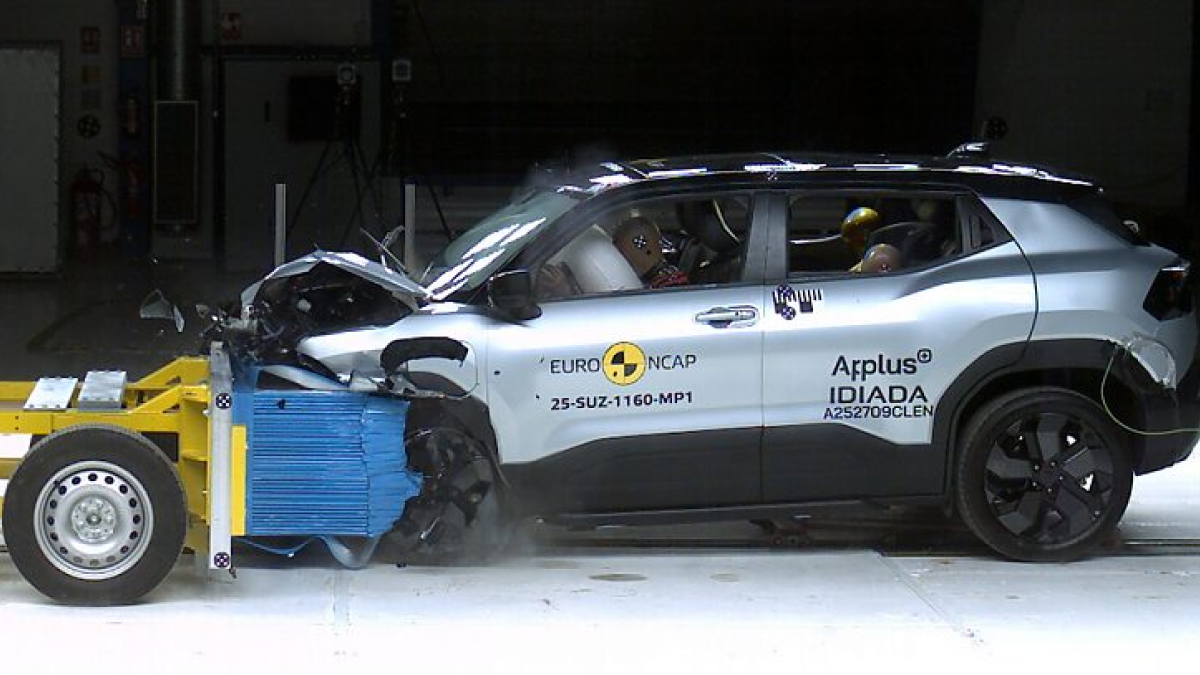
The global electric vehicle race is no longer just about range and rapid charging; safety has become the ultimate frontier for consumer trust. In a significant development for the Australasian market, the Suzuki eVitara—the brand’s first global strategic electric SUV—has officially secured a 4-star safety rating from the ANCAP (Australasian New Car Assessment Program).
While the eVitara remains a formidable contender in the EV space, this result offers a nuanced look at how modern safety protocols are evolving in 2026.
The Scores: Where the eVitara Shined
Tested for the Australia and New Zealand markets, the eVitara demonstrated “sound” levels of protection across several categories. The SUV, which is manufactured at Suzuki’s Gujarat plant in India, recorded the following percentage scores:
- Child Occupant Protection: 87%
- Vulnerable Road User Protection: 79%
- Adult Occupant Protection: 77%
- Safety Assist: 71%
One of the standout highlights was the Child Occupant Protection, where the vehicle scored 43 out of 49 points. In both side impact and frontal offset scenarios, the protection for child dummies was rated as “Good” for all critical body areas, earning maximum points in those specific dynamics.
Why 4 Stars Instead of 5?
In the world of 2026 safety standards, the difference between four and five stars often comes down to the most stringent technical requirements. ANCAP’s protocols have become increasingly difficult to clear, and the eVitara missed the top-tier club due to a few specific factors:
- Chest Protection: During the full-width frontal crash test, the protection for the driver’s chest was rated as “Weak,” while the rear passenger’s head and chest protection was rated as “Marginal.”
- The Center Airbag Factor: The absence of a center airbag—designed to prevent front-seat occupants from colliding with each other during a side impact—limited its “Adult Occupant Protection” score.
- Safety Assist Limitations: While the eVitara features a comprehensive Level 2 ADAS suite, it lacks a Child Presence Detection (CPD) system and an autonomous emergency braking (AEB) system that functions while reversing. These omissions prevented the “Safety Assist” score from hitting the 5-star threshold.
A Regional Perspective: ANCAP vs. Bharat NCAP
Interestingly, the same made-in-India eVitara recently secured a perfect 5-star rating from Bharat NCAP. This discrepancy highlights the variation in global testing protocols. While Bharat NCAP focuses heavily on core structural integrity and crash protection, ANCAP places a much higher weightage on pedestrian safety (Vulnerable Road User) and advanced electronic driver aids (Safety Assist).
Standard Safety Tech Across the Lineup
Despite the 4-star result, Suzuki hasn’t skimped on the fundamentals. Every eVitara variant comes equipped with:
- 7 Airbags (including a rare driver’s knee airbag).
- HEARTECT-e Platform: Constructed with over 60% high-tensile steel to absorb impact energy.
- Full ADAS Suite: Including Lane Keep Assist (LKA), Emergency Lane Keeping (ELK), and Adaptive Cruise Control.
The Verdict
The 4-star ANCAP rating confirms that the Suzuki eVitara is a fundamentally safe, well-engineered SUV. For the everyday driver, the “Good” ratings in side-impact and pole tests provide significant peace of mind. As Suzuki continues to refine its EV lineup, the eVitara stands as a solid pillar of the brand’s commitment to global safety standards.
Does a 4-star global rating influence your purchase decision, or do you prioritize the 5-star local Bharat NCAP score? Join the conversation in the comments below!

