



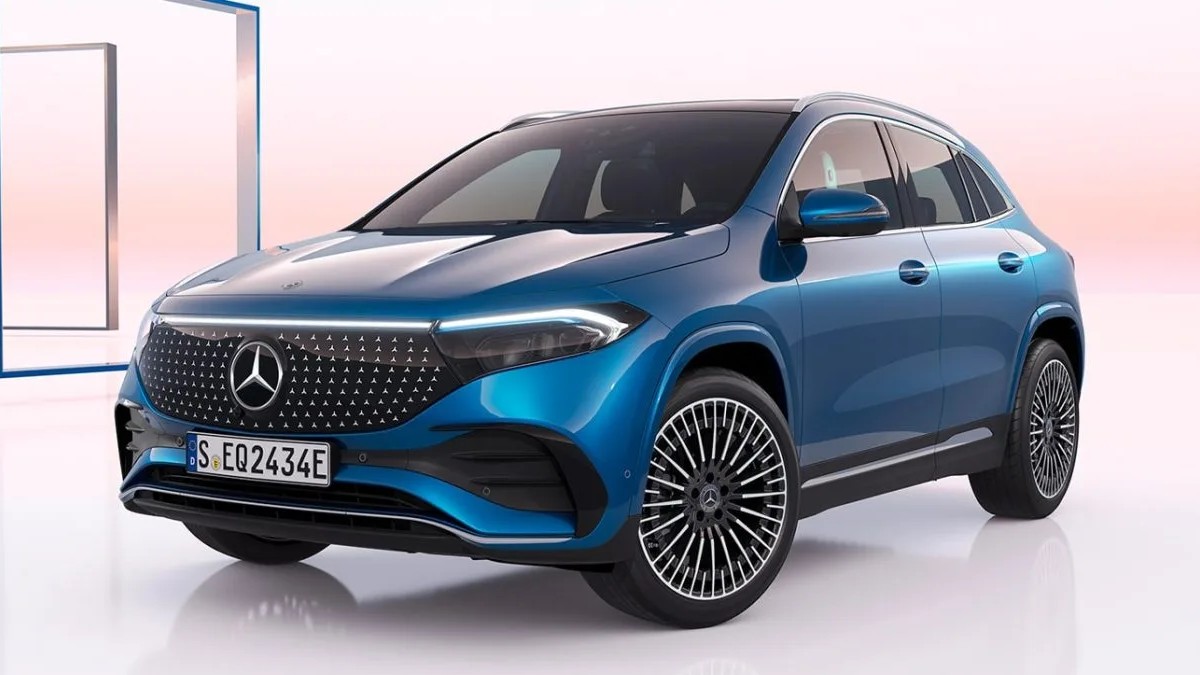
In a landmark decision for the global electric vehicle industry, the Korea Fair Trade Commission (KFTC) has imposed a fine of 11.24 billion won (approximately $7.65 million) on Mercedes-Benz. The penalty, announced on March 10, 2026, targets both the German headquarters and its South Korean subsidiary for allegedly misleading consumers and dealers regarding the manufacturers of the battery cells used in their flagship EQ series.
The Core of the Deception: CATL vs. Farasis
The antitrust regulator’s investigation centered on internal sales guidelines distributed to dealerships in June 2023. These documents reportedly suggested that the Mercedes-Benz EQE and EQS models were equipped exclusively with battery cells from CATL, the world’s leading battery manufacturer known for its high market share and reliability.
However, the KFTC found that a significant portion of these vehicles—specifically four out of six EQE variants—were actually fitted with cells from Farasis Energy. Unlike CATL, Farasis is a much smaller player with a global market share of roughly 1–2%. More critically, Farasis had a documented history of a large-scale recall in China in 2021 due to fire risk concerns—information that the KFTC asserts Mercedes-Benz intentionally concealed from its sales materials.
Investigation Triggered by Incheon Fire
The scrutiny intensified following a high-profile fire in August 2024, where a Mercedes-Benz EQE ignited in an underground parking lot in Incheon. The blaze caused extensive damage to over 100 nearby vehicles and led to a “battery phobia” among the South Korean public. When the KFTC traced the battery in the burned vehicle back to Farasis Energy, it launched a deep dive into the company’s marketing and dealer training protocols.
The regulator concluded that approximately 3,000 vehicles equipped with Farasis batteries were sold under these misleading guidelines, generating roughly 281 billion won in revenue. In response, the KFTC applied a 4% surcharge rate—the legal maximum—marking the first time such a high penalty has been used for unfair customer inducement in South Korea.
Legal Repercussions and Industry Impact
Beyond the financial penalty, the KFTC has referred both the German headquarters and the Korean unit to prosecutors for further criminal investigation. This escalation signals that South Korean authorities now view battery transparency as a matter of public safety rather than a mere commercial dispute.
Mercedes-Benz Korea has officially disputed the ruling, stating that it “firmly disagrees” with the KFTC’s findings and plans to pursue an administrative lawsuit. The company maintains that it has provided accurate information to its customers.
Regardless of the legal outcome, this case underscores a permanent shift in the EV market. As consumers become more sophisticated, the “brand weight” of a battery supplier is becoming as significant as the engine specifications were in the era of internal combustion. For automakers, the era of treating battery sourcing as a “trade secret” is likely over, as transparency becomes the new gold standard for consumer trust.

