




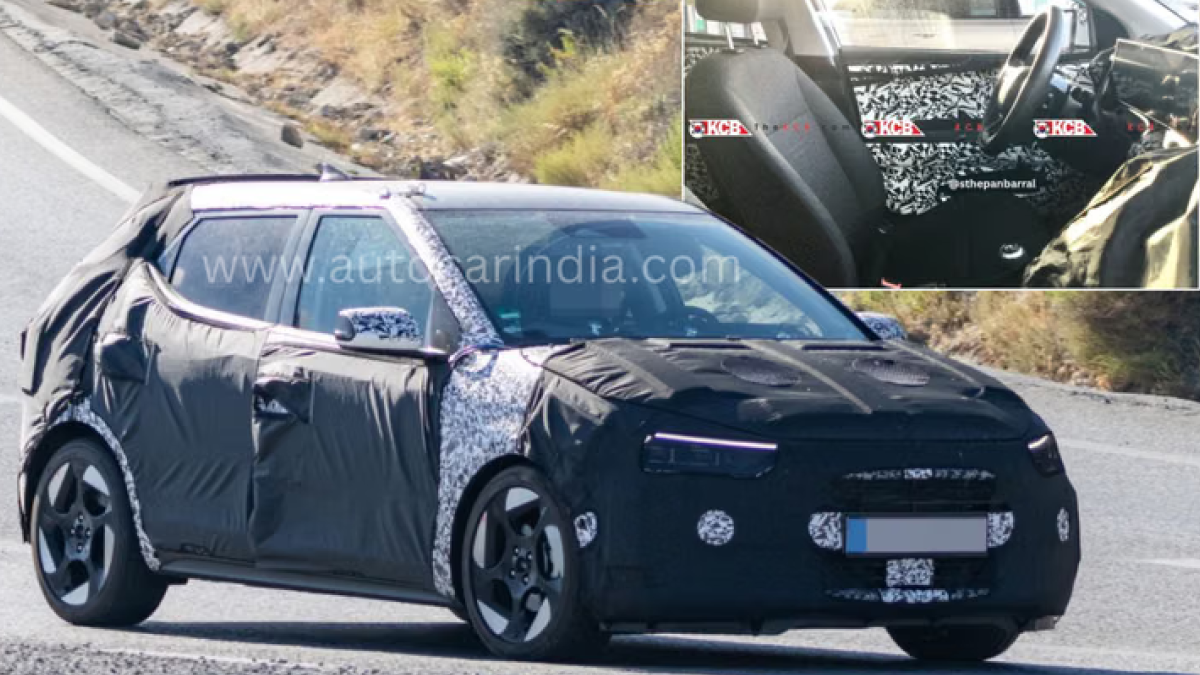
Hyundai’s fourth-generation i20 has once again been spotted undergoing cold-weather testing in Scandinavia, but the latest set of spy images provides our most intimate look yet at the hatchback’s interior. As of March 2026, it is clear that Hyundai is not merely performing a cosmetic facelift; the i20 is undergoing a fundamental digital transformation to keep pace with the premium shifts seen in the SUV segment.
The most significant takeaway from the leaked photos is the adoption of a panoramic curved display. This single-piece glass bezel houses two 12.3-inch screens—one for the digital instrument cluster and another for the primary infotainment hub. This layout is a direct inheritance from the second-generation Venue launched late last year, signaling Hyundai’s intent to standardize a high-tech “glass cockpit” across its entry-premium portfolio.
A Tech-Centric Redesign
Beyond the dual-screen setup, the spy images reveal a completely overhauled dashboard architecture. The traditional physical buttons for the climate control system appear to have been replaced by a more streamlined touch-sensitive panel, though a few tactile dials remain for volume and tuning.
Interestingly, the test mule features a new three-spoke steering wheel that omits the traditional Hyundai “H” logo. In its place are four illuminated dots, which represent the letter “H” in Morse code—a design cue previously reserved for Hyundai’s premium Ioniq EV line. This subtle branding shift suggests that the i20 will be marketed with a more “software-defined” identity, appealing to a younger, tech-savvy demographic that prioritizes cabin ambiance over traditional luxury.
Crossover Influences and Exterior Hints
While the interior is the headline, the camouflaged exterior provides clues to the i20’s new “Sensuous Sportiness” direction. The 2026 model appears to sit slightly higher, with more muscular, flared wheel arches and a steeper rake for the A-pillar. These “crossover” proportions are likely a strategic move to compete with the rising popularity of micro-SUVs, giving the hatchback a tougher, more commanding presence on the road.
At the rear, the spy shots reveal a more raked windscreen and what appears to be a connected LED light bar, similar to the one found on the new Verna. The test vehicle was also riding on a new set of star-pattern, dual-tone alloy wheels that add to the vehicle’s aggressive stance.
Powertrain and Launch Expectations
Mechanically, the next-gen i20 is expected to remain conservative initially. In India, it will likely retain the 1.2-litre naturally aspirated petrol engine for the standard trims and the 1.0-litre Turbo GDi for the N Line variant. However, industry rumors point toward the introduction of a 48V mild-hybrid system to improve city efficiency and help the model meet stricter 2027 emission standards.
With global testing currently in its final stages, the fourth-generation Hyundai i20 is expected to make its world premiere in late 2026, with an Indian market arrival scheduled for the first half of 2027. By integrating Level 2 ADAS and a 360-degree camera system—features currently missing in most premium hatchbacks—Hyundai is positioning the new i20 to reclaim its crown as the most feature-rich car in its class.

