


The Indian automotive landscape is bracing for a tectonic shift as JSW MG Motor India—the newly forged joint venture between the JSW Group and SAIC—unveils its aggressive “Mission 2026” strategy. On February 17, 2026, the company confirmed a massive capital infusion of ₹3,000 to ₹4,000 crore aimed at fundamentally altering its manufacturing footprint and product diversity.
With a target to sell nearly 300,000 units annually, MG is no longer just “the EV brand”; it is positioning itself as a New Energy Vehicle (NEV) powerhouse.
The Six-Model Offensive: What’s Coming?
While the brand previously focused on niche EV segments, 2026 will see the launch of six new models designed to span the ₹7 lakh to ₹70 lakh price bracket.
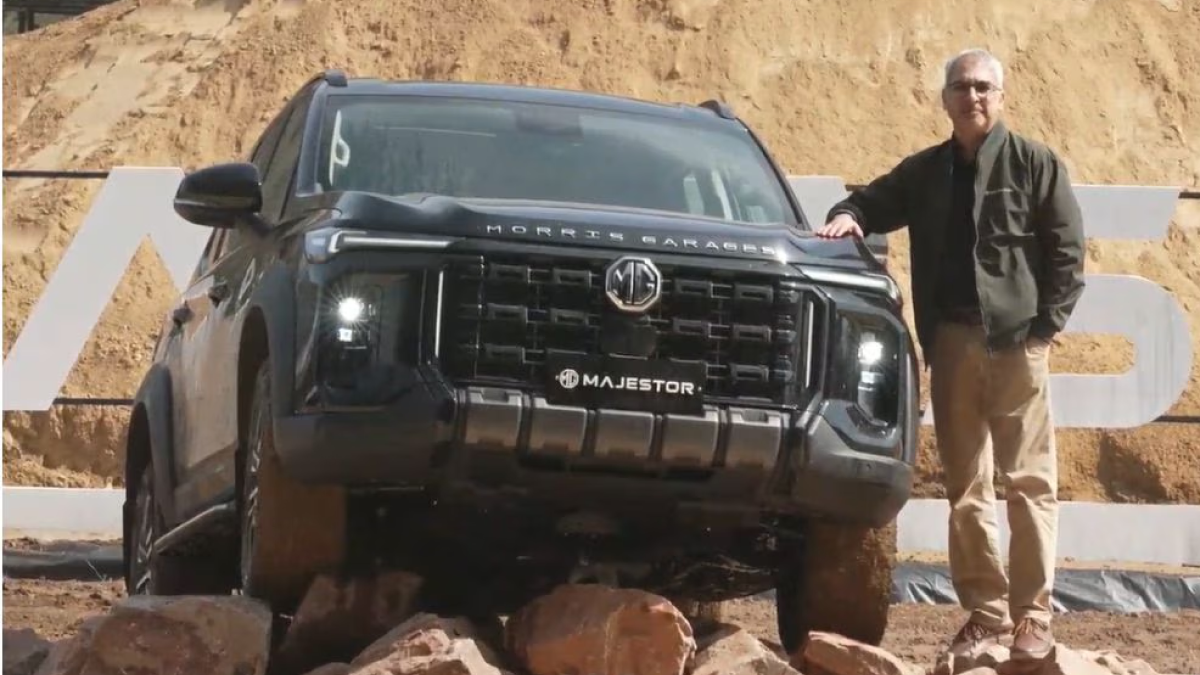
- The Flagship Arrival: Leading the pack is the MG Majestor, unveiled just days ago on February 12. Positioning itself in a new “D+ SUV” segment, the Majestor is designed to lure buyers away from the Toyota Fortuner with its 810mm water-wading depth and Level 2 ADAS.
- The PHEV Pioneer: In a first for the mass-premium segment, MG will debut a Plug-in Hybrid (PHEV) SUV (codenamed 520). Expected to be based on the global Wuling Starlight 560 platform, this 7-seater will feature a 1.5-litre petrol engine paired with a 20.5 kWh battery, offering roughly 100 km of pure electric range.
- Mainstream & Premium Splits: The lineup will be divided between the standard MG channel for high-volume models and the new “MG Select” network for premium offerings like the Cyberster and the M9 MPV.
Engineering a Manufacturing Surge
The reported investment isn’t just for marketing; it’s for hardware. MG’s existing facility in Halol, Gujarat, is currently operating at nearly 70% capacity. To meet the 2026 demand, the company is:
- Establishing a Second Plant: Construction is slated to begin by late 2026, aimed at tripling total production capacity to 3 lakh units.
- Aggressive Localization: Moving away from import-heavy assembly, MG is targeting a localized battery assembly line and higher domestic sourcing for its hybrid drivetrains to keep pricing competitive against rivals like Mahindra and Tata.
Strategic Pivot: The Hybrid “Bridge”
Managing Director Anurag Mehrotra has been vocal about the “center of gravity” for the business. While 80% of MG’s current sales come from pure EVs like the Windsor EV, the 2026 strategy acknowledges that a total EV transition takes time.
By introducing PHEVs, MG is offering a “bridge” for Indian consumers who want the 1,100 km total range of a hybrid without the range anxiety of a pure battery-powered car. This “NEV-first” approach aims to keep 75% of MG’s sales mix in the green energy category, even as they continue to offer diesel options in flagship models like the Majestor.
The Verdict for 2026
MG Motor India is essentially betting the house on the fact that Indian buyers are ready for premium technology. If they can successfully execute the launch of their PHEV SUV at a price point that undercuts traditional luxury hybrids, they may well disrupt the status quo of the mid-to-high SUV market.
