


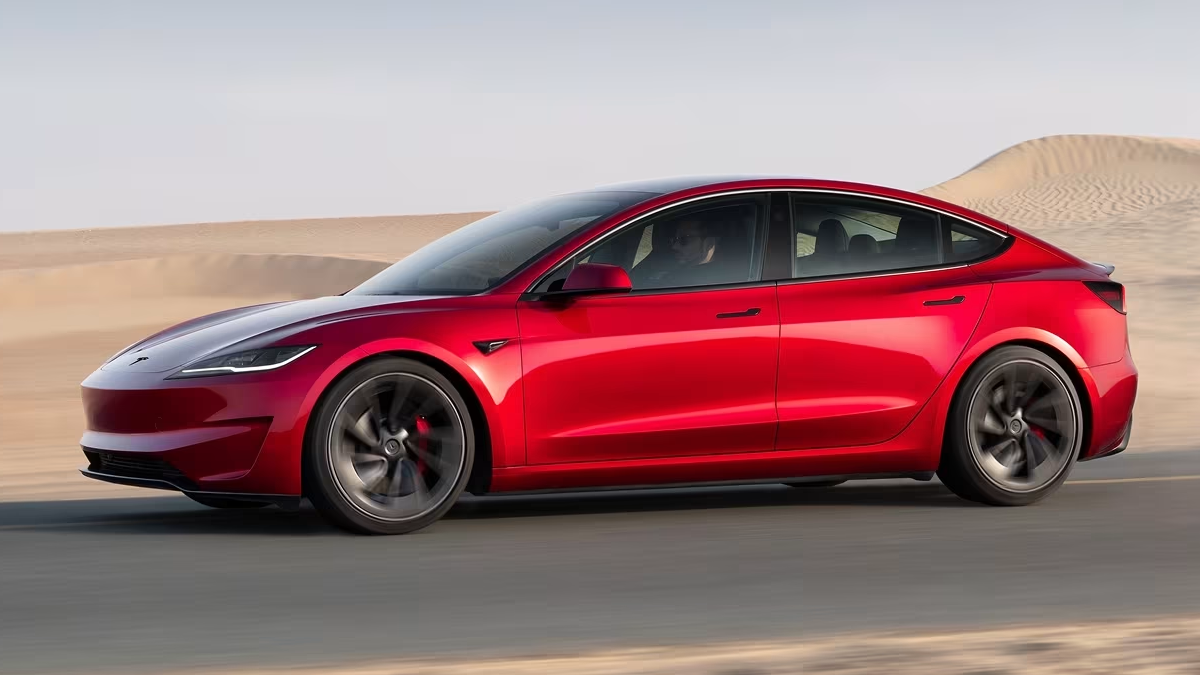
The automotive world is currently facing a “reality check” in its largest market. China has officially formalized a ban on fully hidden, electrically operated door handles—a design choice once hailed as the future of EV aesthetics. This isn’t just a suggestion; it is a mandatory shift under the newly released GB 48001-2026 standard, aiming to end the era where sleek styling compromises passenger safety.
The Ministry of Industry and Information Technology (MIIT) has confirmed that starting January 1, 2027, every new passenger vehicle sold in China must feature a mechanical redundancy for its doors.
Why the “Flush” Trend is Failing the Safety Test
While Tesla popularized flush handles for their 0.02 Cd aerodynamic benefit, Chinese regulators are focused on a much grimmer statistic. Following several high-profile incidents—including a fatal crash in Chengdu where rescuers had to use saws to access a burning EV—the MIIT determined that pure electronic latches are too risky.
The “Red Line” Requirements:
- Mechanical Redundancy: Every door (except the tailgate) must be openable via a physical linkage that works even if the car’s 12V or high-voltage battery is completely dead.
- Operating Space: The law now mandates a minimum recess of 60mm x 20mm x 25mm behind the handle. This ensures that even a person wearing gloves can gain a firm grip during an emergency.
- Force Resistance: Exterior handles must now withstand a pull force of at least 500 Newtons without snapping—ensuring that if a door is jammed, rescuers can apply significant leverage.
The Cost of Compliance
For global giants like Tesla, Xiaomi, and BMW, this creates a massive logistical headache. Approximately 60% of the top-selling New Energy Vehicles (NEVs) in China currently use some form of hidden handle.
- The Grace Period: While new models must comply by 2027, vehicles already in production have until January 2029 to be retrofitted or redesigned.
- Supply Chain Shift: Analysts estimate that retooling for traditional or “semi-flush” mechanical handles could cost manufacturers over RMB 100 million per model.
A Global Ripple Effect
China isn’t just “following” global rules anymore; it is setting them. Because China is the primary volume driver for most EV brands, we will likely see these “failsafe” handles becoming the global standard. Manufacturers are unlikely to spend millions designing two different door systems for different continents.
Ultimately, this move signals a pivot in automotive philosophy. The industry is moving away from “minimalism at any cost” and returning to a world where mechanical reliability is the ultimate luxury.
