


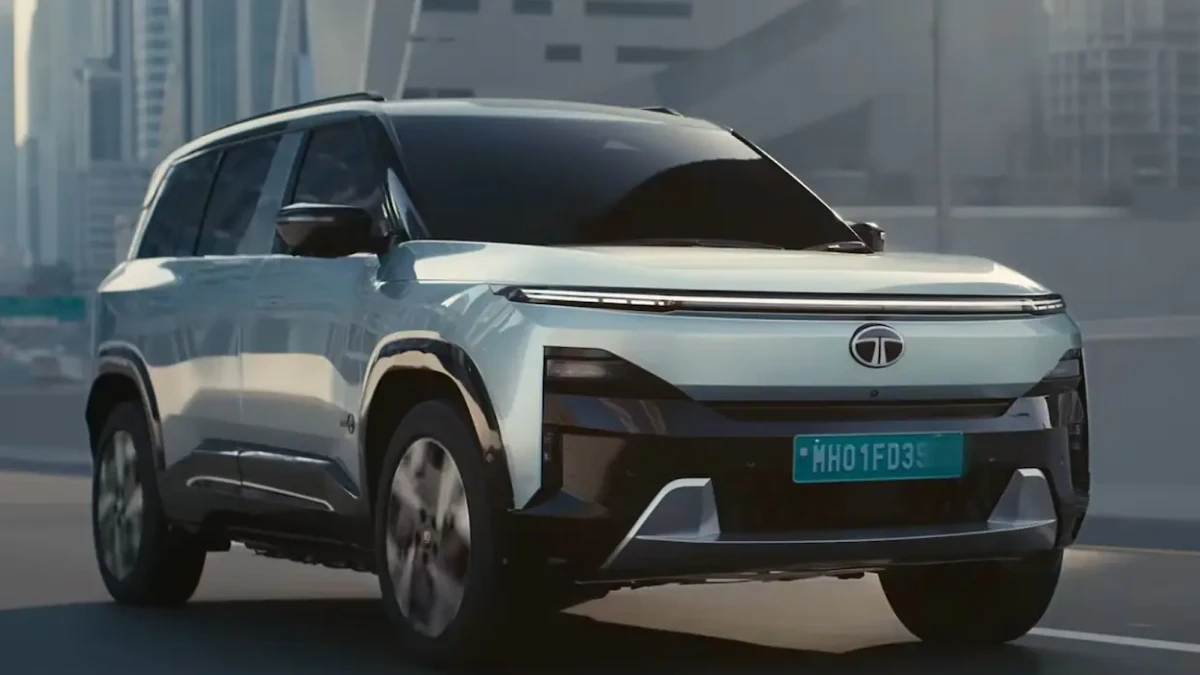
India’s electric passenger vehicle (EV) market achieved a record milestone in July 2026, registering 32,928 retail units according to Vahan portal data. Representing an 83.13% year-on-year (YoY) surge over the 17,981 units recorded in July 2025, July marked the second consecutive month where electric car sales crossed the 30,000-unit threshold.
Electric vehicles accounted for 7.9% of all new passenger car registrations in India during the month—up from 5.1% in July 2025. This growth is driven by expanding manufacturing capacity, elevated fossil fuel prices, and new model releases.
1. Overall Passenger EV Market Performance (July 2026)
While monthly volumes adjusted slightly by 1.78% compared to June’s all-time high of 33,524 units, July 2026 represents the highest July sales volume recorded in India’s electric mobility history. Cumulative passenger EV retail sales for the first four months of Fiscal Year 2027 (April–July 2026) surpassed 1,18,000 units, setting the industry on track to exceed 3.5 lakh annual units.
The table below outlines the overall retail growth trajectory of India’s electric passenger vehicle market:
| Performance Metric | July 2026 Volume / Share | July 2025 Comparative | June 2026 Comparative | YoY Growth (%) | MoM Growth (%) |
| Total Passenger EV Retails | 32,928 Units | 17,981 Units | 33,524 Units | + 83.13% | – 1.78% |
| PV Market EV Penetration | 7.90% Market Share | 5.10% Market Share | 7.85% Market Share | + 280 bps | + 5 bps |
| Top 3 OEM Market Share | 82.32% Concentration | 91.20% Concentration | 83.10% Concentration | – 888 bps | – 78 bps |
| New Entrant Market Share | 9.36% Combined | < 0.50% Share | 8.80% Share | + 886 bps | + 56 bps |
2. Manufacturer Sales Breakdown & Market Share Distribution
The competitive landscape of India’s electric car market is undergoing a structural transition. While Tata Motors maintains its market leadership, rapid expansion by Mahindra & Mahindra and the entry of new volume brands like Maruti Suzuki and VinFast are broadening consumer choices.
The table below provides a manufacturer-wise breakdown of retail EV sales for July 2026:
| Rank | Manufacturer / OEM Name | July 2026 Retails | July 2025 Retails | YoY Growth (%) | June 2026 Retails | July 2026 Market Share |
| 1 | Tata Motors Passenger Vehicles | 13,678 Units | 6,732 Units | + 103.18% | 12,801 Units | 41.54% |
| 2 | Mahindra & Mahindra | 7,742 Units | 3,416 Units | + 126.64% | 8,181 Units | 23.51% |
| 3 | JSW MG Motor India | 5,689 Units | 5,902 Units | – 3.61% | 6,186 Units | 17.28% |
| 4 | Maruti Suzuki India | 1,600 Units | — | N/A (New) | 2,000 Units | 4.86% |
| 5 | VinFast Auto India | 1,482 Units | — | N/A (New) | 1,448 Units | 4.50% |
| 6 | BYD India | 749 Units | 613 Units | + 22.19% | 926 Units | 2.27% |
| 7 | Hyundai Motor India | 566 Units | 719 Units | – 21.28% | 374 Units | 1.72% |
| 8 | Kia India | 470 Units | 65 Units | + 623.08% | 540 Units | 1.43% |
| 9 | BMW India (Luxury Lead) | 369 Units | 270 Units | + 36.67% | 385 Units | 1.12% |
| 10 | Mercedes-Benz India | 165 Units | 115 Units | + 43.48% | 152 Units | 0.50% |
| 11 | Toyota Kirloskar Motor | 123 Units | — | N/A (New) | 35 Units | 0.37% |
| 12 | Tesla India | 115 Units | — | N/A (New) | 140 Units | 0.35% |
| 13 | Citroën India | 51 Units | 68 Units | – 25.00% | 28 Units | 0.15% |
| 14 | Volvo Car India | 49 Units | 58 Units | – 15.52% | 53 Units | 0.15% |
| — | Others / Imports | 80 Units | 23 Units | + 247.83% | 275 Units | 0.24% |
| Total | Industry Total | 32,928 Units | 17,981 Units | + 83.13% | 33,524 Units | 100.00% |
3. Deep Dive: Top 3 EV Manufacturers
July 2026 EV Market Share Breakdown:
■ Tata Motors: 41.5% [13,678 units]
■ Mahindra: 23.5% [7,742 units]
■ JSW MG Motor: 17.3% [5,689 units]
■ Others: 17.7% [5,819 units]
A. Tata Motors: Dominance Backed by Multi-Body Portfolio
Tata Motors retained its position as India’s leading EV manufacturer, delivering 13,678 units in July 2026. This represents a 103.18% YoY doubling in volume and a 6.85% sequential increase from June. Tata commands a 41.54% market share, supported by a multi-model strategy spanning the Tiago EV, Punch EV, Nexon EV, Curvv EV, and the newly introduced Sierra EV.
B. Mahindra & Mahindra: Rapid INGLO Platform Growth
Mahindra secured second position with 7,742 units registered, recording an impressive 126.64% YoY growth. Built on its dedicated INGLO skateboard architecture, models like the BE 6 coupe-SUV, XEV 9e, and three-row XEV 9S helped increase Mahindra’s EV market share to 23.51% (up from 19.00% in July 2025).
C. JSW MG Motor: Windsor EV Drives Volume
JSW MG Motor India ranked third, delivering 5,689 units in July 2026. While the manufacturer experienced a 3.61% YoY decline due to supply chain capacity adjustments, the MG Windsor EV remains one of the highest-selling individual electric car models in urban metro markets.
4. Mainstream Expansion & New Market Entrants
The presence of legacy automakers and international brands entering the Indian EV market highlights the transition from early adoption to mainstream market scale.
The table below contrasts the entry strategies, battery capacities, and initial sales momentum of new mainstream entrants:
| Manufacturer / Model Lineup | Primary Battery Spec | Claimed Range (MIDC) | July 2026 Retails | Key Market Strategy |
| Maruti Suzuki (e-Vitara) | 49 kWh / 61 kWh LFP | 420 km – 500 km | 1,600 Units | Local production at Hansalpur, Gujarat |
| VinFast (VF3 & VF5) | 37.2 kWh LFP | 315 km – 348 km | 1,482 Units | Direct-to-consumer Tamil Nadu plant assembly |
| Toyota (Urban Cruiser Ebella) | 49 kWh / 61 kWh LFP | 420 km – 500 km | 123 Units | Shared platform collaboration with Maruti Suzuki |
| Tesla (Model Y / Model 3) | 60 kWh LFP | 455 km – 533 km | 115 Units | CBU imports in major tier-1 metros |
5. Luxury Electric Vehicle Segment Dynamics
The luxury EV segment recorded steady expansion in July 2026, registering 749 cumulative units across premium brands. BMW India led the luxury space with 369 units, reflecting a 36.67% YoY gain driven by demand for the iX1, i4, and iX models.Mercedes-Benz India followed with 165 units (+ 43.48% YoY), supported by locally assembled EQB and EQE SUV variants.
The table below summarizes luxury passenger EV registrations:
| Luxury Manufacturer | July 2026 Sales | July 2025 Sales | YoY Growth (%) | Bestselling Luxury EV Models |
| BMW India | 369 Units | 270 Units | + 36.67% | BMW iX1, BMW i4 Gran Coupé, BMW iX |
| Mercedes-Benz India | 165 Units | 115 Units | + 43.48% | Mercedes-Benz EQB, EQE 500 SUV |
| Volvo Car India | 49 Units | 58 Units | – 15.52% | Volvo EX30, Volvo XC40 Recharge |
| Porsche & Audi India | 32 Units | 18 Units | + 77.78% | Porsche Taycan, Audi Q8 e-tron |
| Segment Total | 615 Units | 461 Units | + 33.41% | Combined Luxury EV Volume |
6. Macro Drivers Behind India’s EV Acceleration
Industry data from the Federation of Automobile Dealers Associations (FADA) identifies four primary macro factors driving the 83.13% YoY growth in electric passenger vehicles:
- Fuel Price Differentials: Sustained high petrol and diesel prices have reduced the total cost of ownership (TCO) payback period for private EV buyers to under 2.5 years for high-mileage drivers.
- PM E-DRIVE Incentive Scheme: The Centre’s expanded ₹44,038-crore manufacturing and charging infrastructure allocation has improved public charger availability along national highways and urban corridors.
- Dedicated EV Skateboard Platforms: The shift from retrofitted ICE-derived EVs to dedicated EV platforms (e.g., Tata acti.ev, Mahindra INGLO, Maruti e-Vitara) provides better interior packaging, longer range, and faster DC charging.
- State-Level Subsidies & Registration Waivers: States like Maharashtra, Uttar Pradesh, Tamil Nadu, and Gujarat continue to offer 100% road tax exemptions for battery electric vehicles.
Conclusion & Outlook
India’s electric passenger vehicle segment demonstrated strong momentum in July 2026, delivering 32,928 retail units and achieving a 7.9% market penetration rate. As market leader Tata Motors expands production capacity and Mahindra accelerates deliveries of its INGLO-platform lineup, competition is intensifying.
With new manufacturing facilities ramping up and charging networks expanding across tier-2 and tier-3 cities, India’s electric car market is positioned for sustained long-term growth.
