


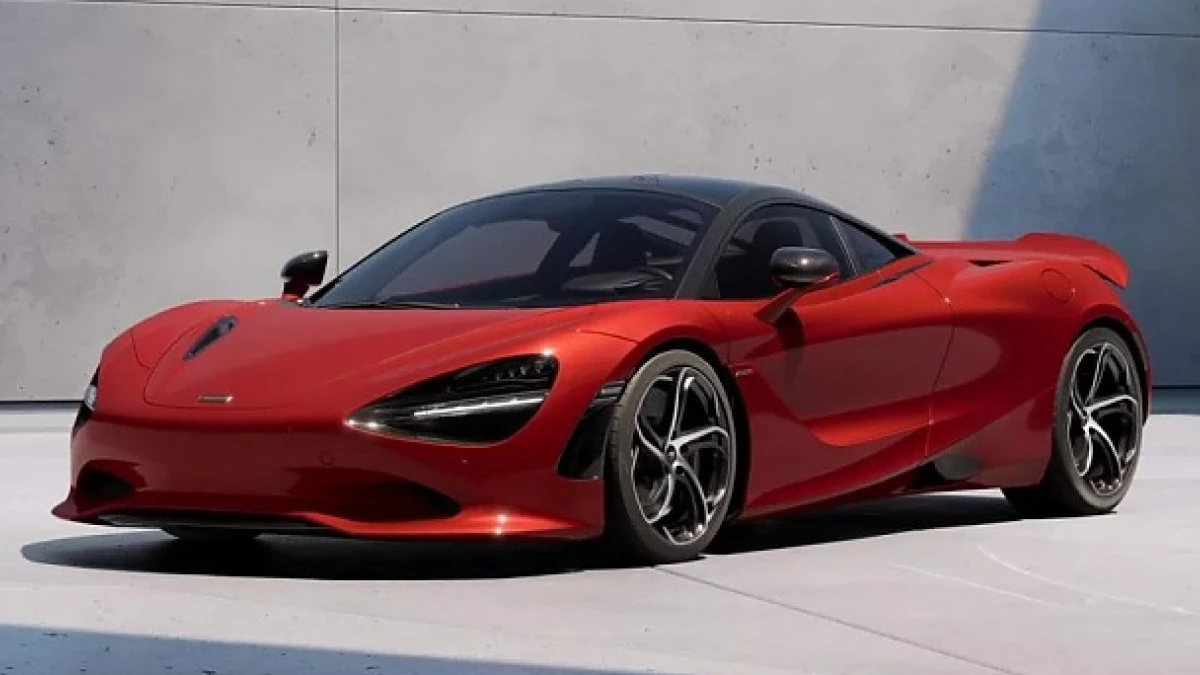
For years, India’s ultra-luxury car market has operated under a protective wall of heavy import taxes. High-end vehicles arriving as Completely Built Units (CBUs) have routinely faced import duties of 110%, effectively doubling their original sticker prices by the time they hit dealership floors. However, a major structural shift is officially underway. Following successful late-stage bilateral negotiations at the G7 Summit, Prime Minister Narendra Modi and British PM Keir Starmer have announced that the historic India-UK Comprehensive Economic and Trade Agreement (CETA) will officially enter into force on July 15, 2026.
This comprehensive trade pact will fundamentally alter the premium automotive space. By systematically reducing import tariffs on British-made vehicles over a phased timeline, the agreement will introduce unprecedented pricing dynamics to the Indian luxury car market.
Decoupling the Numbers: The Quota and Displacement Structure
The tariff reductions introduced by the FTA are not a universal, immediate drop. Instead, commerce ministry officials have engineered a highly strategic, quota-based mechanism designed to protect domestic manufacturing ecosystems while gradually opening up market access.
For the first year of implementation, conventional internal combustion engine (ICE) passenger cars with large powerplants—specifically petrol engines exceeding 3,000cc and diesel engines above 2,500cc—will see their customs duties plummet from 110% down to 30%. This massive drop is capped under a strict first-year import quota of 10,000 units.
Mid-tier and mass-market vehicles are categorized under a separate framework. Petrol models between 1,500cc and 3,000cc, diesel variants up to 2,500cc, and sub-1,500cc urban commuters will see their tariffs drop to 50% (down from 66%) under a tight 5,000-unit annual quota limit per category.
By the fifth year of the pact, these temporary tier brackets will merge into a singular, highly competitive 10% flat import duty rate across all conventional engine sizes, backed by an expanded total annual quota allowance of 37,000 vehicles.
Interestingly, alternative powertrains are on a completely different timeline. Electric vehicles (EVs), hybrids, and hydrogen fuel-cell models priced under £40,000 receive zero tariff concessions during the initial phase. Concessions for premium green vehicles priced above the £40,000 threshold will only begin from the sixth year of the agreement, eventually settling at a 10% duty rate after a decade.
Expected Impact on British Luxury Performance Marques
Because the immediate tariff benefits favor large-displacement internal combustion engines, elite British performance and luxury brands are positioned to reap the most immediate rewards.
| British Luxury Brand | Key Models Impacted | Displacement Bracket | Pre-FTA Duty Rate | First-Year FTA Duty | Initial Pricing Trajectory |
| Jaguar Land Rover | Range Rover SV, Range Rover Sport SV | >3,000cc Petrol / >2,500cc Diesel | 110% | 30% (Within Quota) | Price reductions of ₹40 lakh to ₹75 lakh already active |
| McLaren Automotive | 750S Coupe, 750S Spider, McLaren GT | >3,000cc Twin-Turbo V8 | 110% | 30% (Within Quota) | Anticipated price cuts ranging from ₹2.32 crore to ₹3.32 crore |
| Aston Martin | DB12, Vantage, DBX707 Luxury SUV | >3,000cc Twin-Turbo V8 | 110% | 30% (Within Quota) | Substantial reductions expected across sports car portfolios |
| Rolls-Royce Motor Cars | Phantom, Ghost, Cullinan SUV | 6.75L Twin-Turbo V12 | 110% | 30% (Within Quota) | Major correction anticipated for high-displacement V12 flagships |
| Bentley Motors | Continental GT, Flying Spur, Bentayga | 4.0L V8 Configurations | 110% | 30% (Within Quota) | Significant luxury-tier re-pricing expected by late 2026 |
Strategic Market Takeaway
The July 15 rollout of the India-UK FTA represents a watershed moment for the Indian automotive industry. While boutique sports car makers like McLaren and Aston Martin will enjoy an immediate surge in order books due to corrected retail pricing, the long-term impact on major players is much deeper.
For Jaguar Land Rover, which imports its top-tier Range Rover flagships as CBUs, the trade deal provides an immediate competitive advantage over German rivals like Mercedes-Benz, BMW, and Audi, whose parent companies must wait for the conclusion of the India-EU FTA to receive similar tariff relief.
As the quota expands toward 37,000 units over the next five years, the premium automotive segment in India will transform from an artificially inflated luxury niche into a highly volume-driven, competitive global playground.
