


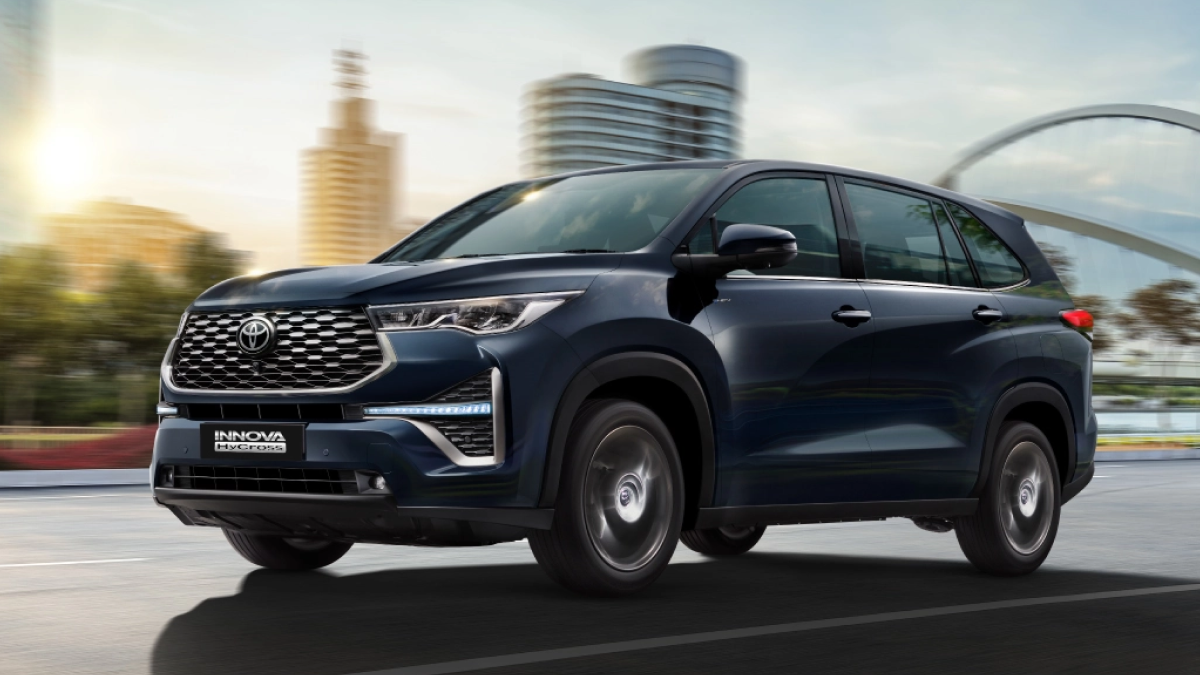
While the automotive world spends massive energy debating when pure electric vehicles will completely take over, Toyota Kirloskar Motor (TKM) has been quietly executing a masterclass in transitional engineering. The Japanese automaker officially announced that its cumulative strong hybrid sales in India have sailed past the 3,00,000-unit milestone.
This figure isn’t just a win for Toyota’s sales team; it serves as a massive proof of concept. It proves that despite a heavy policy tilt toward battery electric vehicles (BEVs) in India, everyday car buyers are overwhelmingly choosing a middle path.
The Models Driving the Momentum
Toyota commands an iron-clad 80% market share in India’s strong hybrid segment. If you factor in the badge-engineered models it manufactures for Maruti Suzuki (like the Grand Vitara), the Toyota-developed hybrid ecosystem controls well over 90% of the market.
The heavy lifting behind this 3 lakh milestone comes down to two highly successful models:
- The Innova HyCross: A massive hit in both the private and fleet segments, racking up an impressive 62,586 units in the recent fiscal year.
- The Urban Cruiser HyRyder: Bringing strong hybrid tech to the ultra-competitive mid-size SUV space, contributing 35,745 units in the same period.
The remaining numbers are rounded off by Toyota’s premium flagships—the executive Camry sedan and the ultra-luxury Vellfire MPV.
Why the Tech is Winning Over Indian Buyers
The sudden surge in hybrid adoption across urban Indian markets comes down to practical economics and stress-free ownership. Toyota’s Self-Charging Hybrid Electric Vehicle (SHEV) tech uses an intelligent system that pairs a conventional petrol engine with an electric motor.
In heavy city traffic, the car runs primarily on battery power. When you need to get moving on the highway, the petrol engine kicks in seamlessly.
The real genius of this system, however, lies in how it answers the two biggest roadblocks keeping buyers away from pure EVs:
- Zero Range Anxiety: You don’t need to hunt for operational fast chargers on a road trip. You fill up at a normal petrol pump, and the car charges its own battery via regenerative braking and engine power.
- Real-World Efficiency: A hybrid like the HyRyder can return close to 27 km/l in test conditions. Compared to a standard petrol SUV of the same size, the fuel savings over 5 years of ownership are massive.
Looking Ahead: A Practical Bridge to the Future
Toyota has long defended its “multi-pathway” strategy, arguing that India’s transition to clean mobility requires a mix of hybrids, flex-fuels, and EVs rather than a forced, single-track shift. With a reassuring 8-year warranty on their hybrid batteries and excellent resale value emerging in the pre-owned market, buyer confidence is at an all-time high.
At current sales velocities, Toyota is well on its way to hitting the 4,00,000 mark within the next 18 months. For now, they have firmly established that the practical bridge to India’s green future is already built—and it doesn’t need to be plugged into a wall.
