


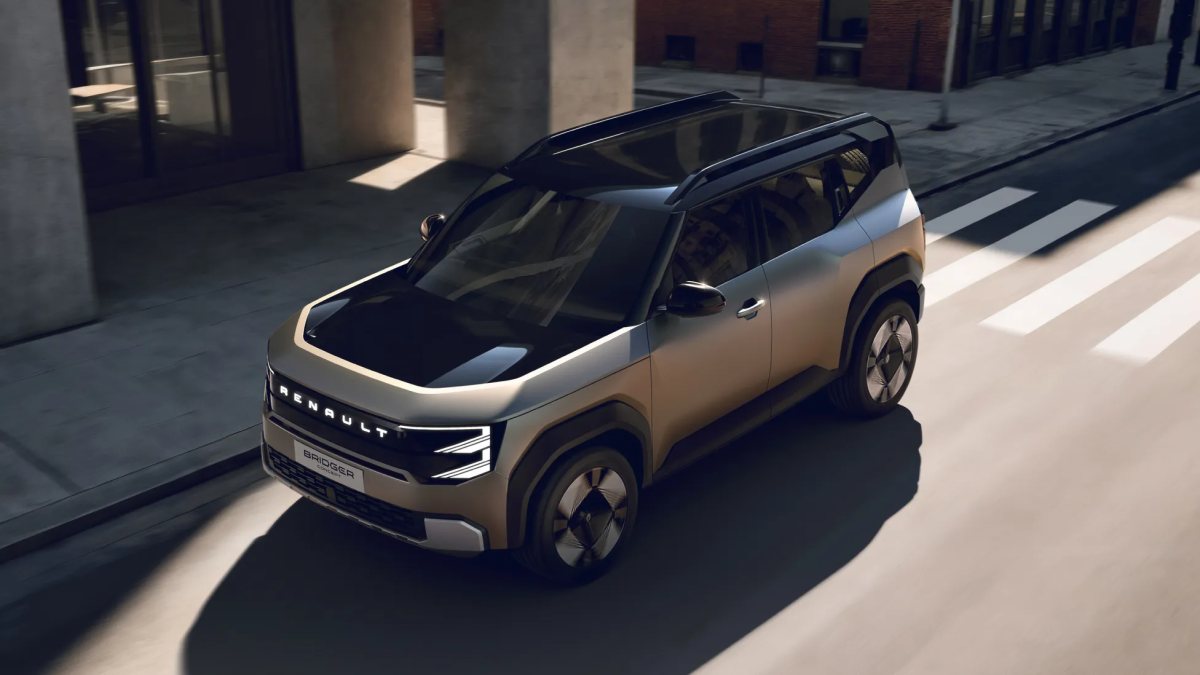
The Indian automotive landscape is witnessing a strategic pivot. On April 16, 2026, Renault Group’s global leadership officially signaled the next phase of their Indian journey, and at the heart of this expansion is a brand-new nameplate: the Renault Bridger.
Slotted between the budget-friendly Kiger and the legendary new-gen Duster, the Bridger is being developed as a “premium-rugged” compact SUV. It is specifically designed to bridge the gap for customers who find the Kiger too small but aren’t quite ready for the mid-size SUV price bracket.
The Foundation: The New RGEP Platform
Unlike previous models that relied on the aging CMF-A architecture, the Bridger is built on the all-new RGEP (Renault Group Entry Platform). This modular foundation is a significant leap forward, offering:
- Enhanced Safety: Engineered to meet 5-star Bharat NCAP standards from day one.
- Powertrain Flexibility: The RGEP is a “multi-energy” chassis, meaning it can house petrol, hybrid, and pure electric powertrains on the same assembly line.
Under the Hood: The 1.2L Turbocharged “HR12”
The most exciting news for enthusiasts is the debut of a new engine. While the Kiger uses a 1.0L unit, the Bridger is expected to feature a 1.2-litre turbocharged 3-cylinder petrol engine (codenamed HR12).
This engine is expected to produce roughly 110 hp and 190 Nm of torque, putting it directly in competition with the Mahindra XUV 3XO and the Tata Nexon. Furthermore, Renault is testing a factory-fitted Dual-Cylinder CNG version of this engine, which utilizes under-floor tank placement to ensure the boot remains 100% usable for luggage.
Design: The “Solaris” Aesthetic
Leaked sketches and teaser images from the Chennai briefing suggest that the Bridger will debut Renault’s new “Solaris” design language.
- Exterior: Look for a high, flat hood, “C-shaped” LED signature lights, and a massive 205mm ground clearance.
- Interior: The cabin will likely feature a 10.25-inch “floating” infotainment system with wireless smartphone integration and a first-for-Renault India dual-pane sunroof.
Renault Bridger vs. The Competition (2026)
| Feature | Renault Bridger (Expected) | Tata Nexon (2026) | Maruti “Y43” Micro-SUV |
| Engine | 1.2L Turbo Petrol | 1.2L Revotron Turbo | 1.2L Z-Series Hybrid |
| Ground Clearance | 205 mm | 208 mm | 190 mm |
| Unique Selling Point | Under-floor CNG Tanks | High Safety / EV Choice | Best-in-class Mileage |
| Tech | 10.25-inch Screen / ADAS | Ventilated Seats / 360 Cam | Heads-up Display |
The Road to Electrification: Bridger EV
Renault has confirmed that an electric version, the Bridger EV, is already in the second stage of prototype testing. Aiming for a 2027 launch, the electric variant is rumored to feature a 45 kWh LFP battery, targeting a real-world range of approximately 380 km.
The Verdict
The Bridger is more than just a new SUV; it is Renault’s attempt to reclaim its status as a disruptor in India. By focusing on a “power-packed” 1.2L engine and solving the CNG boot-space problem, Renault is tackling the exact pain points of the modern Indian family.
Would you pick the rugged Bridger over the segment-leading Nexon or Brezza? Let us know your thoughts in the comments!
