



For half a decade, Genesis held an absolute stranglehold on automotive technology rankings. But in a surprising upset, Cadillac has officially claimed the top spot in J.D. Power’s 2026 U.S. Tech Experience Index (TXI) Study.
Scoring 641 points out of 1,000, Cadillac comfortably outperformed Genesis (559) and BMW (524) among premium brands. However, the real story here isn’t just a corporate victory for General Motors. The 2026 study reveals a massive shift in consumer psychology: car owners are actively rejecting “technology for the sake of technology.” The features that won awards this year weren’t the flashiest—they were the most useful.
Cadillac Is No. 1 in J.D. Power’s 2026 Tech Experience Index
Cadillac’s ascent is remarkable. In 2025, the brand ranked second behind Genesis with a score of 526. Jumping to 641 points represents one of the most significant year-over-year improvements in the study’s recent history.
| Premium Brand | 2026 TXI Score | Position |
| Cadillac | 641 | 1st |
| Genesis | 559 | 2nd |
| BMW | 524 | 3rd |
Important Clarification: This award does not mean Cadillac mathematically packs more microchips or lines of code into its cars than anyone else. J.D. Power’s TXI index measures execution—how effectively a brand introduces new technology and, crucially, how much owners actually enjoy using it without encountering glitches.
How J.D. Power Measures Automotive Innovation
To understand why Cadillac won, you have to understand the methodology. The 2026 TXI study surveyed 68,084 owners of new 2026 model-year vehicles after 90 days of ownership. It analyzed 40 distinct automotive technologies divided into five core categories:
- Comfort and convenience
- Connected vehicle
- Driver assist
- Electric vehicle
- Smart vehicle (Included in the study but not award-eligible this year)
This structure is vital because a car loaded with complex features will actually score poorly if owners find those features confusing, buggy, or useless in daily life.
What Helped Cadillac Win?
Cadillac’s victory wasn’t driven by sci-fi concepts; it was driven by practical execution.
For instance, the Cadillac Escalade received J.D. Power’s premium award in the “Comfort and Convenience” category specifically for its camera rear-view mirror technology.
Why does this matter? It proves that technologies offering immediate, obvious benefits perform exceptionally well. An unobstructed rear view—especially in a massive SUV like the Escalade—solves an everyday problem. It isn’t just impressive on a spec sheet; it adds genuine value the moment the driver puts the car in reverse.
The Bigger Finding: The Future of Car Tech May Be Invisible
This brings us to the most fascinating takeaway from the 2026 study: Simpler, less intrusive technology consistently performs better.
J.D. Power noted that features operating silently in the background—like smart climate control systems and smart ignition—received incredibly high satisfaction scores. Drivers love technology that does the heavy lifting without asking for permission or requiring a tutorial.
Conversely, aggressive, “in-your-face” technology is causing frustration. The study revealed a damning statistic regarding the industry’s current obsession with passenger screens: 35% of owners with a dedicated passenger display had never used it, while only 6% claimed to use it every time they drove.
More Screens Don’t Always Mean a Better Car
The industry has spent the last decade chasing larger central screens and complex infotainment interfaces. But J.D. Power’s findings clearly suggest that high feature counts do not equal high satisfaction. A feature that works automatically delivers far more real-world value than a flashy gimmick buried in a touchscreen menu.
What About ADAS and Hands-Free Driving?
The study’s insights into Advanced Driver Assistance Systems (ADAS) were equally telling.
J.D. Power found that conventional Level 2 systems—which require the driver to keep their hands physically on the steering wheel—scored better in overall user experience than more advanced Level 2+ “hands-free” systems. Interestingly, this remained true even though the Level 2+ systems mathematically recorded slightly fewer problems per 100 vehicles.
The lesson? More automation doesn’t automatically equate to a better user experience if it makes the driver anxious or uncertain about what the car is doing.
Hyundai Remains the Mass-Market Tech King
While Cadillac took the premium crown, Hyundai completely dominated the mainstream segment.
| Mass-Market Brand | 2026 TXI Score |
| Hyundai | 524 |
| GMC | 470 |
| Kia | 470 |
Hyundai ranked first among mass-market brands for the seventh consecutive year. This cements a clear division of labor in the industry: Cadillac is the current premium innovation leader, while Hyundai remains the undisputed champion of democratizing technology for the masses.
Which Car Technologies Actually Won Awards?
| Category | Premium Winner | Winning Technology |
| Comfort & Convenience | Cadillac Escalade | Camera rear-view mirror |
| Connected Vehicle | BMW X6 | Phone-based digital key |
| Driver Assist | Genesis GV70 | Blind-spot camera |
| Electric Vehicle | BMW iX | One-pedal driving |
(Note: Mass-market winners included the Toyota Tundra, Hyundai Palisade, and Hyundai IONIQ 9).
Is Cadillac Really More Innovative Than Tesla?
This is where context is critical. J.D. Power’s study did capture data for Tesla and Rivian, but they were legally ineligible for the official rankings because they do not grant J.D. Power permission to survey owners in certain states where authorization is required.
Unofficially, the scores looked like this:
- Tesla: 924
- Rivian: 781
- Cadillac (Official Winner): 641
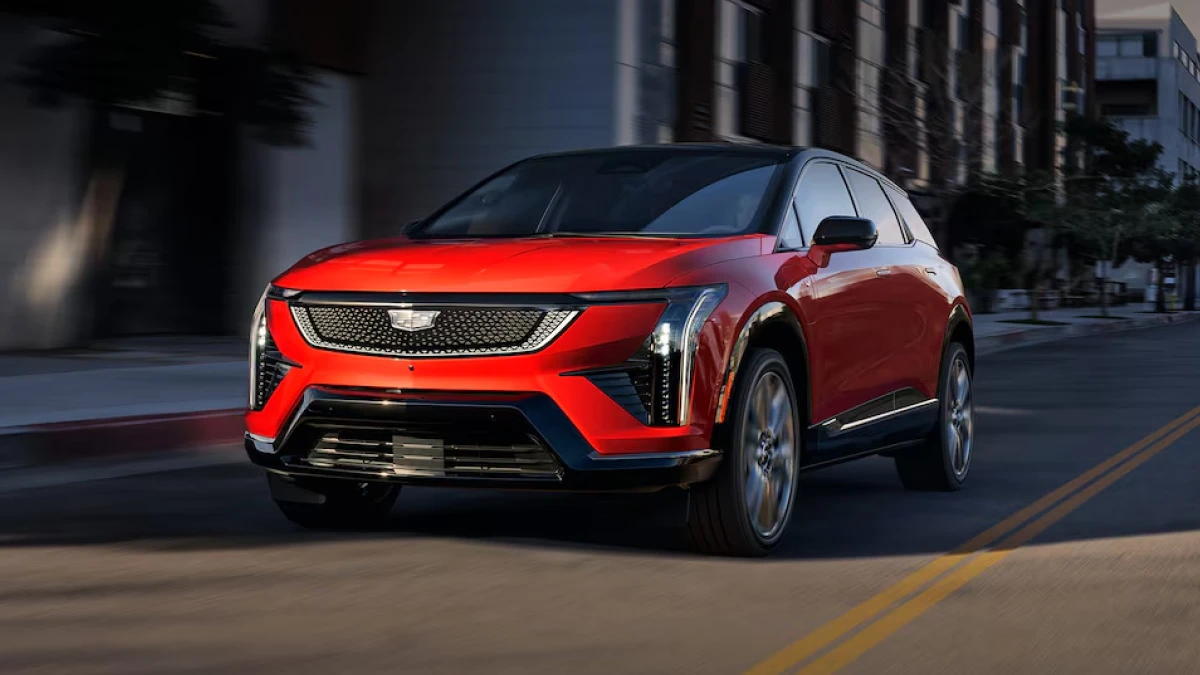
Therefore, it is inaccurate to claim Cadillac “beat” Tesla. Cadillac is the highest-ranked eligible brand. However, Cadillac’s aggressive pivot toward software-driven experiences, advanced driver assistance (Super Cruise), and electrification (the Lyriq) has undeniably shifted its brand perception from a traditional luxury cruiser to a legitimate tech heavyweight.
MotorFuturist Verdict: What This Means for Car Buyers
Cadillac’s 2026 J.D. Power victory is a massive milestone. Displacing a five-time champion like Genesis proves that GM’s aggressive investment in user experience is paying off.
But for you, the car buyer, the real lesson is buried in the data. When shopping for your next vehicle, do not judge a car by the sheer length of its brochure. Before being swayed by a massive dashboard screen, ask yourself:
- Is this feature actually useful?
- Is it easy to operate without taking my eyes off the road?
- Does this technology reduce my workload, or does it create a new distraction?
The 2026 Tech Experience Index proves that car buyers are growing tired of gimmicks. The future of automotive innovation isn’t about slapping more screens onto the dashboard; it’s about making technology work so flawlessly that you barely notice it’s there.
FAQ
Is Cadillac the most innovative car brand in 2026?
Yes. Cadillac ranked highest overall among eligible premium brands in J.D. Power’s 2026 U.S. Tech Experience Index with a score of 641 points.
What is Cadillac’s J.D. Power 2026 score?
Cadillac scored 641 out of 1,000, representing a massive jump from its 2025 score of 526.
Which luxury car brand ranked second?
Genesis ranked second with 559 points (after winning for five consecutive years), followed by BMW with 524 points.
Which mass-market car brand is most innovative?
Hyundai ranked first among mass-market brands for an incredible seventh consecutive year with a score of 524.
Did Cadillac beat Tesla in the J.D. Power study?
Not officially. Tesla (924 points) and Rivian (781 points) scored higher, but they were ineligible for the official ranking because they do not meet the study’s survey criteria in certain states.
What does J.D. Power’s Tech Experience Index measure?
The TXI measures how effectively automakers introduce new technologies into the market and how owners experience those technologies—specifically analyzing adoption rates, overall satisfaction, and execution problems.

