




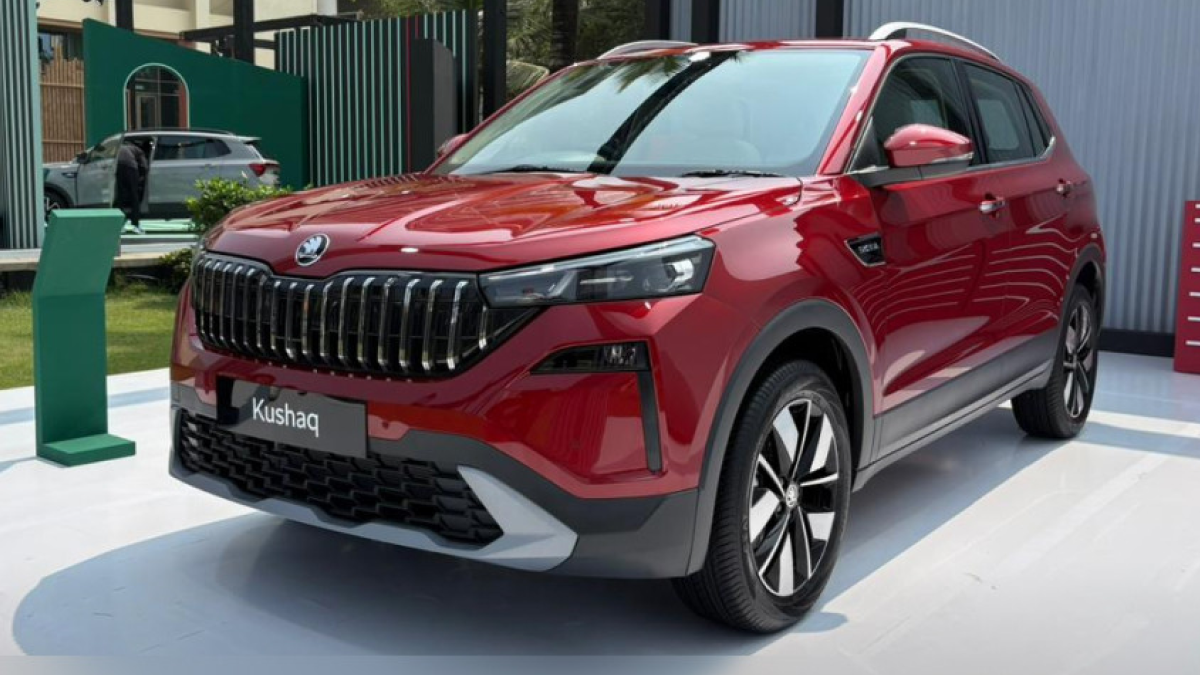
Navigating the compact SUV segment in India often leads buyers to one of the most dynamic engineering platforms on the market: the Skoda Kushaq. Built on the localized MQB-A0-IN platform, the Kushaq has earned a reputation for solid build quality, sharp dynamics, and punchy turbocharged engines.
However, prospective buyers routinely run into a major dilemma at the dealership: Should you pick the practical 1.0 TSI 6-speed Automatic or step up to the performance-oriented 1.5 TSI 7-speed DSG?
While official brochures highlight horsepower and torque figures, real-world ownership tells a much richer story. Differences in transmission behavior, city maneuverability, highway passing power, and fuel economy impact day-to-day driving in distinct ways. This comprehensive breakdown covers technical specifications, city traffic manners, highway dynamics, real-world efficiency, and ownership costs to help you choose the right model.
1. Engine & Transmission Breakdown
Under the hood, both variants showcase Volkswagen Group’s TSI turbo-petrol technology, but their mechanical configurations target entirely different driving styles.
- The 1.0-litre TSI is a compact 3-cylinder unit designed to maximize low-end torque for urban commute requirements. It pairs with a traditional 6-speed torque-converter automatic transmission, which uses fluid coupling to deliver buttery-smooth gear shifts in stop-and-go conditions.
- The 1.5-litre TSI is a sophisticated 4-cylinder engine built for enthusiasts. It features Active Cylinder Technology (ACT), which automatically shuts down two cylinders under light throttle loads to conserve fuel. It comes exclusively with the fast-shifting 7-speed DSG (Direct-Shift Gearbox) dual-clutch transmission.
| Parameter | Skoda Kushaq 1.0 TSI AT | Skoda Kushaq 1.5 TSI DSG |
| Engine Type | 1.0L 3-Cylinder Turbo-Petrol | 1.5L 4-Cylinder Turbo-Petrol |
| Max Power | 115 PS @ 5,000–5,500 rpm | 150 PS @ 5,000–6,000 rpm |
| Max Torque | 178 Nm @ 1,750–4,500 rpm | 250 Nm @ 1,600–3,500 rpm |
| Gearbox Type | 6-Speed Torque Converter (AQ250) | 7-Speed Dual-Clutch (DQ200 DSG) |
| Drivetrain | Front-Wheel Drive (FWD) | Front-Wheel Drive (FWD) |
| Efficiency Tech | Idle Start/Stop System | Active Cylinder Tech (ACT) + Start/Stop |
| 0–100 km/h Acceleration | ~10.8 seconds | ~8.6 seconds |
2. City Traffic & Low-Speed Driveability
Urban commutes reveal the most noticeable operational differences between these two automatics.
1.0 TSI AT (Torque Converter)
- Progressive and smooth creep function
- Complete absence of low-speed hesitation or dual-clutch shudder
- Ideal for stop-and-go bumper-to-bumper traffic jams
1.5 TSI DSG (Dual-Clutch)
- Lightning-fast upshifts once past initial movement
- Occasional low-speed gear hunting between 1st and 2nd gear
- Requires delicate throttle control in dense crawling traffic
1.0 TSI Automatic in the City
The 6-speed torque-converter automatic feels tailored for heavy traffic. When crawling through bumper-to-bumper congestion, the fluid coupling allows for seamless roll-off without jerkiness or hesitation. Up-shifts are masked effectively, and downshifts happen predictably when you need a quick burst of power to close a gap. The 3-cylinder thrum is mild at idle and well-contained within the cabin during routine acceleration.
1.5 TSI DSG in the City
The 1.5 TSI offers massive reserve power, but its dual-clutch gearbox requires a slight learning curve in low-speed environments. Because the DSG relies on mechanical clutches engaging and disengaging, light-throttle crawling can occasionally induce brief hesitation between 1st and 2nd gear. However, once traffic clears slightly and speeds exceed 20 km/h, the powertrain transforms into an exceptionally responsive unit.
3. Highway Performance & Passing Power
Open highways showcase the 1.5 TSI DSG’s full capabilities.
1.0 TSI AT
- Steady acceleration up to 120 km/h
- Gearbox drops 1–2 gears for aggressive overtakes
- High-rpm engine note becomes noticeable under high load
1.5 TSI DSG
- Instantaneous kickdowns via twin-clutch architecture
- Effortless overtakes without straining the engine
- Rapid speed build-up with flat, linear torque delivery
Cruising and Overtaking
With 150 PS and 250 Nm of torque available from low down, the 1.5 TSI DSG accelerates effortlessly. Pushing the accelerator at 80 km/h triggers an instantaneous gear drop, launching the car forward with impressive urgency. Maintaining 120 km/h cruising speeds keeps the engine turning at low revs, making long-distance touring relaxed and quiet.
The 1.0 TSI AT is far from underpowered; it comfortably holds triple-digit speeds on expressways. However, high-speed overtakes require planning. When executing quick maneuvers on two-lane roads, the torque converter must drop two gears, pushing the 3-cylinder engine higher into its rev range where it sounds vocal.
4. Real-World Fuel Economy & Efficiency
Fuel consumption varies noticeably based on driving style, route conditions, and ambient environment.
| Driving Scenario | 1.0 TSI AT Expected Real-World | 1.5 TSI DSG Expected Real-World |
| Heavy City Traffic | 9.5 – 11.5 km/l | 8.5 – 10.5 km/l |
| Moderate Urban Commute | 11.5 – 13.5 km/l | 11.0 – 12.5 km/l |
| Highway Cruising (80–100 km/h) | 15.0 – 17.0 km/l | 16.5 – 19.5 km/l |
| Combined Average | 12.5 – 14.0 km/l | 13.0 – 14.5 km/l |
How Efficiency Tech Plays Out
- In the City: The smaller 1.0 TSI generally uses less fuel during idling and extended stop-and-go cycles. However, heavy throttle application spins up the turbocharger rapidly, which increases fuel consumption.
- On the Highway: The 1.5 TSI takes the lead in cruising efficiency due to Active Cylinder Technology (ACT). When maintaining steady speeds on flat highways, the ECU seamlessly shuts down cylinders 2 and 3. Combined with the tall 7th gear of the DSG, the 1.5 TSI often posts better highway efficiency figures than the 1.0 TSI.
5. Maintenance, Reliability & Ownership Expectations
Long-term ownership considerations extend beyond fuel efficiency.
1.0 TSI AT
- Time-tested torque converter design (high mechanical durability)
- Simpler single-scroll turbo setup
- Lower initial purchase price and insurance premiums
1.5 TSI DSG
- Advanced dual-clutch transmission (requires strict adherence to driving etiquette)
- Complex cylinder-deactivation hardware
- Premium variant pricing with higher long-term replacement component costs
Key Reliability Takeaways
- Transmission Longevity: The 6-speed torque converter in the 1.0 TSI is a traditional design with a proven reliability track record in Indian traffic conditions. The DQ200 7-speed dry-clutch DSG in the 1.5 TSI has been refined significantly with updated software and synthetic fluids, but it inherently operates under higher thermal stress during heavy urban stop-and-go driving.
- Upfront Price Premium: The 1.5 TSI DSG carries a noticeable price premium over an equivalent 1.0 TSI AT variant. Prospective buyers should weigh whether the extra performance justifies the initial cost differential based on their typical driving patterns.
6. Final Verdict: Which Kushaq Automatic Fits Your Lifestyle?
Both Skoda Kushaq automatic variants excel in their intended roles. Choosing between them comes down to evaluating where you do most of your driving and what you prioritize behind the wheel.
Buy the Skoda Kushaq 1.0 TSI AT if:
- 80% of your driving occurs in congested city traffic, where smooth gear shifts and effortless creeping matter most.
- You prefer a time-tested, low-stress torque-converter automatic for long-term ownership peace of mind.
- You want to keep your initial purchase price, insurance, and routine maintenance costs lower.
- You desire a comfortable, well-built compact SUV for daily errands, school runs, and weekend family trips.
Buy the Skoda Kushaq 1.5 TSI DSG if:
- You frequently travel on open highways, expressways, or mountain passes where reserve power is essential.
- You are an enthusiastic driver who appreciates lightning-fast gear changes and rapid 0–100 km/h acceleration.
- You regularly travel with a full complement of passengers and luggage.
- You want advanced tech like Active Cylinder Technology to maximize fuel efficiency during long-distance cruises.

