





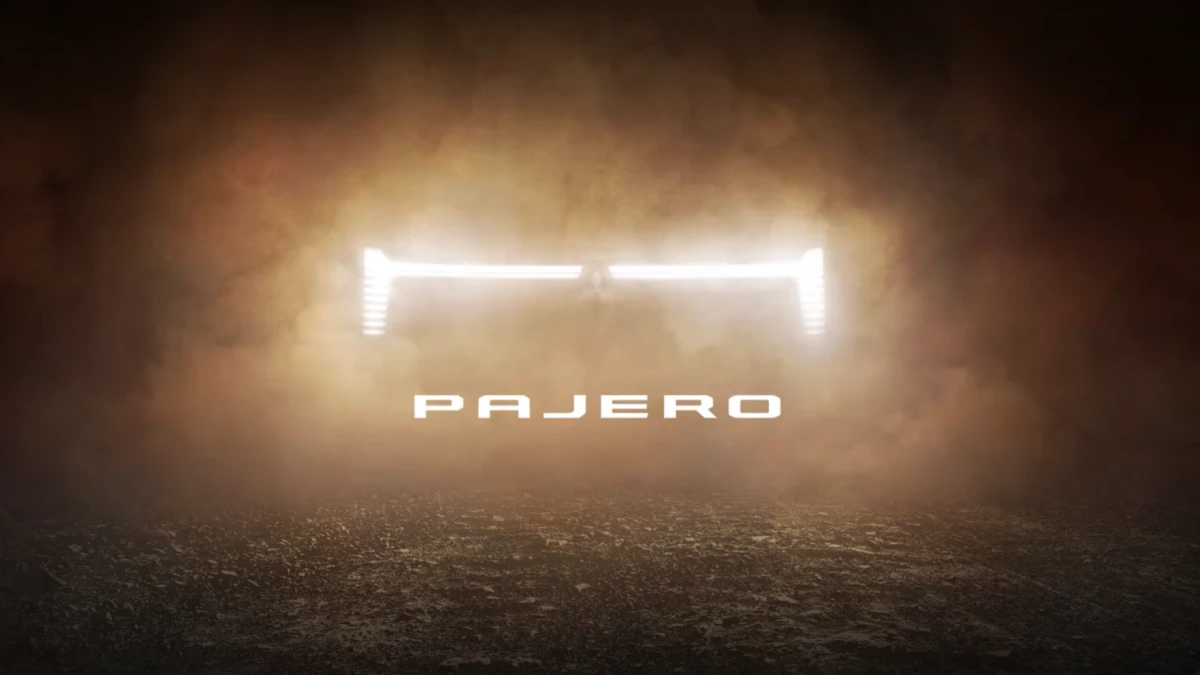
Mitsubishi Motors Corporation has officially confirmed that the legendary fifth-generation Mitsubishi Pajero will make its global debut on September 2, 2026. Following a five-year hiatus from global production, the iconic cross-country SUV returns to its hardcore off-road roots.The new iteration ditches the unibody architecture of the fourth-generation model in favor of a rugged body-on-frame chassis, advanced torque-vectoring four-wheel drive, and modern technology.Commercial rollouts are slated to commence across major international markets in early 2027.
1. Platform Dynamics: Switching Back to Body-on-Frame
The headline structural change for the 2027 Pajero is its return to a heavy-duty ladder-frame architecture.Derived from the robust chassis underpinning the latest Mitsubishi Triton pickup truck, this platform has been re-engineered with SUV-specific front and rear suspension geometry to deliver high off-road capability without compromising high-speed highway refinement.
- Chassis Architecture:Swapped from previous unibody monocoque construction back to a heavy-duty ladder-frame (body-on-frame) platform.
- Underlying Platform:Built on a modified heavy-duty platform derived directly from the Mitsubishi Triton pickup.
- Primary Drivetrain Target:Focuses strictly on high off-road durability, heavy-duty towing, and cross-country capability.
- All-Wheel Drive Hardware:Integrates Mitsubishi’s Super All-Wheel Control (S-AWC) alongside Super Select II 4WD hardware.
Transitioning to a ladder-frame chassis significantly boosts frame rigidity, payload thresholds, and towing capacity. This shift addresses key demands from enthusiast markets in Australia, Southeast Asia, and the Middle East, where durability on unpaved surfaces remains essential.

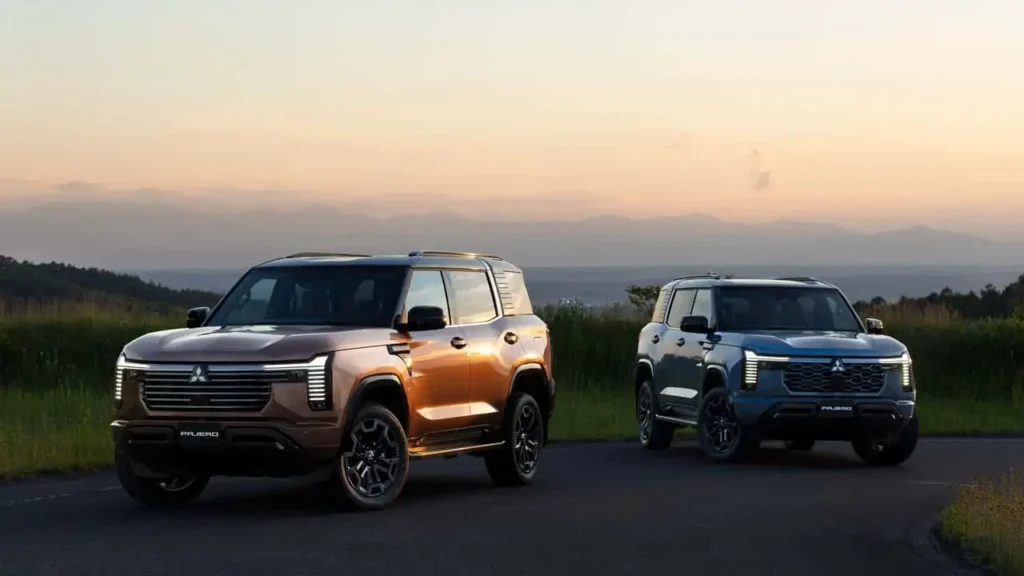
2. Advanced 4WD Hardware & Off-Road Electronics
Mitsubishi is equipping the new Pajero with its flagship Super All-Wheel Control (S-AWC) technology.Known historically for powering the Lancer Evolution performance cars, the S-AWC system has been tuned for cross-country off-road use.
- Primary Transfer Case:Super Select 4WD-II system featuring two-wheel drive, full-time four-wheel drive, and low-range gear reduction modes.
- Vectoring Controls:Active Yaw Control (AYC) system that manages front-to-rear torque distribution and applies selective wheel braking for maximum traction.
- Axle Management:Mechanical rear differential lock coupled with an electronic Hill Descent Control system.
- Drive Modes:Dedicated multi-surface drive selector tailored for varying terrain conditions.
Comprehensive Multi-Terrain Modes
The drivetrain works in tandem with an expanded drive-mode selector, allowing drivers to tune throttle response, transmission shift points, and traction control parameters based on terrain.
- Eco / Normal:Designed for paved city roads and open highways to maximize fuel economy and smooth power delivery.
- Gravel:Calibrated for unpaved tracks and loose dirt to balance wheel slip and maintain forward momentum.
- Sand:Tuned for deep sand and desert dunes by allowing controlled wheel spin to avoid sinking.
- Snow:Optimizes icy road and packed snow driving by reducing throttle sensitivity to prevent traction loss.
- Mud:Regulates wheel speed across slick mud and deep rutted trails to continuously clear tire tread grooves.
- Rock:Designed for extreme bouldering and rock crawling by engaging low-range gearing with maximum torque vectoring.
3. Powertrain Expectations: Hybrid Tech Takes Center Stage
While final powertrain specifications remain under wraps until the September 2 world premiere, industry reports point toward an electrified diesel setup as the primary engine option.
- Initial Launch Engine:Expected to feature an advanced mild-hybrid diesel engine with an integrated starter-generator.
- Electrification Strategy:High-torque turbo-diesel motor paired with dynamic electric assist for instant off-the-line torque.
- Secondary Alternatives:Plug-in hybrid (PHEV) and battery-electric (BEV) variants under consideration for specific international markets.
- Transmission:Heavy-duty multi-speed automatic gearbox tuned to handle high torque outputs.
Developing a high-torque diesel-hybrid powertrain allows Mitsubishi to comply with tightening global emissions regulations while retaining the low-rpm pulling power required for heavy towing and off-road driving.
4. Dakar-Inspired Exterior Design Language
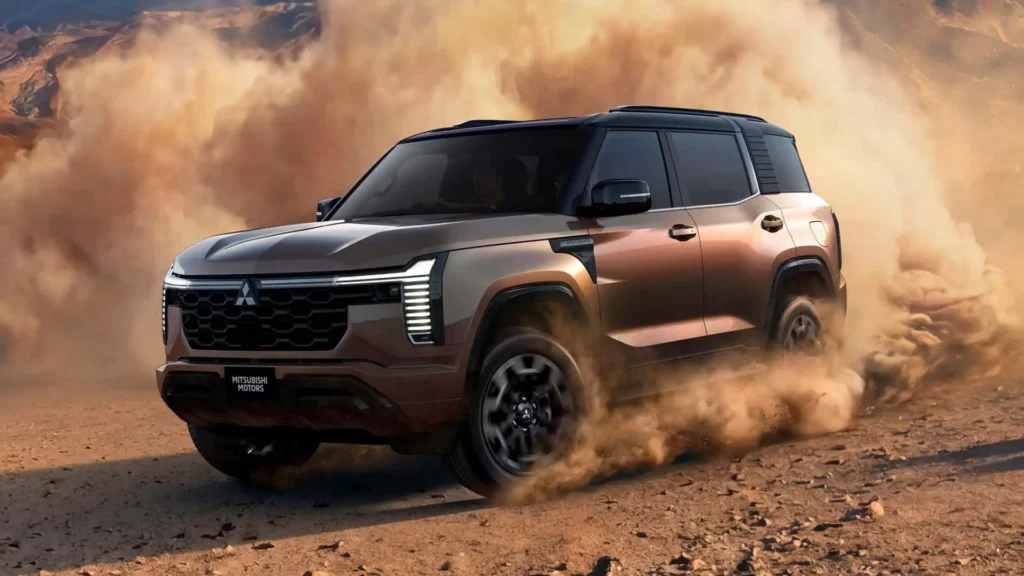
Official teasers released by Mitsubishi highlight a redesigned exterior that draws heavily on the brand’s Dakar Rally heritage.The overall silhouette emphasizes classic 4×4 proportions with short overhangs, an upright stance, and wide fender flares.
- Front Fascia:Features vertical pixel-style LED lighting, connected light bars, and a prominent front grille setup.
- Side Profile:Defined by an upright pillar architecture, squared wheel arches, and high-articulation off-road tires.
- Rear Assembly:Houses a connected LED tail lamp bar, a rugged lower bumper guard, and high departure angle clearance.
- Underbody Protection:Outfitted with heavy-duty integrated skid plates and reinforced front and rear tow hooks.
Leaked information suggests Mitsubishi may offer two distinct front-end styling treatments, tailored to differentiate urban-oriented trims from dedicated off-road configurations.
5. Cockpit Architecture & High-Tech Interior
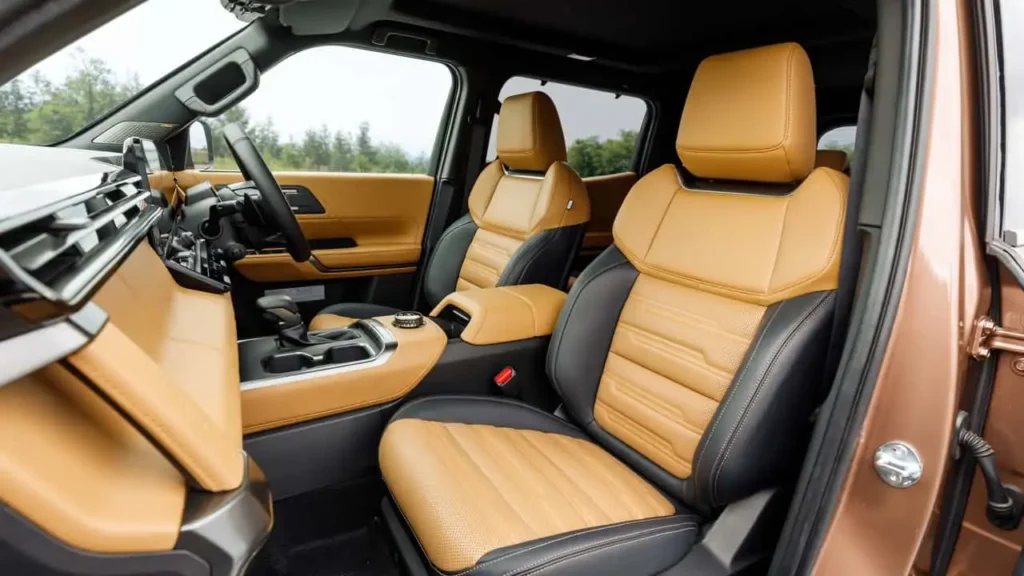
Inside, the new Pajero combines a rugged layout with modern digital screens and premium materials.
- Instrument & Infotainment Display:Integrated 14.3-inch curved dual-screen setup housing driver information and media controls.
- Off-Road Telemetry:“3-Gauge Meter” digital tribute display featuring an inclinometer, digital compass, altimeter, and torque distribution readouts.
- Seating Upholstery:Premium semi-aniline leather upholstery featuring integrated heating and ventilation (S-EXCEED grade).
- Tactical Controls:Physical rotary 4WD selector dial, mechanical differential lock switches, hill-descent toggles, and a wireless charging pad.
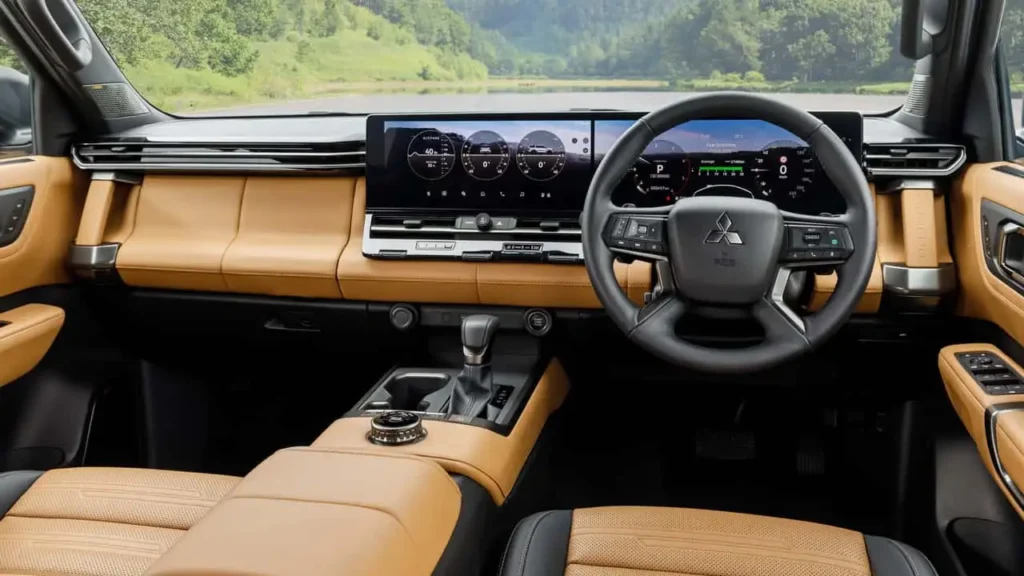
Digital Off-Road Telemetry
Paying homage to the multi-gauge pods found in vintage Pajero dashboards, the 14.3-inch screen features a dedicated digital gauge widget.This display provides real-world off-road data, including vehicle pitch and roll angles, tire steering angles, wheel-articulation levels, and real-time torque distribution across all four wheels.
6. Competitive Landscape: Targeting Full-Size 4×4 Rivals
By returning to a ladder-frame chassis, the fifth-generation Pajero moves directly into competition with established, body-on-frame off-road SUVs.
- Toyota Land Cruiser Prado:Built on the TNGA-F ladder-frame platform, featuring full-time 4WD with a Torsen center differential and turbo-gas hybrid or diesel powertrains.
- Ford Everest:Utilizes the Ranger body-on-frame platform, equipped with shift-on-the-fly 4WD and V6 turbo-diesel engine options.
- Isuzu MU-X:Built on the rugged D-Max ladder chassis, focusing on part-time 4WD simplicity, durability, and a 3.0-litre turbo-diesel motor.
- Mitsubishi Pajero (5th Gen):Combines the Triton ladder frame, S-AWC torque vectoring, Super Select 4WD-II, and an upcoming diesel-hybrid powertrain.
7. Global Release Schedule and Indian Market Potential
Mitsubishi has locked in September 2, 2026, for the official world premiere.Commercial sales will begin in primary markets like Australia, Southeast Asia, and the Middle East in early 2027, followed by a potential North American launch under the Montero nameplate.
- World Premiere Unveiling:Scheduled for September 2, 2026.
- Initial Market Deliveries (Australia & ASEAN):Expected between late 2026 and early 2027.
- Secondary International Rollout:Planned throughout mid-to-late 2027.
- North American Launch (Montero Badge):Projected for future model years.
India Market Business Case
The Pajero holds significant nostalgic appeal in India, where the Pajero SFX and Pajero Sport built a loyal enthusiast following before being discontinued due to emission norm updates.
While Mitsubishi has not officially confirmed an Indian release, bringing the fifth-generation model via the CBU (Completely Built-Up) or CKD (Completely Knocked-Down) route would create a strong halo product.Placed against high-end ladder-frame rivals like the Toyota Fortuner and MG Majestor, a diesel-hybrid Pajero would offer a compelling alternative for Indian buyers seeking genuine 4×4 heritage.Full details regarding specifications, dimensions, and regional availability will be revealed on September 2.

