





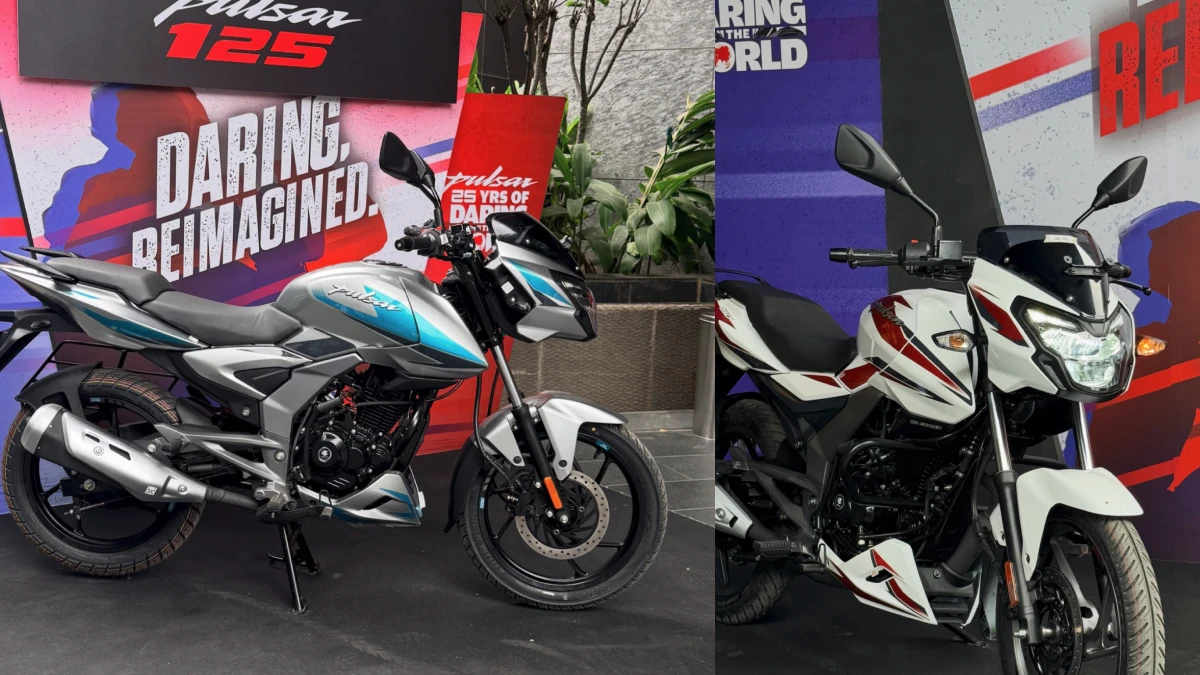
Bajaj Auto has officially unveiled the next-generation iterations of two of its iconic commuter motorcycles, the Bajaj Pulsar 125 and Bajaj Pulsar 150. Serving as the core revenue pillars of the Pulsar family for years, both models have received comprehensive mechanical overhauls, revised chassis architecture, modern connected electronics, and a segment-first low-speed anti-stall feature called Crawl Tech.
With ex-showroom prices starting at ₹92,990 for the Pulsar 125 and ₹1,15,233 for the Pulsar 150, Bajaj aims to bridge the gap between everyday commuter practicality and high-tech features previously limited to upper-tier sport motorcycles.
1. Complete Variant Breakdown and Ex-Showroom Pricing
Bajaj has structured the launch lineup to cater to varying consumer budgets, offering a range of configuration choices across seat styles, instrument displays, and braking hardware.
| Motorcycle Model | Variant Configuration | Key Features Included | Price (Ex-Showroom) |
| Pulsar 125 | Base Single Seat | Coloured LCD, Monoshock, Crawl Tech, LED Lamp | ₹92,990 |
| Pulsar 125 | Standard Single Seat | 5-inch TFT Display, Ride Modes, ISG, USB Type-C | ₹99,291 |
| Pulsar 125 | Standard Split Seat | Split Seat Layout, 5-inch TFT, Ride Modes, ISG | ₹1,00,288 |
| Pulsar 125 | Premium Split Seat | Full TFT Package, Full LED Package, Premium Graphics | ₹1,04,318 |
| Pulsar 150 | Single Disc (Single Seat) | Coloured LCD, Monoshock, Crawl Tech, USB Type-C | ₹1,15,233 |
| Pulsar 150 | Twin Disc (Single Seat) | 5-inch TFT, Google Navigation, ISG, Clip-on Bars | ₹1,22,184 |
| Pulsar 150 | Twin Disc (Split Seat) | 5-inch TFT, Google Navigation, ISG, Split Seating | ₹1,23,187 |
2. All-New Powertrain Performance & Torque Curves
The next-gen Pulsar 125 and 150 drop their older engine designs in favor of refined, high-efficiency engines focused on strong low-end acceleration.Engineers have retuned the torque delivery profile specifically for heavy city commuting.
| Parameter | Next-Gen Pulsar 125 Specifications | Next-Gen Pulsar 150 Specifications |
| Engine Displacement | 124.58 cc Single-Cylinder | 149.5 cc Single-Cylinder |
| Peak Horsepower | 12 PS @ 6,000 rpm | 14 PS @ 6,500 rpm |
| Peak Torque Output | 11.4 Nm @ 6,000 rpm | 14.1 Nm @ 6,500 rpm |
| Low-End Torque Delivery | 85% of peak torque at 3,000 rpm | 85% of peak torque at 3,000 rpm |
| Gearbox Configuration | 5-Speed Manual Mesh | 5-Speed Manual Mesh |
By offering 85 percent of peak torque starting as low as 3,000 rpm, riders can accelerate out of tight corners and slow-moving traffic without needing frequent downshifts.
3. Segment-First “Crawl Tech” Assistance System
Heavy city traffic demands constant clutch slipping and throttle modulation, leading to wrist fatigue. To combat this, Bajaj has introduced a proprietary low-speed system named Crawl Tech across all variants of both motorcycles.
Similar to the creep function found in automatic cars, Crawl Tech allows the motorcycle to maintain continuous forward momentum without any rider throttle input.
- Pulsar 125 Crawl Speeds:Sustains approximately 5 km/h in 1st gear up to 25 km/h in 5th gear with zero throttle application.
- Pulsar 150 Crawl Speeds:Sustains approximately 10 km/h in 1st gear up to 30 km/h in 5th gear smoothly without stalling.
This setup works alongside an Integrated Starter Generator (ISG) on select variants to provide silent engine starts and instant auto stop-start capabilities at signal halts.
4. Next-Gen Cockpit: 5-Inch TFT with Google Navigation
Moving away from traditional analog tachometers, upper variants of the Pulsar 125 and Pulsar 150 incorporate a modern 5-inch color TFT display.
| Feature / Tech Module | Operational Functionality |
| Turn-by-Turn Navigation | Integrated Google Maps mirroring via smartphone connectivity |
| Smartphone Screen Sharing | Displays call alerts, SMS notifications, and active music playback controls |
| Digital Document Locker | Securely stores digital copies of vehicle Registration Certificate (RC) & Insurance |
| Selectable Ride Modes | Three pre-configured riding modes: Road, Rain, and Sport |
| Device Charging Port | Fast-charging USB Type-C port mounted near the handlebar setup |
Lower-tier base variants are fitted with a revised negative-display LCD digital console that retains essential trip metrics, gear position readout, and fuel readouts.
5. Modern Chassis Engineering & Suspension Upgrade
A major structural upgrade is the retirement of the older dual gas-charged rear shock absorbers.Both motorcycles now feature a diamond-type frame paired with a monoshock rear suspension system as standard equipment.
- Suspension Tuning:Front telescopic forks combined with a nitrogen gas-charged rear monoshock deliver improved straight-line stability, sharper cornering responses, and better vibration damping over rough roads.
- Styling Refresh:Updated front cowl with LED “Wolf-Eye” headlamps, dynamic LED turn indicators, aggressive tank shrouds, exposed frame sections, a redesigned underbelly cowl, and fresh body graphics.
- Ergonomic Tweaks:The Pulsar 150 features sportier clip-on handlebars on higher trims, while the Pulsar 125 retains a comfortable single-piece handlebar setup for upright commuter ergonomics.
6. Color Schemes and Aesthetic Options
Bajaj offers both motorcycle models in five distinct dual-tone and metallic paint options designed to highlight their refreshed body panels.
| Motorcycle Model | Available Color Options | Visual Accents |
| Bajaj Pulsar 125 | Sapphire Blue, Fury Red, Ebony Black Magenta, Ebony Black Cyan Blue, Dark Silver | Matching rim stripes, dual-tone exhaust cover, body graphics |
| Bajaj Pulsar 150 | Sapphire Blue, Fury Red, Ebony Black Magenta, Ebony Black Ink Blue, Pearl Metallic White | Engine belly pan cowl, split grab rails, dark engine accents |
7. Competitive Landscape Comparison
The commuter segments in India remain fiercely competitive. With these tech updates, both the Pulsar 125 and Pulsar 150 present strong arguments against established market rivals.
| Category | Model Name | Engine Displacement | Key Standout Feature |
| 125cc Class | Bajaj Pulsar 125 | 124.58 cc | Crawl Tech, Monoshock, 5-inch TFT with Google Navigation |
| 125cc Class | Hero Xtreme 125R | 124.7 cc | Sharp aggressive styling, Single-Channel ABS option |
| 125cc Class | TVS Raider 125 | 124.8 cc | TFT Display, Under-seat storage compartment |
| 125cc Class | Honda SP125 | 123.94 cc | High fuel efficiency rating, Silent ACG Starter |
| 150-160cc Class | Bajaj Pulsar 150 | 149.5 cc | 14.1 Nm Torque, Low-speed Crawl Tech, Full Connected Tech |
| 150-160cc Class | Honda Unicorn | 162.7 cc | Extremely smooth power delivery, High resale value |
| 150-160cc Class | TVS Apache RTR 160 | 159.7 cc | High top speed, Glide Through Technology (GTT) |
8. Strategic Outlook and Market Takeaway
The introduction of the next-generation Pulsar 125 and Pulsar 150 represents a major strategic upgrade for Bajaj Auto.By trickling down advanced features such as monoshock rear suspension, Google Maps TFT navigation, multi-ride modes, and anti-stall Crawl Tech into accessible price brackets starting under ₹1 Lakh, Bajaj strengthens its hold on India’s high-volume commuter motorcycle market.
For daily city commuters looking for low-end torque, modern software integration, and aggressive styling, the updated Pulsar 125 and Pulsar 150 stand out as two of the most feature-packed value propositions in their respective segments.

