



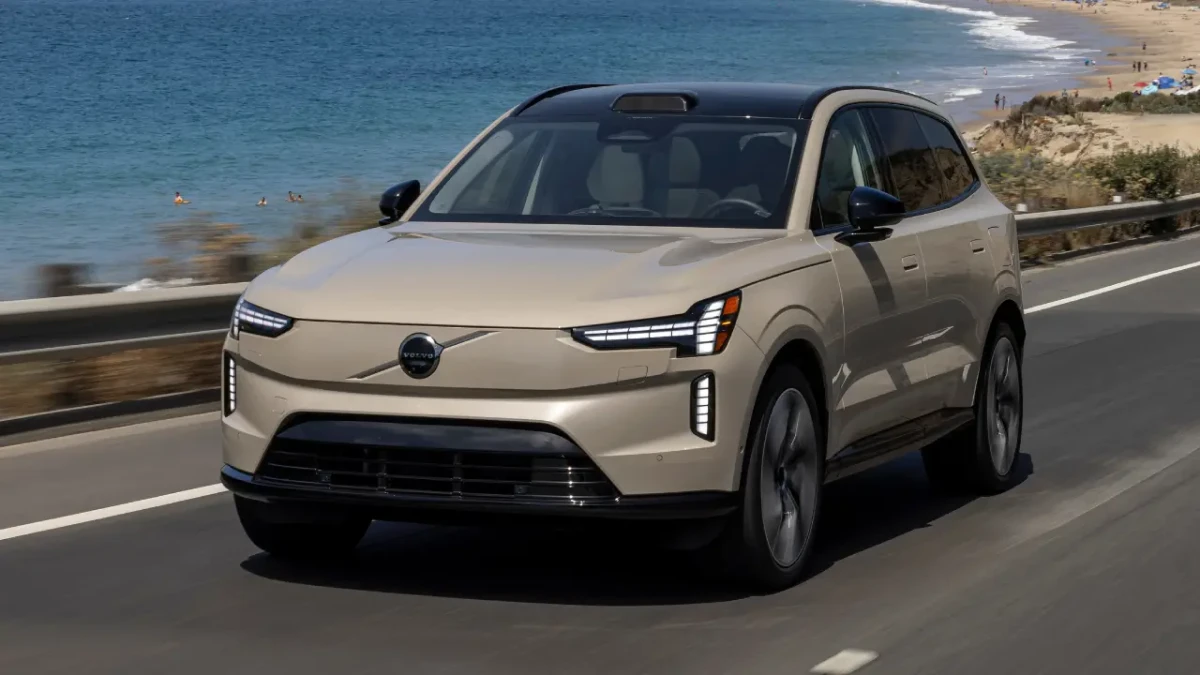
Volvo Car India has officially confirmed that its premier electric offerings—the Volvo EX90 flagship SUV and the Volvo ES90 luxury electric sedan—will launch in India on October 12, 2026. Sitting at the absolute apex of the Swedish automaker’s electrification portfolio, both vehicles introduce next-generation EV engineering, including an advanced 800V electrical architecture, continuous NVIDIA DRIVE core computing, and industry-leading range figures exceeding 690 km.
The arrival of the ES90 holds dual significance for the Indian market.Beyond introducing Volvo’s new executive EV flagship, it marks the brand’s return to the luxury three-box sedan segment following the discontinuation of the ICE-powered S90 in mid-2025.Concurrently, the EX90 takes over as the electric counterpart to the XC90 SUV, competing at the top end of the luxury three-row EV space.

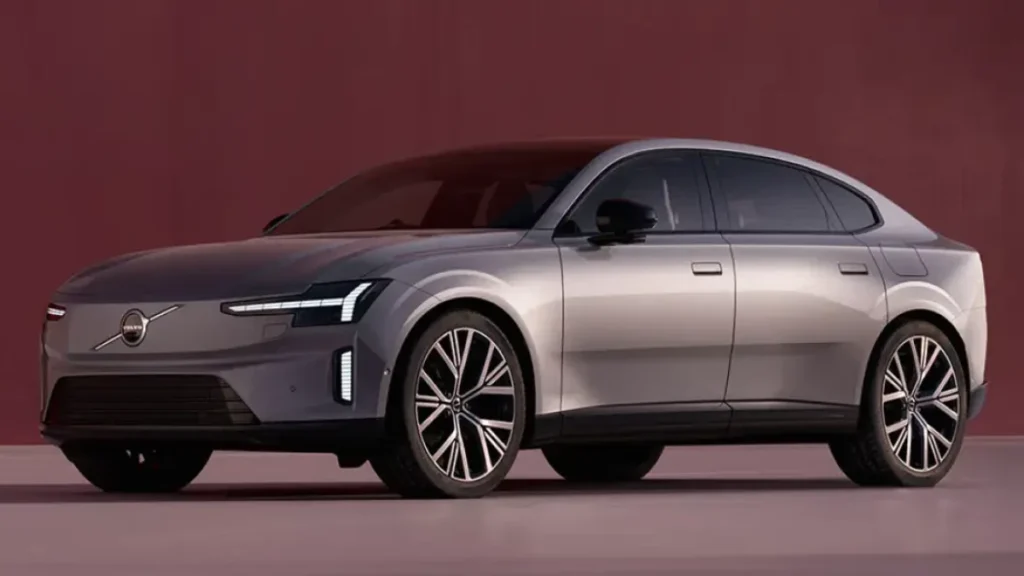
Image for representation purposes only – Volvo ES 90
Volvo EX90 & ES90 Technical Specifications Matrix
Both the EX90 and ES90 share Volvo’s scalable SPA2 (Scalable Product Architecture 2) platform, built natively around an 800-volt electrical backbone to enable high-speed power delivery and ultra-fast thermal charging management.
| Engineering Parameter | 92 kWh Single Motor (RWD) | 106 kWh Twin Motor (AWD) | 106 kWh Twin Motor Performance (AWD) |
| Battery Capacity (Gross/Usable) | 92 kWh / 88 kWh (CATL NMC) | 106 kWh / 102 kWh (CATL NMC) | 106 kWh / 102 kWh (CATL NMC) |
| Electric Motor Layout | Single Rear-Mounted Motor | Dual Motors (Front + Rear) | Dual Motors (Front + Rear) |
| Peak System Output | 333 HP (245 kW) | 456 HP (336 kW) | 680 HP (500 kW) |
| Peak System Torque | 480 Nm | 670 Nm | 870 Nm |
| 0–100 km/h Acceleration (EX90) | 6.6 Seconds | 5.3 Seconds | 4.0 Seconds |
| 0–100 km/h Acceleration (ES90) | 6.9 Seconds | 5.4 Seconds | 4.0 Seconds |
| WLTP Driving Range (EX90) | Up to 565 km | Up to 608 km | Up to 602 km |
| WLTP Driving Range (ES90) | Up to 664 km | Up to 696 km | Up to 680 km |
| DC Fast-Charging Speed | Up to 350 kW DC | Up to 350 kW DC | Up to 350 kW DC |
| 10% to 80% DC Charging Time | 22 Minutes | 22 Minutes | 22 Minutes |
Platform Architecture & 800V Charging Capabilities
The transition from the 400V architecture used in the XC40 Recharge and C40 Recharge to an 800V electrical system on the SPA2 platform represents a shift in operational efficiency. Operating at double the voltage reduces heat generation within the wiring looms and battery pack during high-load scenarios, allowing the vehicles to maintain peak energy transfer for longer periods.
| Charging & Thermal Control Metric | Performance Standard | Practical Real-World Impact |
| Peak DC Charging Input | 350 kW Maximum Rate | Adds approximately 300 km of driving range in 10 minutes at 350 kW stations. |
| DC Fast-Charging Duration | 22 Minutes (10% to 80% SoC) | Minimizes highway charging stops on long-distance interstate routes. |
| AC Home Charging System | 11 kW Three-Phase Onboard Charger | Full home recharge completed in approximately 9 to 10 hours overnight. |
| Thermal Pre-Conditioning | Active Heat Pump & Liquid Cooling System | Optimizes battery temperatures automatically based on navigation destination routing to fast chargers. |
Dimensions and Segment Positioning
The two flagship EVs cater to distinct luxury vehicle segments, differing in footprint, seating layouts, and aerodynamic profiles.
| Dimensional Metric | Volvo EX90 (Flagship EV SUV) | Volvo ES90 (Executive EV Sedan) |
| Overall Length | 5,037 mm | 5,000 mm |
| Overall Width | 1,964 mm (excluding mirrors) | 1,942 mm |
| Overall Height | 1,744 mm | 1,550 mm |
| Wheelbase | 2,985 mm | 3,100 mm |
| Coefficient of Drag ($C_d$) | 0.29 $C_d$ | 0.23 $C_d$ |
| Seating Layout Options | 7-Seater (Standard) / 6-Seater Captains | 5-Seater Executive Lounge |
| Luggage Capacity | 384L (All Rows Up) / 310L Frunk: 45L | 424L Boot / Frunk: 27L |
Safety Architecture & Connected Technology Integration
Positioned as Volvo’s safest production vehicles to date, both the EX90 and ES90 feature an integrated Safe Space Technology suite.
Core Technological Highlights
- Roof-Mounted Luminar LiDAR:Mounted at the leading edge of the roofline, the Iris LiDAR sensor operates at a 1,550 nm wavelength. It detects pedestrians up to 250 meters away in pitch-black conditions, independent of ambient light.
- NVIDIA DRIVE Orin Core Computing:Powered by dual NVIDIA DRIVE Orin system-on-a-chip (SoC) architectures capable of executing over 508 TOPS (Trillion Operations Per Second), processing real-time sensor data from 5 radar units, 8 external cameras, and 12 ultrasonic sensors.
- Driver Understanding System: Interior capacitive sensors and dual infrared cameras monitor driver eye-gaze patterns and steering inputs to detect drowsiness or medical distraction, intervening via progressive warning stages.
- Infotainment & Audio Suite: A central 14.5-inch portrait-oriented touchscreen with built-in Google software functions as the primary interface, backed by an available 25-speaker, 1,610-Watt Bowers & Wilkins 3D Surround Sound system featuring Dolby Atmos processing.
Competitive Market Landscape & Expected Price Structure
When launched on October 12, both models will be imported as Fully Built Units (CBU) under India’s luxury EV import regulations.
| Model | Target Market Rivals in India | Estimated Ex-Showroom Price Range |
| Volvo EX90 | Mercedes-Benz EQS SUV, BMW iX, Audi Q8 e-tron, Kia EV9 | ₹1.40 Crore – ₹1.55 Crore |
| Volvo ES90 | BMW i5, Mercedes-Benz EQE Sedan, Porsche Taycan | ₹1.25 Crore – ₹1.40 Crore |
The dual launch strategy allows Volvo to establish a high-performance, long-range presence across both the luxury multi-row SUV and executive sedan segments, reinforcing its long-term commitment to becoming a fully electric car manufacturer by 2030.

