





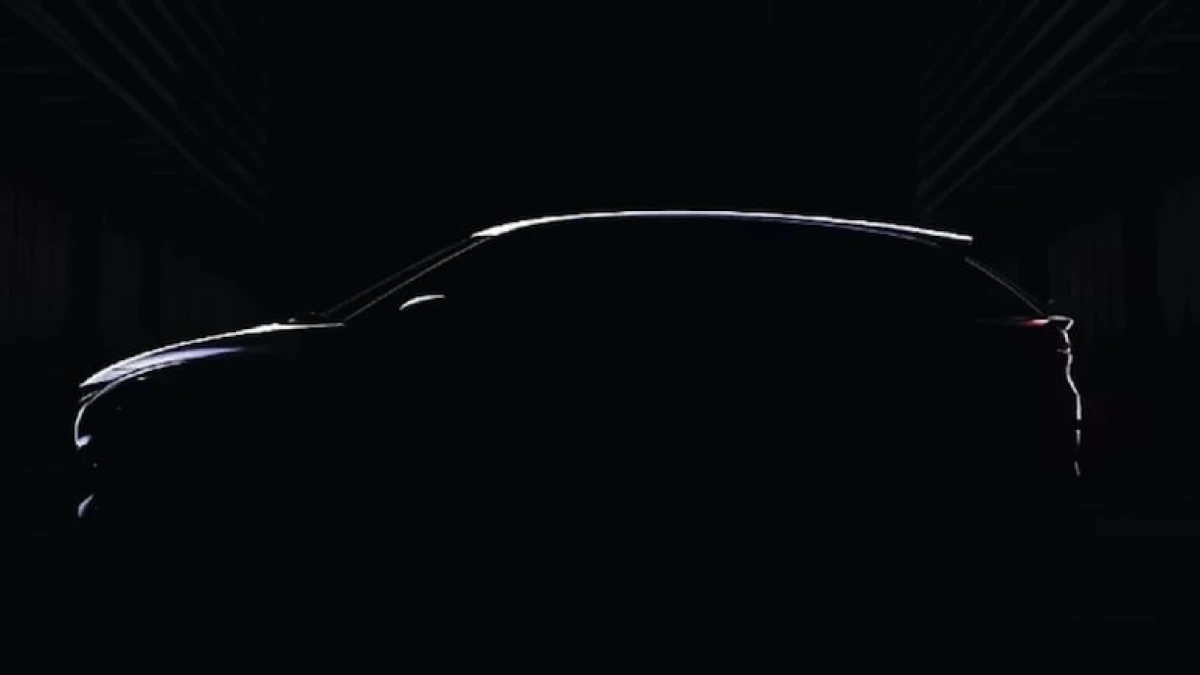
Maruti Suzuki India Limited (MSIL) has officially confirmed that the updated 2026 Baleno facelift will launch in the Indian market on September 5, 2026. The premium hatchback, currently in its second generation after an overhaul in February 2022, is receiving a mid-cycle refresh ahead of the upcoming festive season.
Spied during road tests across NCR and northern highways, the facelifted Baleno features a revised front grille, updated bumper styling, a broader feature suite, and the potential addition of a single-pane electric sunroof.The update aims to maintain the hatchback’s market position against competitors like the Hyundai i20, Tata Altroz, and its rebadged sibling, the Toyota Glanza.
1. Exterior Redesign: Front Fascia & Styling Updates
The most noticeable updates on the 2026 Baleno facelift are concentrated at the front end.The outgoing grille design gives way to a sleeker, wider mesh pattern bisected by a prominent horizontal chrome bar that seamlessly connects the LED projector headlights.
While the signature three-element ‘NexDrive’ LED daytime running lamps (DRLs) and LED headlight housings are retained, the lower air dam and bumper housing receive structural changes. Test mules indicate the removal of separate fog lamp housings on lower and mid-spec trims, using instead an integrated lower intake grille that gives the front profile a wider, grounded stance.
Along the side, the body silhouette remains identical to the 2022 model, with updates limited to a new set of 16-inch dual-tone precision-cut alloy wheels. At the rear, the C-shaped LED taillights continue, paired with a subtly restyled rear bumper, an integrated roof spoiler, and a rear window wiper with washer.
The table below outlines the exterior design changes across the front, side, and rear profiles:
| Exterior Component / Area | Outgoing Baleno (2022–2025 Model) | 2026 Baleno Facelift (September 5 Launch) | Visual & Functional Impact |
| Front Main Grille | Wave-mesh grille with bottom chrome trim | Sleeker mesh with central horizontal chrome bar | Gives the hatchback a wider front profile |
| Headlight & DRL Setup | LED Projectors + 3-element LED DRLs | LED Projectors + 3-element LED DRLs (Carried Over) | Maintains NEXA’s signature lighting identity |
| Front Bumper Assembly | Bumper with integrated fog lamp pods | Restyled bumper with wider air intake (No fog pods) | Clean lower fascia with improved air intake |
| Side Profile & Wheels | 16-inch Precision-Cut Multi-Spoke Alloys | New 16-inch Dual-Tone Geometric Alloy Wheels | Refreshed side profile stance |
| Rear Profile Styling | C-shaped LED taillamps + chrome boot strip | C-shaped LED taillamps + Restyled rear bumper | Updated rear profile aesthetic |
2. Cabin Experience & Feature Enhancements
Inside, the 2026 Baleno facelift retains the basic dual-tone black and navy blue dashboard layout. However, Maruti Suzuki has introduced selective trim upgrades to align the car with market expectations.
The primary addition to top-spec Alpha variants is a single-pane voice-assisted electric sunroof—a feature already offered by segment rivals like the Hyundai i20 and Tata Altroz.Additionally, the interior receives multi-color ambient cabin lighting, revised seat upholstery materials, soft-touch inserts on the door armrests, and an upgraded 10.1-inch SmartPlay Pro+ touchscreen infotainment unit on higher trims, replacing the previous 9-inch screen.
Existing equipment—including the Head-Up Display (HUD), 360-degree HD view camera, wireless Apple CarPlay and Android Auto, Arkamys Surround Sense audio, auto-dimming IRVM, rear AC vents, and cruise control—will remain standard across upper variant tiers.
The table below contrasts the interior equipment between the current model and the upcoming facelift:
| Interior Feature / Hardware | Outgoing Baleno (Current Alpha Trim) | 2026 Baleno Facelift (Top-Spec Variant) | Convenience & Comfort Value |
| Sunroof Availability | Not Available | Single-Pane Voice-Controlled Sunroof | Meets popular market feature demand |
| Infotainment Screen | 9.0-inch SmartPlay Pro+ Touchscreen | 10.1-inch SmartPlay Pro+ Touchscreen | Larger display area and faster processing |
| Driver Display Suite | Analog Dials + Multi-Information Display | Analog Dials + Enhanced Color TFT MID | Shows turn-by-turn navigation & fuel metrics |
| Segment-Exclusive Tech | Head-Up Display (HUD) + 360 Camera | Head-Up Display (HUD) + 360 HD Camera | Projector display for speed & gear warnings |
| Cabin Illumination | Standard Single Bulb Lighting | Multi-Color Ambient Cabin Illumination | Enhanced cabin lighting ambience |
| Safety Package | 6 Airbags, ESP, Hill Hold, ISOFIX | 6 Airbags Standard Across All Variants | High baseline safety compliance |
3. Powertrain Architecture: 1.2L K-Series Petrol & S-CNG
Mechanically, the 2026 Baleno facelift relies on Maruti Suzuki’s proven engine options. Powering the hatchback is the 1.2-litre four-cylinder K12N DualJet, Dual VVT naturally aspirated petrol engine equipped with Idle Start-Stop (ISS) technology.
This engine generates 88.5 bhp (90 PS) of peak power at 6,000 rpm and 113 Nm of peak torque at 4,400 rpm. Transmission choices remain a 5-speed manual gearbox and a 5-speed Automated Manual Transmission (AMT / AGS).
For fuel-conscious buyers, the Baleno S-CNG variant continues alongside the petrol model.Operating in CNG mode, the 1.2L engine delivers 76.4 bhp (77.5 PS) and 98.5 Nm of torque, paired exclusively with a 5-speed manual transmission.Reports also suggest Maruti Suzuki may reintroduce the 1.0-litre three-cylinder Boosterjet turbo-petrol engine (100 hp / 147 Nm) as a limited-run performance variant, similar to the Fronx.
The table below provides the full technical specifications for the 2026 Baleno facelift’s engine lineup:
| Engine Metric / Parameter | 1.2L DualJet Petrol (5-Speed Manual) | 1.2L DualJet Petrol (5-Speed AMT) | 1.2L S-CNG Petrol-CNG (5-Speed Manual) |
| Engine Configuration | 1,197cc 4-Cylinder Naturally Aspirated | 1,197cc 4-Cylinder Naturally Aspirated | 1,197cc 4-Cylinder Factory Fitted S-CNG |
| Peak Power Output | 88.5 bhp (90 PS) @ 6,000 rpm | 88.5 bhp (90 PS) @ 6,000 rpm | 76.4 bhp (77.5 PS) @ 6,000 rpm |
| Peak System Torque | 113 Nm @ 4,400 rpm | 113 Nm @ 4,400 rpm | 98.5 Nm @ 4,300 rpm |
| Transmission Type | 5-Speed Manual Transmission | 5-Speed Automated Manual (AMT) | 5-Speed Manual Transmission |
| ARAI Claimed Fuel Economy | 22.35 km/l | 22.94 km/l | 30.61 km/kg |
| Fuel Tank Capacity | 37 Litres Petrol | 37 Litres Petrol | 37L Petrol + 55L Water Equivalent CNG |
4. Expected Variant Pricing & Market Positioning
The outgoing Maruti Suzuki Baleno is priced between ₹5.99 Lakh and ₹9.14 Lakh (ex-showroom) across its Sigma, Delta, Zeta, and Alpha trims. With the styling changes, revised front bumper, and added equipment like the sunroof and larger touchscreen, prices for the 2026 facelift are expected to increase slightly by ₹15,000 to ₹35,000 depending on the variant.
The base Sigma variant is expected to retain an entry price point around ₹6.20 Lakh, while the feature-packed Alpha AMT variant with a sunroof could reach ₹9.60 Lakh (ex-showroom).
The table below outlines the estimated ex-showroom pricing across the variant lineup:
| Variant Trim Level | Existing Price Range (Ex-Showroom) | Estimated 2026 Facelift Price (Ex-Showroom) | Expected Feature Additions |
| Baleno Sigma (Base) | ₹5.99 Lakh | ~₹6.20 Lakh | Standard 6 airbags, revised front grille, ESP |
| Baleno Delta (Mid-1) | ₹7.40 Lakh – ₹7.90 Lakh | ~₹7.55 Lakh – ₹8.05 Lakh | Restyled wheel covers, 7-inch SmartPlay screen |
| Baleno Zeta (Mid-2) | ₹8.30 Lakh – ₹8.80 Lakh | ~₹8.50 Lakh – ₹9.00 Lakh | Rear camera, 16-inch alloy wheels, LED DRLs |
| Baleno Alpha (Top) | ₹9.10 Lakh – ₹9.60 Lakh | ~₹9.30 Lakh – ₹9.80 Lakh | Electric Sunroof, 10.1-in Screen, HUD, 360 Camera |
| Baleno S-CNG (Delta/Zeta) | ₹8.35 Lakh – ₹9.20 Lakh | ~₹8.50 Lakh – ₹9.35 Lakh | Factory CNG tank, dual interdependent ECUs |
5. Segment Comparison: Baleno Facelift vs. Key Rivals
Upon its launch on September 5, the updated Maruti Suzuki Baleno will compete in the premium hatchback market.Its primary rivals include the Hyundai i20, Tata Altroz, and Toyota Glanza.
The table below benchmarks the 2026 Baleno facelift against its main segment competitors:
| Metric / Feature | 2026 Maruti Baleno Facelift | Hyundai i20 | Tata Altroz | Toyota Glanza |
| Expected Price Range | ₹6.20 Lakh – ₹9.80 Lakh | ₹7.04 Lakh – ₹11.21 Lakh | ₹6.65 Lakh – ₹10.80 Lakh | ₹6.86 Lakh – ₹10.00 Lakh |
| Base Petrol Engine | 1.2L 4-Cyl (90 hp / 113 Nm) | 1.2L 4-Cyl (83 hp / 115 Nm) | 1.2L 3-Cyl (88 hp / 115 Nm) | 1.2L 4-Cyl (90 hp / 113 Nm) |
| Automatic Transmission | 5-Speed AMT | Intelligent Variable Transmission (IVT) | 6-Speed Dual-Clutch (DCA) | 5-Speed AMT |
| Factory CNG Option | Yes (1.2L S-CNG @ 30.6 km/kg) | No | Yes (1.2L iCNG Twin Cylinder) | Yes (1.2L e-CNG) |
| Sunroof Availability | Yes (Voice-Controlled Single-Pane) | Yes (Single-Pane Electric) | Yes (Voice-Assisted Electric) | Expected with upcoming update |
| HUD & 360 Camera | Yes (Segment-Exclusive HUD) | 360 Camera Only | 360 Camera Only | Yes (HUD & 360 Camera) |
Strategic Verdict: Maintaining Segment Leadership
The 2026 Maruti Suzuki Baleno facelift brings targeted exterior styling updates, key interior feature additions like a sunroof, and an expanded screen layout while retaining its established powertrain options.
With an entry price point expected around ₹6.20 Lakh and fuel economy ratings exceeding 22 km/l for petrol and 30 km/kg for CNG, the updated Baleno is well-positioned to maintain its competitive edge in India’s premium hatchback segment when it arrives on September 5, 2026.


1 Comment
Pingback: 2026 Maruti Suzuki Baleno Facelift Review: Z-Series Engine, Level 2 ADAS, Features, and Drive Impression - Motor Futurist Maruti Baleno Facelift Review