


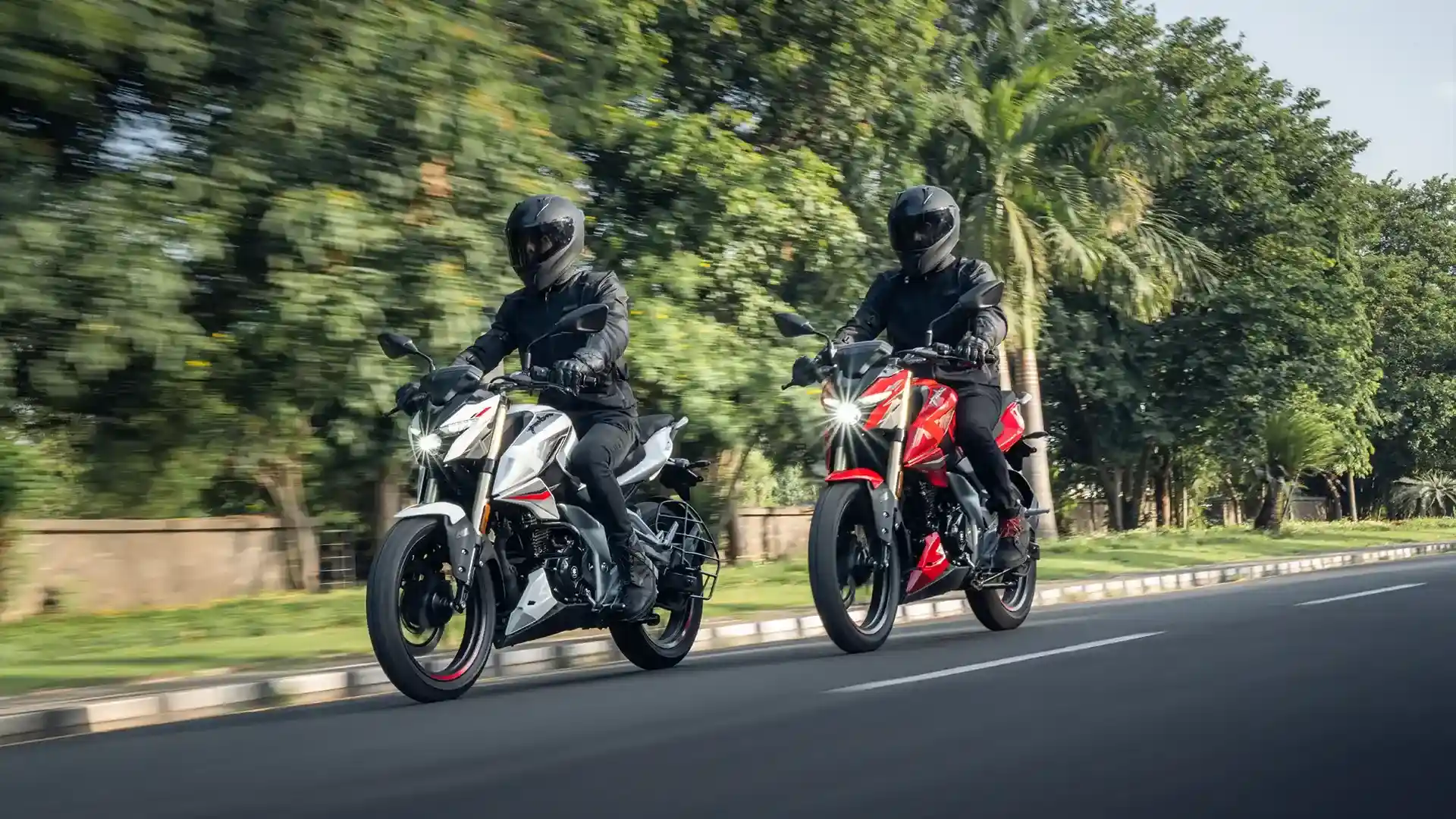
Bajaj Auto has officially expanded the Pulsar N160 family by introducing two brand-new variants: the N160 S and the N160 SS. This launch brings a massive mechanical and technological overhaul to the popular 160cc streetfighter.
The most significant upgrade lies beneath the bodywork. Both the S and SS variants are powered by a fresh 164.5cc, four-valve engine complete with oil cooling and an Electronic Throttle Body. This setup punches out 18.5 PS and 14.4 Nm of torque—a solid 2.5 PS bump over the existing two-valve N160.
Interestingly, Bajaj is not discontinuing the older model. The familiar two-valve motorcycle will remain on showroom floors as the entry-level option, allowing the new S and SS trims to position themselves as premium upgrades.
Bajaj Pulsar N160 S & N160 SS Price
The pricing strategy clearly separates the three available tiers of the N160 lineup.
| Model | Ex-showroom Price (Delhi) |
| Pulsar N160 (Existing) | Base model pricing continues |
| Pulsar N160 S | ₹1,33,511 |
| Pulsar N160 SS | ₹1,42,585 |
With the N160 S priced roughly ₹9,000 lower than the flagship SS, buyers need to look closely at the equipment gap between the two to decide which offers the best overall value for their daily commute.
The Biggest Change: A New 4-Valve Engine
The beating heart of these new motorcycles is where Bajaj has heavily invested its engineering efforts. The move to a 4-valve engine pushes performance figures significantly higher.
| Specification | New N160 S / SS | Existing N160 |
| Displacement | 164.5cc | 164.82cc |
| Cylinders | Single-cylinder | Single-cylinder |
| Valves | 4-valve SOHC | 2-valve |
| Cooling System | Oil-cooled | Air-cooled |
| Throttle Type | Electronic Throttle Body | Mechanical throttle |
| Peak Power | 18.5 PS @ 9,500 rpm | 16 PS |
| Peak Torque | 14.4 Nm @ 8,000 rpm | 14.65 Nm |
| Transmission | 5-speed gearbox | 5-speed gearbox |
While peak torque has seen a very marginal dip, the extra horsepower completely transforms the bike’s top-end performance. Bajaj claims a 0–60 km/h sprint time of just 4.5 seconds, effectively making the new N160 the quickest motorcycle in its segment.
Why the Electronic Throttle Is a Big Deal
Swapping a traditional mechanical throttle cable for a ride-by-wire Electronic Throttle Body (ETB) isn’t just about making the twist-grip feel smoother. This hardware change acts as the central gateway for advanced electronic rider aids.
By adopting ETB, Bajaj has successfully integrated:
- Multiple riding modes
- Traction control
- Highly sophisticated throttle mapping
- Low-speed Crawl Technology
This level of electronic intervention is incredibly rare in the 160cc commuter-sport segment, giving the N160 twins a massive competitive edge.
Four Riding Modes Explained
Both new motorcycles come equipped with four distinct riding modes, giving riders the ability to adapt the bike’s engine behavior to specific environments.
- Road Mode: The standard setting designed for everyday urban riding and commuting.
- Rain Mode: Delivers a softer, more predictable throttle response and heightens electronic intervention for maximum control on wet pavement.
- Sport Mode: Sharpens the throttle mapping for aggressive acceleration and enthusiastic weekend rides.
- Off-road Mode: Adjusts the power delivery specifically for loose surfaces, dirt trails, and gravel.
Offering this level of adaptability is highly unusual at this price point, setting a new benchmark for 160cc motorcycles in India.
Pulsar N160 SS Gets TFT + Google Maps
If the engine is the biggest mechanical change, the dashboard is the biggest technological leap.
The N160 S is equipped with a crisp LCD instrument cluster featuring Bluetooth connectivity and turn-by-turn navigation.
However, the flagship N160 SS completely steals the show. It boasts a vivid 5-inch TFT display that supports Bluetooth, Wi-Fi, and—in a first for an Indian sports motorcycle—full Google Maps mirroring. This means riders get real-time, interactive navigation right on their dashboard without needing to risk mounting a smartphone to the handlebars.
Bajaj Pulsar N160 S vs N160 SS: What’s the Difference?
Is the SS worth the extra money? Here is a direct breakdown of what separates the two new variants.
| Feature | Pulsar N160 S | Pulsar N160 SS |
| 164.5cc 4V Engine | ✔ | ✔ |
| 18.5 PS Power | ✔ | ✔ |
| Electronic Throttle | ✔ | ✔ |
| 4 Riding Modes | ✔ | ✔ |
| Crawl Technology | ✔ | ✔ |
| Console Type | LCD Display | 5-inch TFT Display |
| Bluetooth Integration | ✔ | ✔ |
| Navigation | Turn-by-turn | Google Maps Mirroring |
| Wi-Fi Connectivity | ❌ | ✔ |
| Traction Control | ❌ | ✔ |
| Adjustable Levers | ❌ | ✔ |
| Radial Rear Tyre | ❌ | ✔ |
| Coloured Alloys | ❌ | ✔ |
The SS variant easily justifies its roughly ₹9,000 premium by throwing in high-end tech like traction control, adjustable levers, superior radial rubber, and that brilliant Google Maps-enabled TFT screen.
Hardware Upgrades
To effectively handle the 18.5 PS output, Bajaj has beefed up the running gear on both the S and SS models compared to the standard N160.
- Front Suspension: Upgraded from the existing 33mm USD forks to much thicker 37mm USD forks for improved front-end stability under heavy braking.
- Front Brakes: The front disc size has been increased from 280mm to 300mm to provide stronger stopping power.
Otherwise, the bikes retain the familiar tubular frame, rear monoshock, 165mm ground clearance, 795mm seat height, and 14-litre fuel tank.
Crawl Technology: What Is It?
Bajaj has introduced “Crawl Technology” to take the fatigue out of low-speed riding. This system allows the motorcycle to creep forward smoothly at very low speeds without requiring the rider to constantly slip the clutch or manually feather the throttle.
This feature shines in practical scenarios like:
- Brutal stop-and-go traffic jams.
- Slow parking maneuvers.
- Slow-moving city traffic.
- Navigating through tight, crowded alleyways.
Design & Colours
Aesthetically, Bajaj hasn’t strayed from the muscular, aggressive streetfighter stance that made the N160 so popular. The new variants feature revised body graphics, while the top-spec SS gets exclusive colored alloy wheels to help it stand out.
Buyers can choose from three striking paint schemes:
- Atlantic Blue
- Pearl Metallic White
- Brooklyn Black
Existing Pulsar N160 vs New N160 S / SS
If you are confused about where the new bikes stand next to the older model, here is a quick cheat sheet.
| Specification | Existing N160 | New N160 S & SS |
| Engine Valve Count | 2-valve | 4-valve |
| Cooling | Air-cooled | Oil-cooled |
| Throttle Type | Mechanical | Electronic (Ride-by-wire) |
| Power Output | 16 PS | 18.5 PS |
| Torque | 14.65 Nm | 14.4 Nm |
| Riding Modes | ❌ | 4 Modes |
| Front Fork Size | 33mm USD | 37mm USD |
| Front Disc Size | 280mm | 300mm |
Which Pulsar N160 Should You Buy?
N160 – For Value
Choose the existing 2-valve N160 if you want the lowest possible price, prefer a mechanically simpler motorcycle, and don’t care about riding modes. It remains an excellent everyday commuter.
N160 S – The Middle Ground
The N160 S makes perfect sense if you want the punchy 18.5 PS 4-valve engine and riding modes, but you feel standard Bluetooth and turn-by-turn navigation are more than enough for your daily routing.
N160 SS – The Technology Choice
The N160 SS is the one to buy if you love tech. The Google Maps integration, traction control, radial rear tire, and adjustable levers make it one of the most advanced 160cc motorcycles currently on the market.
Bajaj Pulsar N160 S & SS vs Rivals
The 160cc segment is fiercely competitive. The new 4-valve N160 twins now sit squarely against heavyweights like the TVS Apache RTR 160 4V, Hero Xtreme 160R 4V, and the Yamaha FZ-S Fi.
The Apache RTR 160 4V is a particularly important rival. By moving to a 4-valve engine and adding ride-by-wire technology, Bajaj has essentially eliminated the performance gap between the two models, bringing them into a much closer conversation while leaping ahead in terms of dashboard mapping tech.
Is the New Pulsar N160 SS Worth ₹1.43 Lakh?
The N160 SS isn’t simply a cosmetic upgrade. For the additional money over the S variant, buyers get the TFT, Google Maps, traction control, and hardware additions like adjustable levers and radial tires. For riders who actually use those features, the price difference is relatively easy to justify.
However, buyers primarily looking for a powerful daily commuter without the extra electronic frills will find the N160 S far more sensible.
MotorFuturist Verdict
The new Bajaj Pulsar N160 S and N160 SS fundamentally change what buyers can expect from a 160cc motorcycle. The 4-valve engine brings a thrilling 18.5 PS, while the electronic throttle control opens the door to four distinct riding modes, traction control, and segment-first Crawl Technology.
The N160 SS pushes boundaries even further with its Google Maps-enabled 5-inch TFT display. The biggest surprise, however, is that Bajaj continues to sell the existing 2-valve N160 alongside these new motorcycles, effectively giving buyers three different interpretations of the same excellent 160cc platform.
- Best Value: Pulsar N160 S
- Best Equipped: Pulsar N160 SS
- Best for Simplicity: Existing Pulsar N160
FAQ
What is the price of the Bajaj Pulsar N160 S?
The Pulsar N160 S is priced at ₹1,33,511 (ex-showroom, Delhi).
What is the price of the Pulsar N160 SS?
The flagship N160 SS variant costs ₹1,42,585 (ex-showroom, Delhi).
Does the new Pulsar N160 get a 4-valve engine?
Yes. Both the N160 S and SS variants utilize a new 164.5cc, 4-valve, oil-cooled engine producing 18.5 PS and 14.4 Nm of torque.
Does the Pulsar N160 SS have Google Maps?
Yes. The N160 SS features a 5-inch TFT display that includes Wi-Fi connectivity and Google Maps mirroring for seamless navigation.
Does the N160 S get the TFT display?
No. The N160 S utilizes an LCD console with standard Bluetooth and turn-by-turn navigation, whereas the TFT display is exclusive to the N160 SS.
Does the new N160 have riding modes?
Yes. Both the N160 S and N160 SS are equipped with four selectable riding modes: Road, Rain, Sport, and Off-road.

