





The Indian automotive sector is undergoing a massive structural shift, moving away from single-fuel reliance toward a blended landscape of electric, hybrid, and gas-powered options. Solidifying its position at the forefront of this industrial evolution, Tata Motors Passenger Vehicles (TMPV) has formally unveiled its high-stakes, long-term corporate growth blueprint.
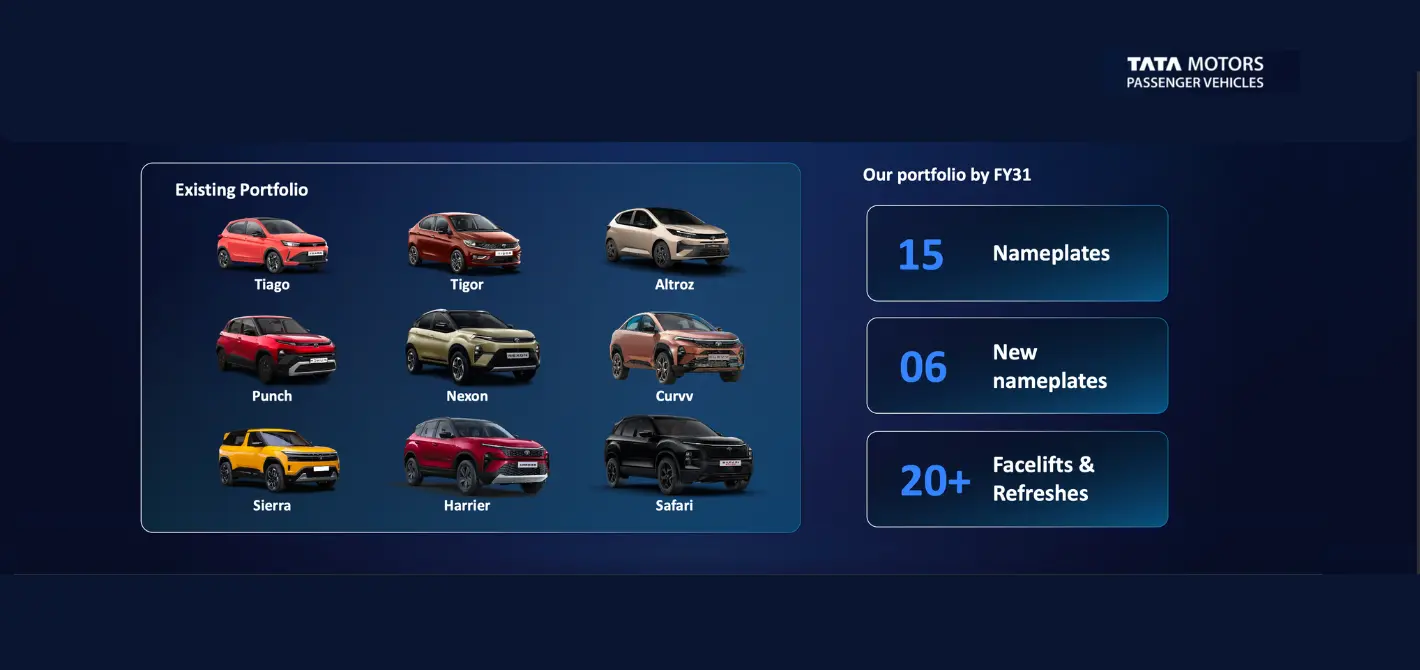
Presented at its latest Investor Day meet, the homegrown auto giant outlined a comprehensive five-year product offensive backed by a massive capital expenditure allocation of up to ₹40,000 crore. By FY2031, the brand aims to scale its current commercial portfolio from nine distinct nameplates to an expansive 15-model lineup, driving for an aggregate 18-20% share of the domestic passenger vehicle market.
The 26-Model Assault: Balancing Traditional and Alternative Power
At the heart of Tata’s long-term strategy is an aggressive 26-model product offensive. This approach relies heavily on a multi-powertrain philosophy, designed to protect the brand against sudden shifts in consumer adoption or changing fuel regulations. Instead of abandoning internal combustion engines (ICE) for a pure electric future, Tata is expanding its conventional ICE and compressed natural gas (CNG) portfolio from nine models to 15 by introducing six all-new nameplates alongside more than 20 mid-lifecycle facelifts and structural updates.
Simultaneously, Tata’s industry-leading electric vehicle division will expand from six active models to 10 dedicated EV nameplates by FY31. This sub-division will be supported by more than 10 major product interventions, updates, and range refreshes over the next five years.
To bridge these two worlds efficiently, Tata’s product pipeline includes three highly flexible vehicles built to house both ICE and battery-electric drivetrains under a single body style. This allows the assembly lines to easily pivot production based on real-time market demand.
Scaling the Lineup: Upcoming Flagships and Alternative Fuel Targets
The next wave of product launches highlights Tata’s push to premiumize its lineup while moving into fresh market segments. The product rollout kicks off with the highly anticipated Sierra.ev, scheduled for its official public debut on June 30. This will be followed closely by the Safari.ev, expected to hit showrooms during the upcoming festive season to challenge Mahindra’s upcoming electric SUVs.
Further out, the brand will launch its premium, next-generation Avinya EV range, which marks Tata’s transition to a highly advanced, software-defined skateboard platform architecture.
This product offensive is aimed squarely at capturing a massive 30% EV sales mix within Tata’s own internal sales volume by FY31, translating to an annual volume of 3,50,000 to 4,00,000 electric units.
Concurrently, the company is doubling down on its highly successful twin-cylinder CNG technology. Combined, Tata projects that EVs and CNG models will account for roughly 45% of its entire sales volume by the end of the decade, protecting its bottom line as traditional diesel options continue to face strict regulatory scrutiny.
Tata Motors Strategic Operational Milestones: Baseline vs. FY31 Target
To successfully deliver on this product roadmap, Tata Motors is executing a massive manufacturing overhaul, detailed in the comprehensive operational performance matrix below.
| Core Strategic & Volume Metric | Current FY26 Operational Baseline | Projected FY31 Target Window | Total Planned Structural Shift | Key Engineering & Platform Focus |
| Annual Sales Volume | ~6,40,000 Units | >12,00,000 Units | ~90% Volume Expansion | Doubling volumes through segment expansion |
| Total Active Portfolios | 9 Nameplates | 15 Active Nameplates | +6 All-New Nameplates | Entering high-growth white spaces |
| Dedicated EV Models | 6 Electric Models | 10 Electric Models | +4 New EV Flagships | Launching Sierra.ev, Safari.ev, & Avinya |
| Annual Production Headroom | 9,00,000 Units / Year | 13,00,000 Units / Year | ~45% Capacity Growth | Expanding Pune, Sanand, & Tamil Nadu plants |
| Domestic Market Share | ~14% Passenger Vehicle Share | 18% to 20% Market Share | Target 25%+ in Key Segments | Positioning to secure a clear No. 2 industry slot |
| EV Portfolio Penetration | Stated Baseline Volume | ~30% Internal Sales Mix | Core Fleet Electrification | Deploying 75+ kWh packs & 3x faster charging |
| Corporate Revenue Outlook | Stated Annual Turn | >₹1.4 Lakh Crore (TMPV) | Near-Doubling of Top-Line | Scaling margins to a steady 10% EBITDA floor |
Strategic Market Takeaway
Tata Motors’ FY31 roadmap shows a mature automaker balancing the high-tech requirements of tomorrow with the profitable realities of today. By expanding its annual manufacturing capacity from 9,00,000 units to a flexible 1.3 million units within the next three years, the company ensures it can easily handle massive volume spikes.
Through its smart multi-powertrain strategy, massive ₹40,000 crore investment plan, and the launch of distinct premium vehicles like the Sierra and Avinya, Tata is not just reacting to market changes—it is actively shaping the future of Indian mobility.
To see a detailed financial breakdown of this massive transformation and watch the official executive addresses on future factory expansions, take a look at the comprehensive Tata Motors Investor Day Strategy Analysis. This presentation outlines the long-term capital allocation plans, supply chain localized sourcing initiatives, and the technical milestones that underpin the brand’s ambitious multi-powertrain expansion through the end of the decade.

