





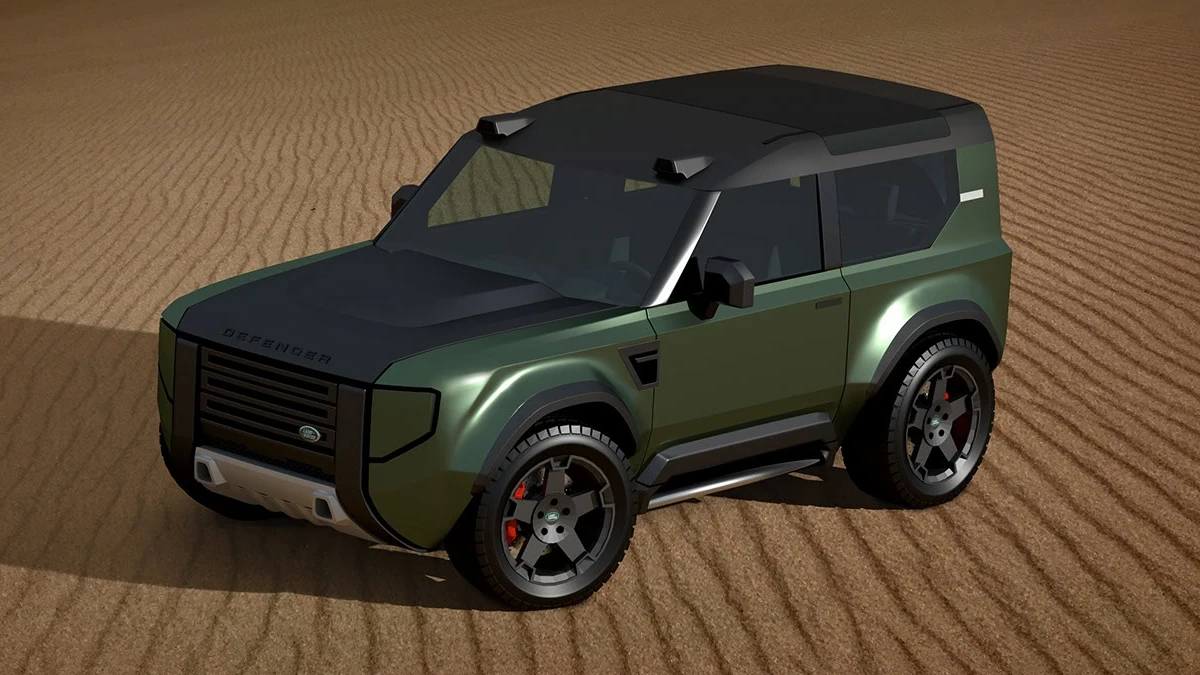
Jaguar Land Rover’s ambitious “House of Brands” reorganization is about to bear its most critical product yet. Under this overarching corporate strategy, the legendary Defender nameplate has officially transitioned from a single vehicle model into a standalone luxury division. Now, advanced product development leaks have confirmed that a highly anticipated, compact version of the 4×4—affectionately dubbed the “Baby Defender” and widely expected to carry the Defender Sport badge—is moving rapidly toward its global production debut.
While early engineering blueprints pointed to this junior off-roader arriving as an exclusive battery-electric vehicle (BEV), JLR leadership has adjusted its course. In a major tactical shift driven by changing premium market dynamics, the upcoming compact 4×4 will officially debut with a dual-powertrain strategy, offering both fully electric and strong-hybrid (HEV) configurations.
The Powertrain Pivot: Why Hybrids Joined the Mix
The decision to re-engineer JLR’s specialized Electrified Modular Architecture (EMA)—which also underpins the upcoming electric successors to the Range Rover Evoque and Velar—to accept a combustion-assisted hybrid powertrain comes down to realistic global demand. While the European sector continues its steady regulatory march toward total electrification, premium buyers in the United States (which has recently grown to become the Defender brand’s largest single market globally) have shown a massive resurgence in demand for hybrid flexibility.
By opting for a traditional strong-hybrid system rather than a cumbersome plug-in hybrid (PHEV) configuration, JLR is optimizing the vehicle’s tight under-floor packaging. This specialized hybrid system allows the engine and a high-torque electric motor to operate in perfect harmony, automatically switching power sources to deliver exceptional fuel economy and instant torque while eliminating the range anxiety or public charging hassles typically associated with pure electric platforms.
Preserving the Core: Overcoming the Aerodynamic Penalty
Downsizing a vehicle that built its reputation on massive trail capabilities and an uncompromised, boxy silhouette presents a major engineering challenge. JLR brand director Mark Cameron has publicly noted that maintaining the traditional Defender styling elements—such as the iconic upright front fascia, sharp window angles, and a flat, blunt rear end—creates a major aerodynamic penalty that directly fights against pure electric driving range.
To combat this, the pure electric version of the compact Defender is expected to utilize an advanced dual-motor setup providing permanent, software-controlled four-wheel drive.
Furthermore, JLR engineers are relying on active torque vectoring programs to overcome the minor wheel articulation compromises caused by mounting a rigid, flat battery pack directly underneath the floorboards. Measuring roughly 4.6 meters in length, the compact model sits close to the footprint of a midsize family vehicle, making it highly maneuverable in tight city streets while remaining tough enough to confidently tackle mud, ruts, and deep water.
Compact Luxury Adventure SUV Comparison Matrix
The upcoming entry-level Defender Sport is positioned to carve out a highly specialized niche within the premium compact adventure space. The table below outlines how JLR’s upcoming baby off-roader matches up against its immediate global rivals.
| Upcoming Premium Contenders | Powertrain Configurations | Platform Base | Estimated Length | Core Mechanical Focus | Target Launch Timeline | Estimated Base Price |
| Land Rover Defender Sport | Strong Hybrid (HEV) & Pure Electric (BEV) | JLR Modular EMA | ~4.6 Meters | Active Off-Road Cruise & Software 4×4 | Mid-2027 | ₹60.00 Lakh – ₹65.00 Lakh |
| Mercedes-Benz “Little G” | Pure Electric (BEV) & Mild-Hybrid | Mercedes MMA Architecture | ~4.5 Meters | Mechanical Locking Diffs & Urban Luxury | Late 2026 / 2027 | ₹70.00 Lakh+ |
| Jeep Recon EV | Pure Electric (BEV) Only | Stellantis STLA Large | ~4.7 Meters | Removable Doors, Trail-Rated Traction | Late 2026 | ₹55.00 Lakh+ |
| Rivian R3X | Tri-Motor Electric (BEV) Only | Rivian Midsize Platform | ~4.4 Meters | Rally-Inspired Torque Vectoring | Early 2027 | North American Focused |
Strategic Market Takeaway
The introduction of the compact Defender represents a massive market expansion for Jaguar Land Rover. By translating the rugged prestige and unmistakable boxy styling of the full-size Defender 110 into an urban-friendly, sub-4.7-meter footprint, JLR is directly addressing a massive demographic of young affluent buyers and city dwellers.
More importantly, by modifying their EMA platform to offer a strong-hybrid option alongside a pure electric variant, they have insulated themselves from unpredictable shifts in EV adoption rates, ensuring this entry-level model can successfully drive volume across both western markets and developing premium spaces.
To see how these boxy, terrain-conquering design cues translate to a more urban-friendly layout, take a look at this digital layout of the New Land Rover Defender Sport Concept. This video breaks down the aggressive proportions, shorter overhangs, and signature lighting elements that allow the junior model to maintain its iconic family identity while downsizing its actual physical footprint.

