


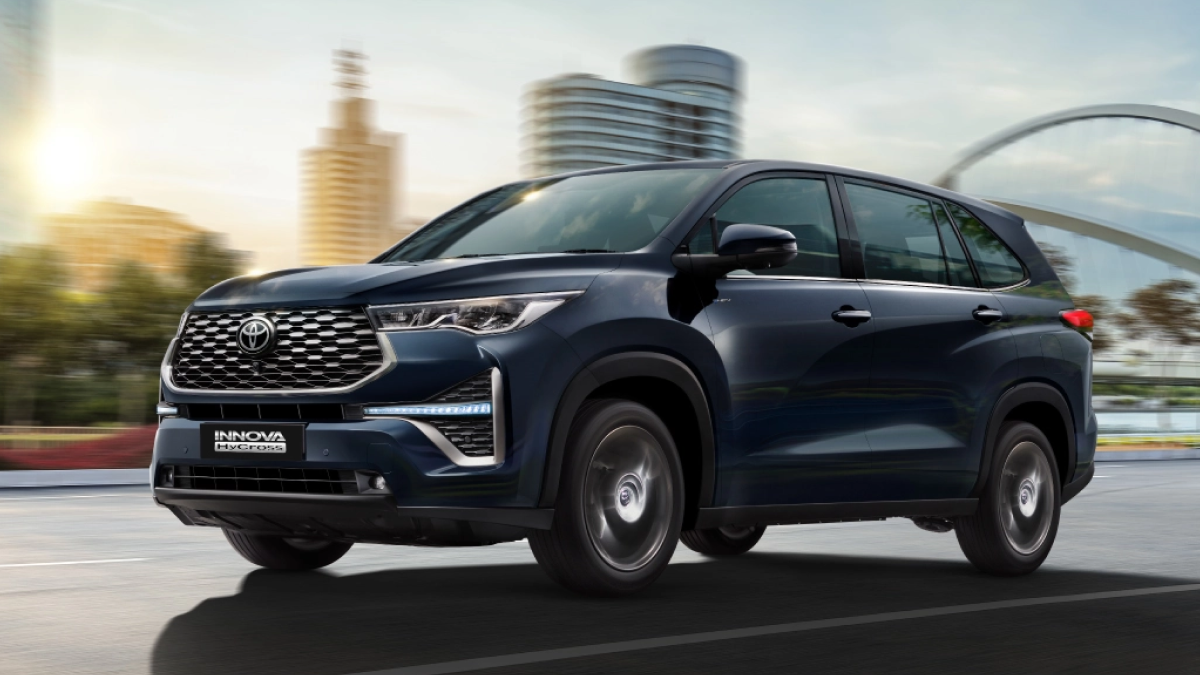
For years, the Indian automotive market was a battleground between the high-torque reliability of diesel and the mass-market affordability of petrol. But the final numbers for Fiscal Year 2026 (FY26) tell a new story. With over 1.23 lakh strong hybrid units sold, the “silent revolution” of hybrid technology has officially arrived, carving out a permanent place in the Indian driveway.
Leading the charge are two powerhouses: Toyota and Maruti Suzuki. Together, they have successfully convinced the Indian buyer that you don’t need a charging plug to experience the benefits of an electric future.
1. The Undisputed Leader: Toyota Innova Hycross
If there is one vehicle that defines the hybrid boom, it is the Toyota Innova Hycross. In FY2026, the Hycross wasn’t just a leader; it was a phenomenon, accounting for a staggering 50.7% market share in the hybrid segment with 62,586 units sold.
One in every two hybrid cars sold in India last year was a Hycross. By offering a 23.24 kmpl fuel efficiency in a massive 7-seater frame, Toyota has effectively replaced the need for large-capacity diesel engines for urban families.
2. The Mid-Size SUV Battle: Hyryder vs. Grand Vitara
The mid-size SUV segment also saw a major tilt toward electrification.
- Toyota Urban Cruiser Hyryder: Placed second overall with 35,745 units. Its success lies in its versatility, offering a strong-hybrid option that delivers nearly 28 kmpl—a figure previously unheard of in the SUV space.
- Maruti Suzuki Grand Vitara: Coming in third, the Grand Vitara (which shares its hybrid tech with Toyota) moved 11,739 units. While Maruti dominates the mass market with its mild-hybrid and CNG range, its strong-hybrid numbers show a growing appetite for premium technology among its loyal customer base.
3. The “Diesel-Killer” Trend
Perhaps the most significant insight from FY2026 is how hybrids are cannibalizing the market once held by diesel. In major urban centers like Delhi, Mumbai, and Bengaluru, the preference for hybrids has surged.
| Why Buyers Are Switching | The Hybrid Advantage |
| City Efficiency | Hybrids excel in stop-and-go traffic where diesels are least efficient. |
| Lower NVH | The near-silent start and low-speed EV mode provide a luxury feel. |
| Resale Value | With tightening emission norms, hybrids are seen as a safer long-term investment. |
| Range Anxiety | Unlike EVs, hybrids offer 1000km+ range without needing a charger. |
4. Looking Ahead: The Road to FY2027
As we move into the new fiscal year, the momentum shows no signs of slowing. Maruti Suzuki is reportedly working on its own in-house series-hybrid technology to bring costs down, while Toyota is preparing to broaden its hybrid lineup to include more accessible price points.
The Final Word
The numbers don’t lie: India is no longer waiting for the infrastructure to catch up to the EV dream. By choosing hybrids, Indian motorists are voting for “practical electrification”—a bridge that offers the best of both worlds without the compromises.
Are you planning to make the switch to a hybrid this year, or is the torque of a diesel still calling your name? Share your thoughts in the comments!

