


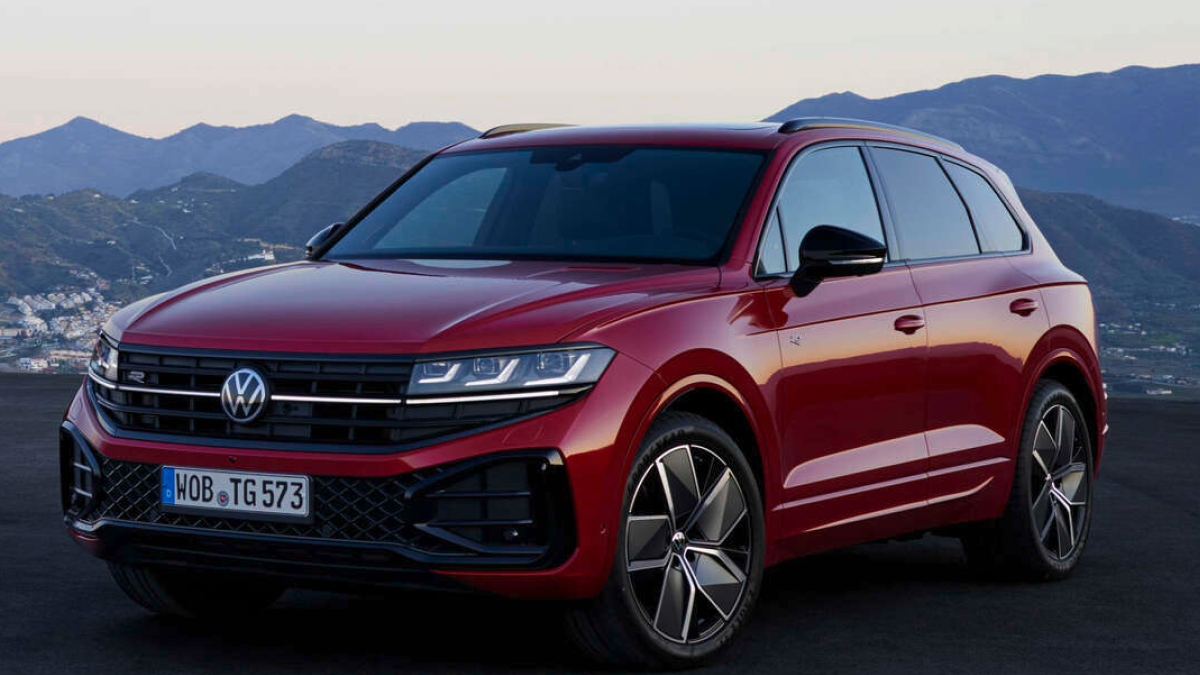
The automotive world is at a crossroads where heritage meets high-voltage innovation. For over two decades, the Volkswagen Touareg has served as the brand’s silent flagship—a vehicle that offered the ruggedness of an off-roader with the refinement of a luxury cruiser. However, as the current third-generation model prepares to take its final bow in late 2026, Volkswagen has confirmed a major strategic shift: the Touareg nameplate is officially transitioning to an all-electric future.
As of April 9, 2026, internal reports from Wolfsburg suggest that this isn’t just a powertrain swap. It is a fundamental reimagining of what a “People’s Car” flagship should be in the electric era.
The “ID” Transition: Filling the Premium Gap
The upcoming model, which industry insiders suggest may carry the “ID. Touareg” badge, is designed to fill a very specific “sweet spot” in the market. Volkswagen’s sales chief, Martin Sander, recently noted that while the Touareg isn’t a high-volume mass-market car, it holds a unique place for buyers who want an upscale, premium experience without the “badge-heavy” price tag of a luxury marque.
By moving to an all-electric architecture, Volkswagen aims to offer a vehicle that sits comfortably between the mainstream ID range and the ultra-luxury offerings from Audi and Porsche.
Shared DNA: Leveraging Audi and Porsche Tech
The most exciting prospect of the new electric Touareg is its technical foundation. Unlike the current model, which shared its platform with the Porsche Cayenne and Audi Q7, the next-gen EV is expected to utilize the SSP (Scalable Systems Platform) or a modified version of the high-performance PPE (Premium Platform Electric) architecture.
What this means for the driver:
- 800V Architecture: Expect ultra-fast charging capabilities that can add 250 km of range in under 15 minutes.
- Dual-Motor AWD: A standard dual-motor setup is likely, providing the “4Motion” capability that Touareg fans have relied on for years.
- Intelligent Air Suspension: To maintain its “go-anywhere” reputation, the electric successor will likely feature a revised version of VW’s active air suspension, tailored for the unique weight distribution of a large battery pack.
Inside the “Innovision” Cabin 2.0
The original Touareg was famous for introducing the “Innovision Cockpit,” and the 2026 successor is expected to push that even further. The cabin will likely ditch physical buttons entirely, moving toward a 15-inch augmented reality (AR) head-up display and a seamless, curved OLED dashboard.
Furthermore, with a dedicated EV platform, the interior space—especially the rear legroom and flat floor—will significantly exceed the current diesel and petrol versions, effectively offering “Q7-level” roominess in a more compact, maneuverable footprint.
Launch Roadmap: When to Expect It?
While the current internal combustion (ICE) Touareg will retire by the end of 2026, the electric successor is slated to enter production in Slovakia shortly after. For the Indian market, this flagship EV could serve as a vital halo product, potentially arriving as a CBU (Completely Built Unit) by 2027 to rival the likes of the Kia EV9 and the Hyundai Ioniq 9.
The Verdict: The Touareg was always the “thinking person’s” luxury SUV. By going electric, Volkswagen is ensuring that its most sophisticated nameplate remains relevant for a generation that values sustainability just as much as status.
Would you pick a Volkswagen “ID. Touareg” over a traditional luxury brand EV? Let us know in the comments below!

