





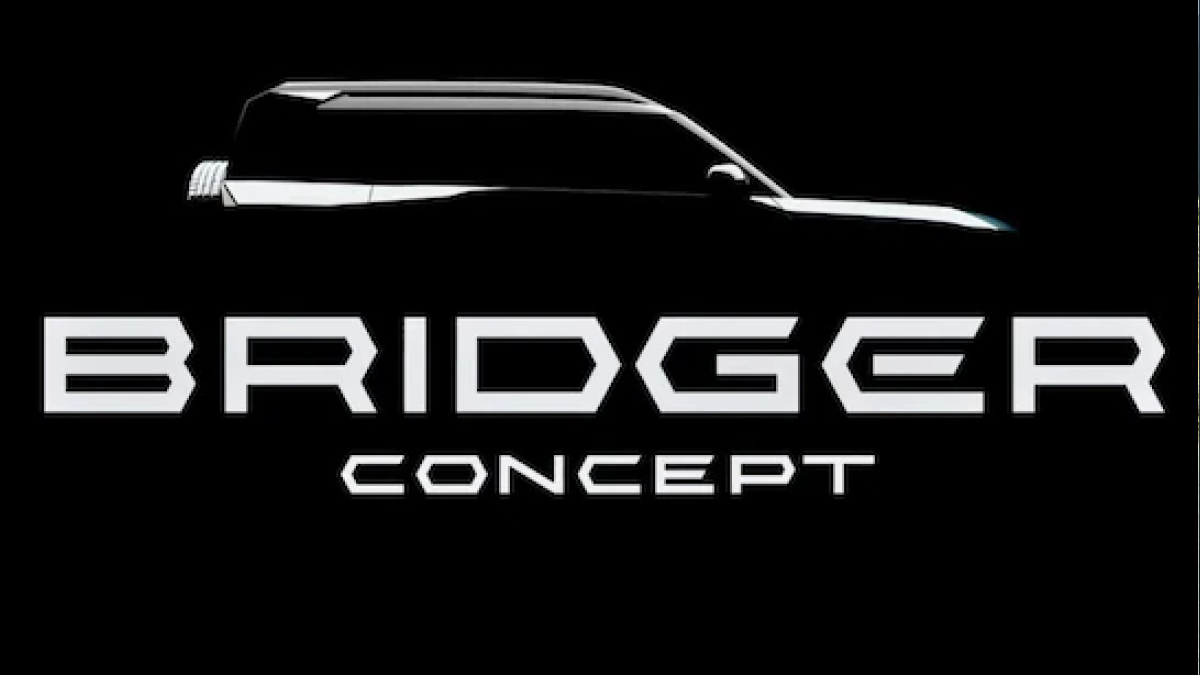
Renault is currently executing one of the most significant product offensives in its history in India, aimed at restoring the brand’s equity in the SUV space. A cornerstone of this “futuREady” strategic plan is a new sub-4-metre SUV, internally codenamed RB3-K2, which has recently been christened the Renault Bridger. Set to be previewed as a concept on March 10, 2026, the Bridger is widely regarded as the “Mini Duster” due to its rugged, upright design language and shared engineering DNA with the next-generation Duster scheduled for a March 17 launch.
Design Philosophy and Positioning
While Renault already competes in the compact segment with the Kiger, the Bridger is designed to occupy a completely different niche. Teaser images released in early March 2026 reveal a boxy, silhouette-heavy design that contrasts sharply with the Kiger’s crossover-like curves. Key styling elements include a tailgate-mounted spare wheel, illuminated Renault lettering on the fascia, and high-clearance wheel arches.
This “old-school” SUV aesthetic is a deliberate move to target buyers who desire the road presence of a traditional off-roader like the Maruti Suzuki Jimny or Mahindra Thar, but in a more practical, five-door package. In the Renault lineup, the Bridger will sit comfortably between the entry-level Kiger and the flagship Duster, allowing the brand to cover the Rs 10 lakh to Rs 20 lakh price bracket more effectively.
The Versatility of the R-GMP Platform
The Bridger will be built on the Renault Group Modular Platform (R-GMP), a highly localized architecture derived from the global CMF-B platform. Unlike global platforms that can be prohibitively expensive to adapt, the R-GMP has been engineered with a completely new electrical and electronic (E&E) architecture to support modern features while keeping manufacturing costs low.
One of the most ambitious aspects of the Bridger project is its powertrain diversity. Renault is reportedly developing the most diversified portfolio in the segment, including:
- Petrol Engines: A new 1.2-litre naturally aspirated engine for entry variants and a 1.0-litre turbo-petrol unit for higher trims.
- Electrified Options: Both strong-hybrid and CNG variants are under consideration to counter rising fuel costs.
- Electric Mobility: Most notably, the Bridger is expected to offer two battery pack alternatives—35 kWh and 55 kWh—allowing Renault to target multiple price points within the EV space.
Strategic Importance and Timeline
The production-ready version of the Bridger is expected to arrive in Indian showrooms by Diwali 2027, roughly 18 months after the launch of the standard Duster. Renault is targeting annual volumes of 80,000 to 90,000 units, reflecting the high expectations placed on this model to restore the brand’s market share.
By focusing on a design that “speaks the language of today’s India”—a project led largely by Renault’s domestic R&D team—the company is betting that the Bridger will serve as a vital link between its legacy models and its electrified future.

